

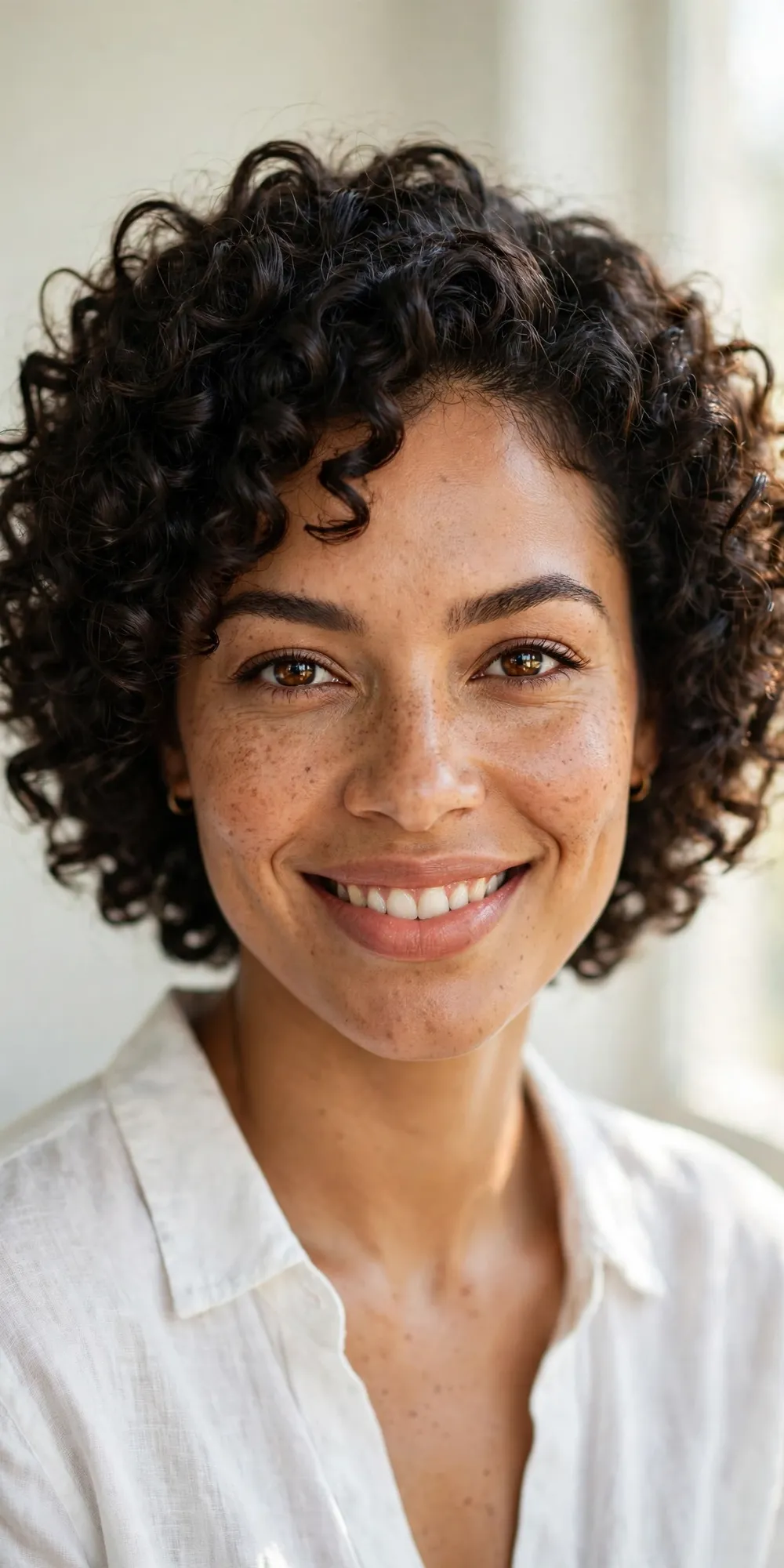
The best short curly hairstyles work with your curl pattern instead of fighting it — the cut has to plan for shrinkage and shape, not just length. If you want three safe bets, start with the Tapered Curly Pixie, the Rounded Curly Bob, or the Layered Curly Shag: each one flatters a different curl type and face shape, and all three are genuinely easy to live with. Below you’ll find 33 cuts and styles, from wash-and-go crops to party-ready updos, with the exact words to use at the salon and honest notes on upkeep.
Which Short Curly Hairstyle Suits You?
Before you pick a cut, match it to your curls and your routine — a style that takes twenty minutes on tight coils might take two on loose waves.
- Loose curls (2C–3A): Bobs, shags and side-parted cuts keep their shape with the least effort. Layers stop the dreaded triangle shape, and a diffuser is usually all you need.
- Tight curls (3B–4A): Tapered cuts, finger-coiled crops and mini afros give definition without daily heat. Ask for a dry cut so shrinkage doesn’t surprise you.
- Round faces: Height on top and length around the jaw — pixies with volume, deep side parts and asymmetrical bobs all stretch the face visually.
- Long or oval faces: Width helps. Rounded bobs, curtain bangs and bowl shapes add fullness at the sides and soften length.
- Five minutes or less: Wash-and-go crops, tapered cuts, top knots and clipped side sweeps. If a style needs diffusing and re-coiling every morning, it doesn’t belong in this group.
- Happy to maintain: Finger coils, wet-look crops and faux hawks look incredible but ask for product and patience most wash days.
The 33 Best Short Curly Hairstyles
1. Tapered Curly Pixie
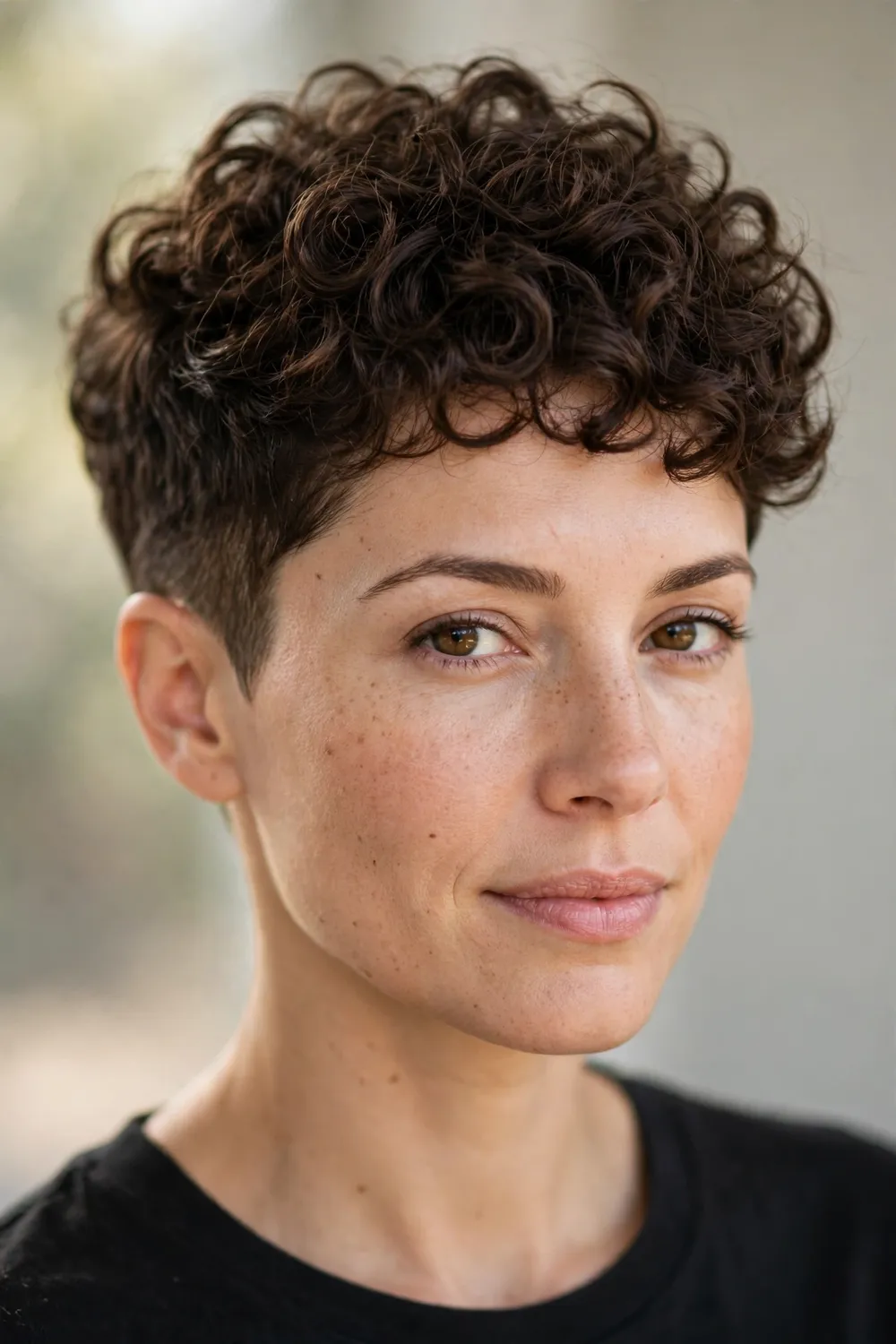
This is the short curly cut that converts the most sceptics. The sides and nape are tapered close while the top keeps enough length for springy, defined curls, so you get structure without losing the curl itself. It suits oval and heart-shaped faces best, and it loves tight curls — 3A through 4A — especially thick hair that would otherwise puff outwards. Ask your barber for a taper, not a skin fade, with the top cut on dry or stretched curls so shrinkage is accounted for. Finish with a pea-sized amount of curl cream, then a light gel scrunched through the top for hold. Maintenance is honest: it needs a tidy-up every four to five weeks, but day to day it’s a true wash-and-go.
2. Rounded Curly Bob

A rounded bob gives short curls a soft, deliberate silhouette instead of the accidental triangle that happens when curls are cut straight across. The shape arcs gently around the head and skims the chin, which flatters round and square faces — the curve softens a strong jaw and adds length to a wide face. It works best on loose to medium curls, roughly 2C to 3B, with medium density; very thick hair needs internal layers or it will sit too wide. Ask your stylist to cut it dry, shaping the arc curl by curl, removing bulk from underneath rather than thinning the top. Leave-in conditioner plus volumising mousse keeps the curls bouncy. Expect a reshape trim every six to eight weeks.
3. Side-Parted Chin-Length Cut
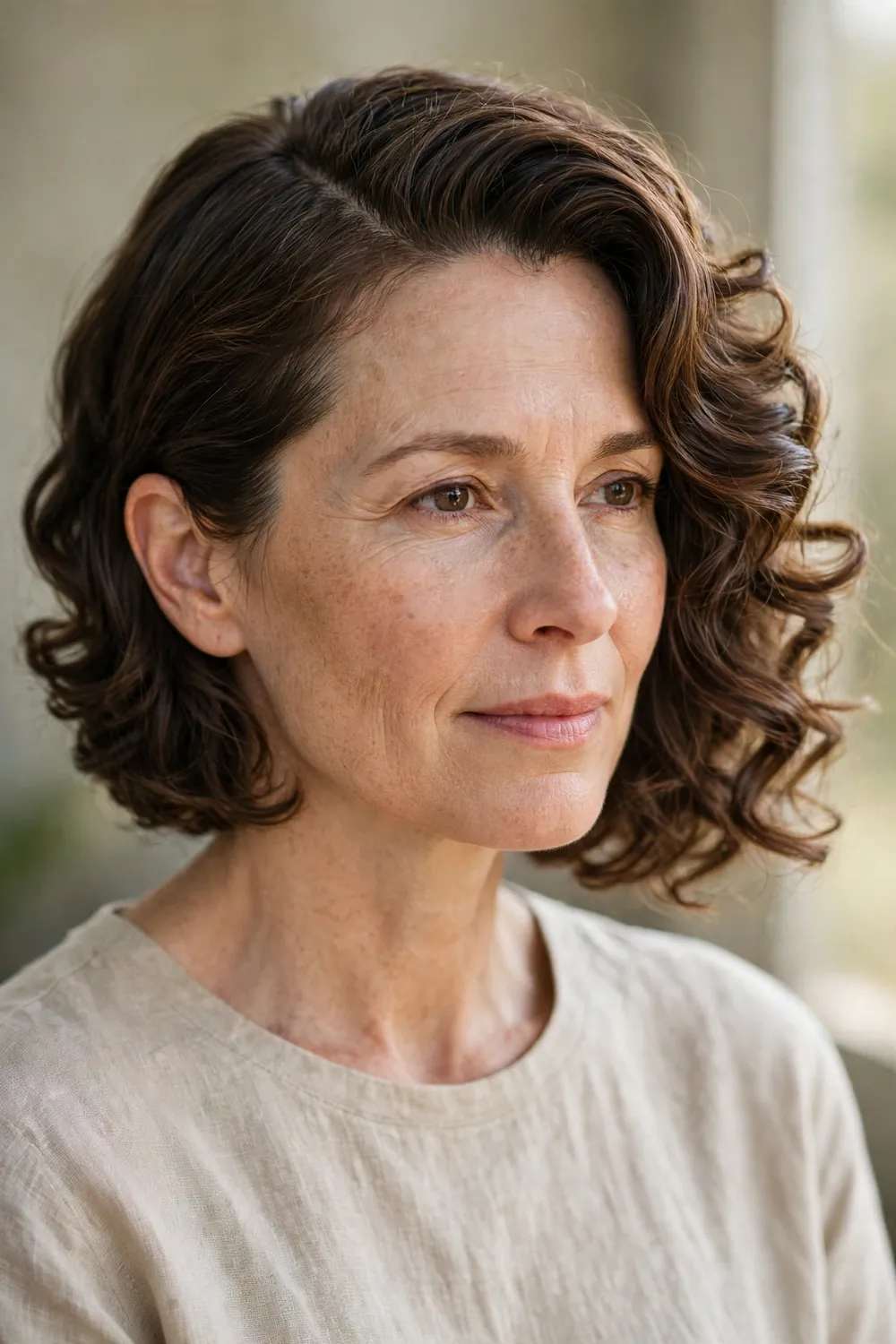
Sometimes the simplest change makes the biggest difference — a deep side part is exactly that. Moving the part a few inches throws volume across the forehead, breaks up symmetry, and gives chin-length curls a sweeping, grown-up shape. This one suits almost every face, but round faces benefit most, since the diagonal line draws the eye across rather than around. Loose curls from 2B to 3A hold the sweep best, and fine to medium hair gets a lift it never manages with a centre part. Ask for chin length with long, soft layers and a part that sits above the arch of one eyebrow. Light mousse at the roots keeps the volume from collapsing. Maintenance is low — trims every eight weeks keep the length honest.
4. Layered Curly Shag
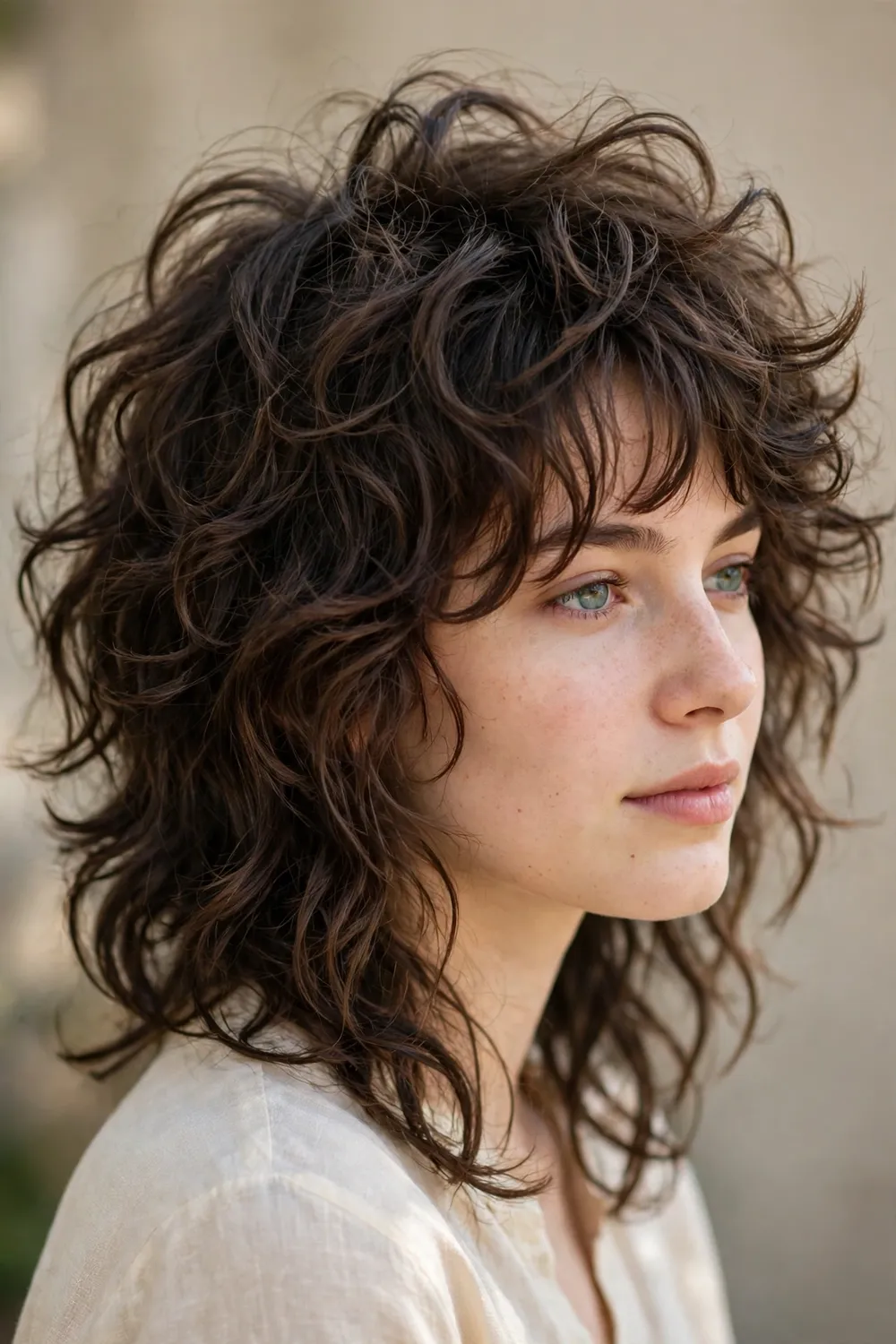
The shag is the cut for anyone whose curls feel heavy, flat on top, and wide at the bottom. Choppy layers through the crown lift the roots, while thinned, airy ends stop the shape from ballooning outwards. It suits long and oval faces beautifully — the layers add width where a long face needs it — and thick hair in the 2C to 3C range, where the layering actually has something to work with. Ask for disconnected layers with the shortest at the crown, and mention a curtain fringe if you want the face framed too. A texture cream or sea salt spray scrunched into damp hair gives it that lived-in finish. It grows out gracefully, so eight to ten weeks between cuts is realistic.
5. Curtain-Bang Bob

Curtain bangs and curls are a natural match — the bangs fall in soft, face-framing pieces instead of a blunt wall, and the bob underneath keeps everything neat at jaw length. Heart-shaped and oval faces get the most from this cut, because the parted bangs soften a wide forehead and draw attention to the cheekbones. It works best on soft waves through loose curls, 2B to 3A, where the bang pieces can actually separate. Ask your stylist to cut the bangs dry, at cheekbone length when stretched, so they spring up to the right spot. A dab of light cream and a quick diffuse shapes them. The only catch is upkeep: bangs need a trim every four to six weeks.
6. Deep Side Part Bob
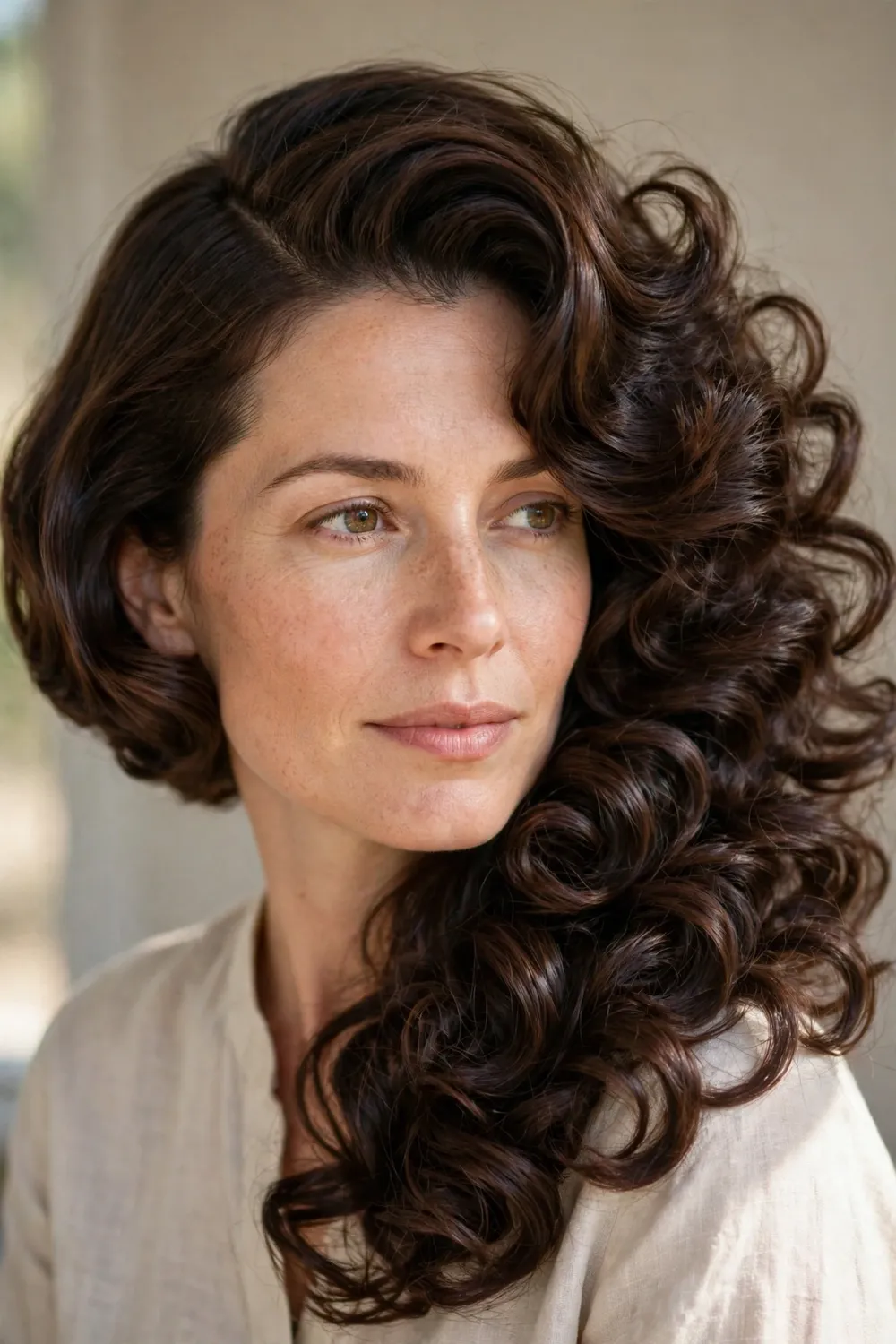
If you like the idea of a bob but want more drama than a centre part gives, sweep everything to one side. A deep side part bob piles volume over to one side of the head, which instantly makes fine hair look thicker and gives round or square faces a flattering diagonal. Medium to thick curls, 2C to 3B, hold the sweep without sliding back by lunchtime. Ask for a part that starts near the temple, with the longer side falling just past the chin and internal layers underneath to keep the shape from going boxy. Root-lift mousse applied to damp roots, then diffused upside down, locks the volume in. It’s a low-maintenance cut — a trim every seven or eight weeks is plenty.
7. Half-Up Mini Top Knot
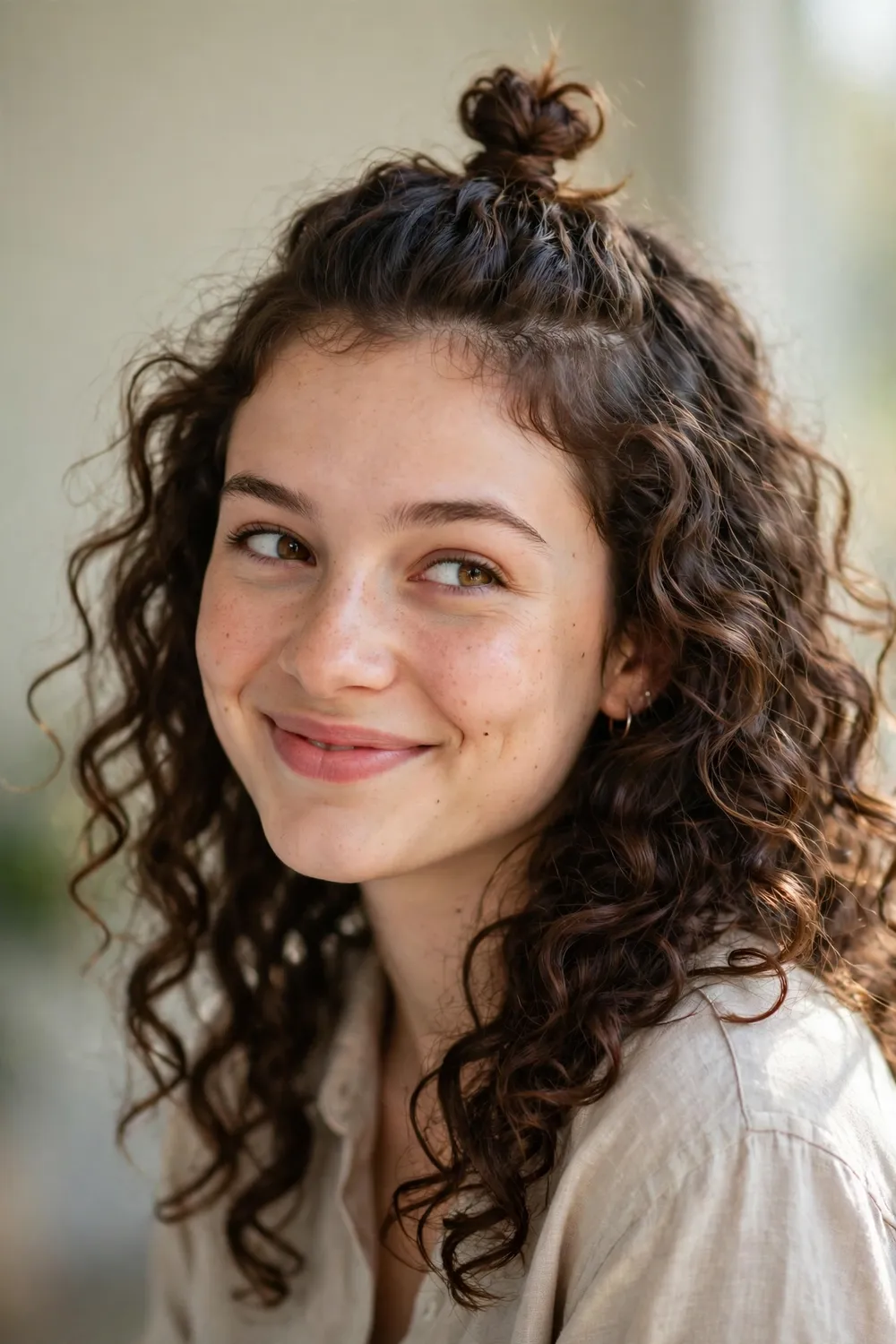
This is the style that saves second-day curls. A tiny knot gathered at the crown lifts the front away from your face while the rest of your curls stay loose below, so you get the polish of an updo without hiding the texture you woke up with. It works on every curl type as long as there’s enough length to gather — even a short bob can manage a mini knot if the top layers reach. No cut is needed; this is pure styling. Use a small elastic, twist the gathered section loosely, and pin any flyaways with a light gel on your fingertips. It takes two minutes, holds all day, and needs no maintenance at all beyond taking it down gently at night.
8. Finger-Coiled Crop
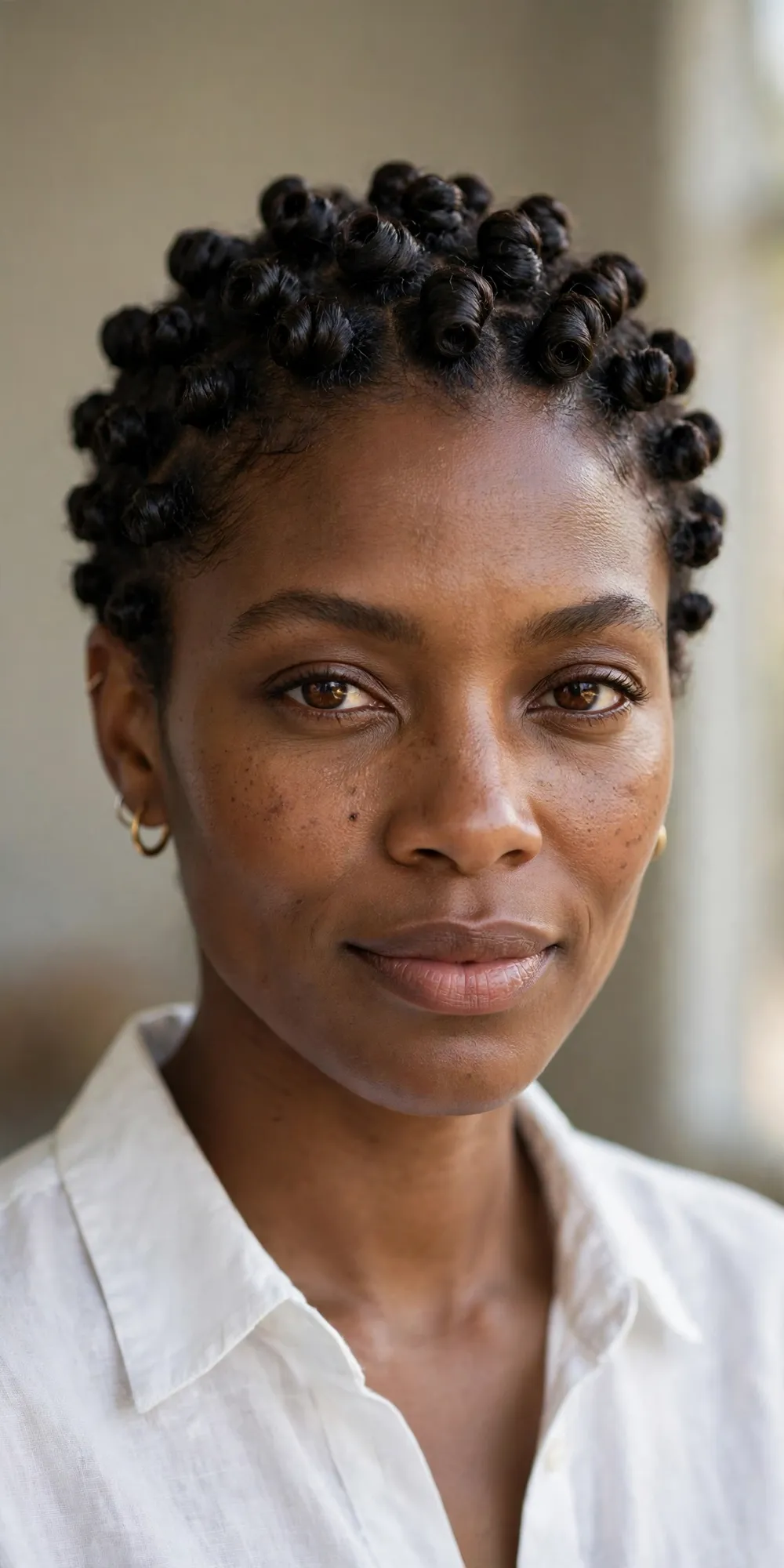
Finger coiling is the closest thing to a guaranteed defined curl. Each section is wrapped around a finger while the hair is wet, which trains the curl into a neat, sculpted coil and gives a compact crop a polished, intentional finish. It suits tight curls, 3C to 4A, and oval or round faces, since the neat shape frames the face without adding width. Ask your barber for a short crop with a tapered nape and enough length on top to coil — about two to three inches. Work a curl custard or gel through soaking-wet hair, coil section by section, then let it dry untouched. It’s medium-high maintenance: coiling takes time on wash day, though the result lasts several days.
9. Soft Curly Wolf Cut
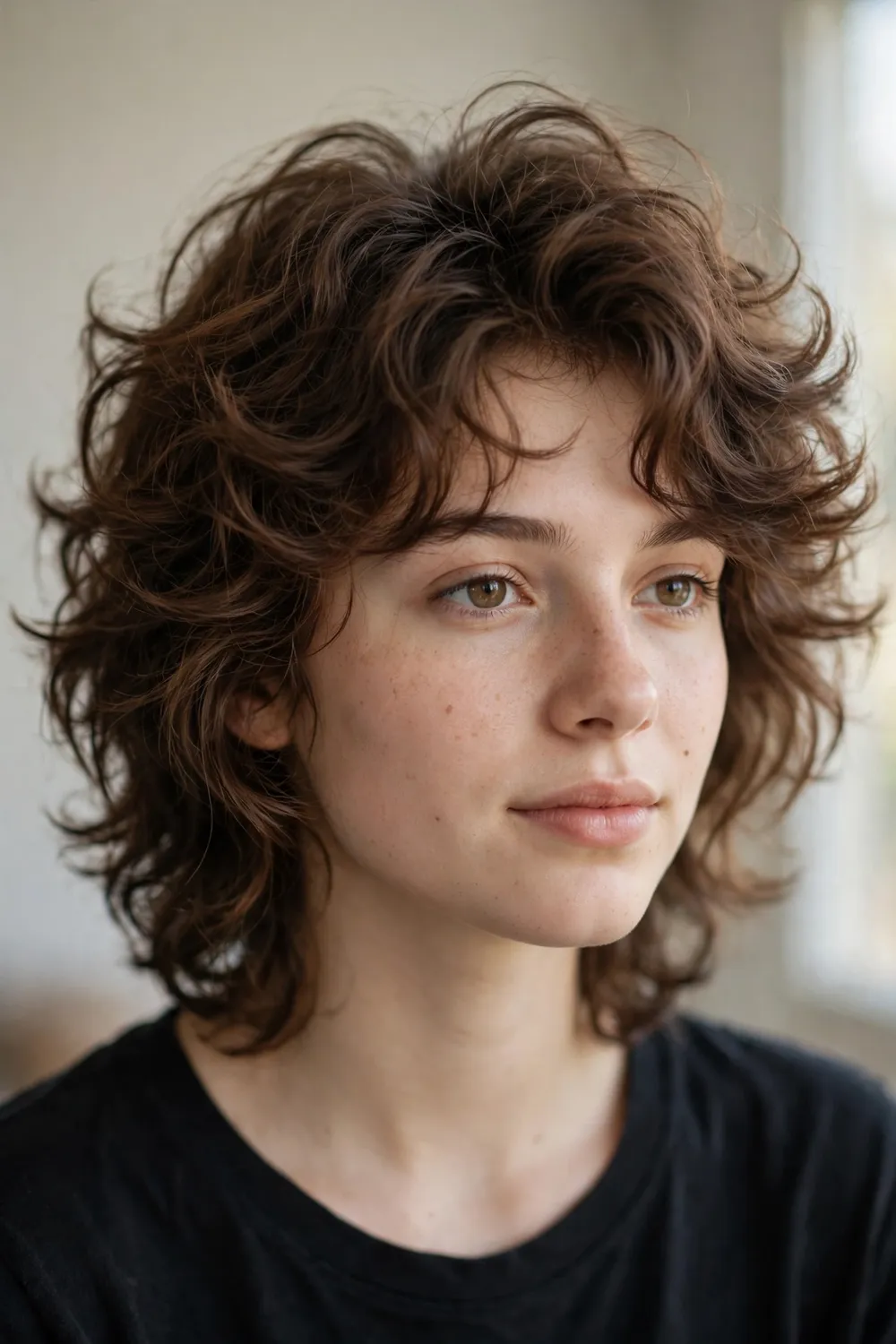
The wolf cut sounds wild, but the soft curly version is surprisingly wearable. It keeps fullness at the crown and lets the layers get airier towards the ends, so thick curls get movement instead of bulk. Long and oval faces suit it best — the crown volume and wispy ends balance a longer face — and it needs thick hair in the 2C to 3C range to fill the shape out. Ask for short layers at the crown, longer pieces around the face, and ends that are point-cut rather than blunt. Scrunch a texture cream through damp hair and diffuse on low heat for lift. Maintenance is moderate: it looks good grown out, but a trim every eight weeks keeps the layers from turning shaggy.
10. Tapered Natural Cut
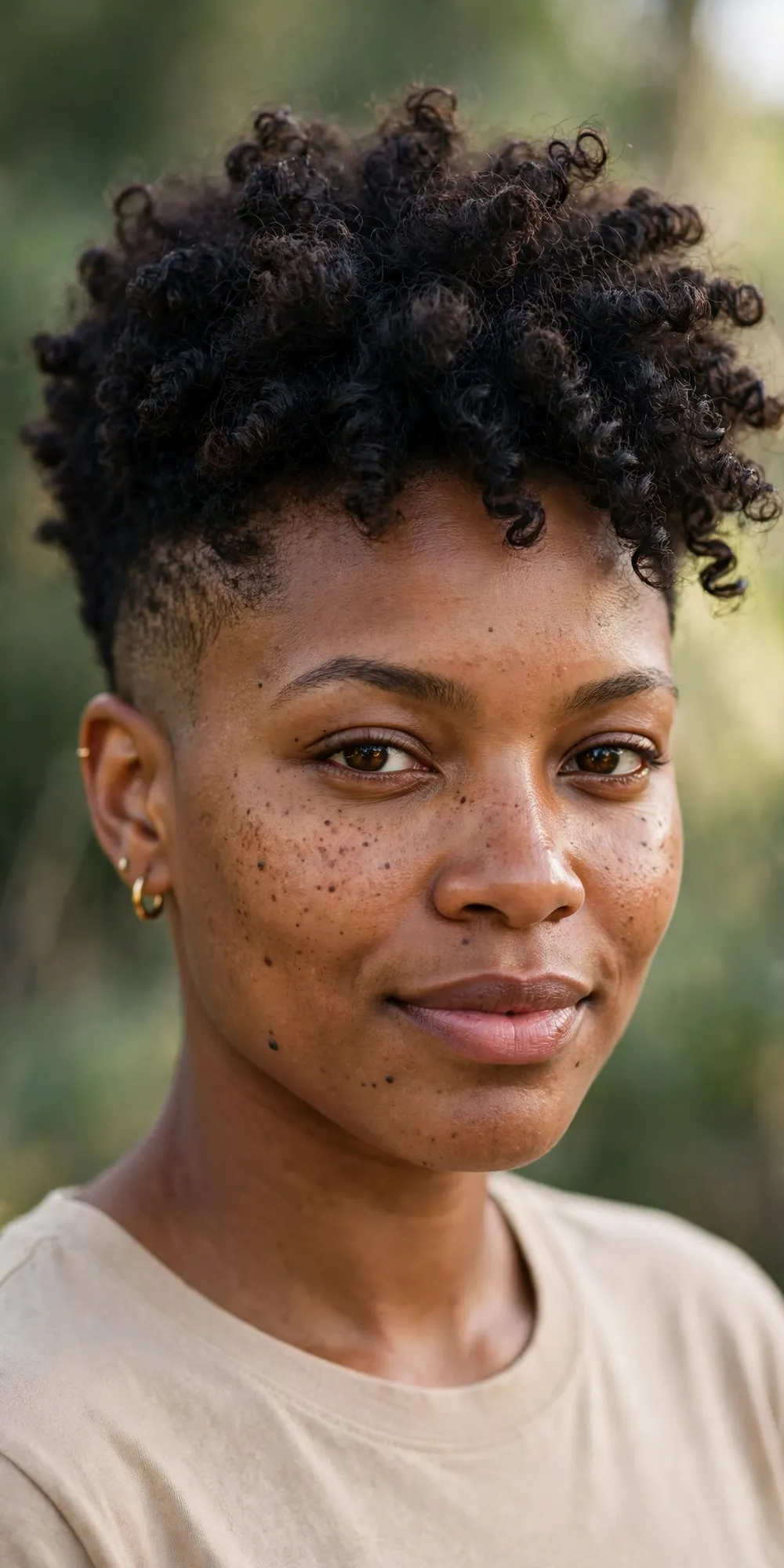
A tapered natural cut is the low-fuss way to wear tight curls short. The sides and back are tapered close while the top stays full and rounded, giving the hair a clean shape that still shows off the curl pattern. It flatters round and oval faces, and it’s made for 3B to 4C curls — the taper controls the sides so the top can do the talking. Ask your barber to taper the edges and shape the top dry, curl by curl, rather than cutting it wet and guessing where it will land. A leave-in conditioner followed by a butter or cream keeps the top defined and soft. Expect a tidy-up every four to six weeks to keep the taper sharp.
11. Asymmetrical Curly Bob

An asymmetrical bob is a quiet way to make a classic cut feel modern. One side sits a little longer — usually an inch or two — which creates a subtle diagonal that flatters the face and gives the curls a direction to fall. Oval and heart-shaped faces wear it best, and medium curls in the 2C to 3B range show the angle off most clearly. Ask your stylist for a gentle asymmetry rather than a dramatic one; with curls, too much difference can look like a mistake once the hair shrinks. A defining cream scrunched through damp curls keeps both sides neat. Maintenance is moderate, since the longer side needs regular trims to keep the angle deliberate.
12. French Bob for Curls
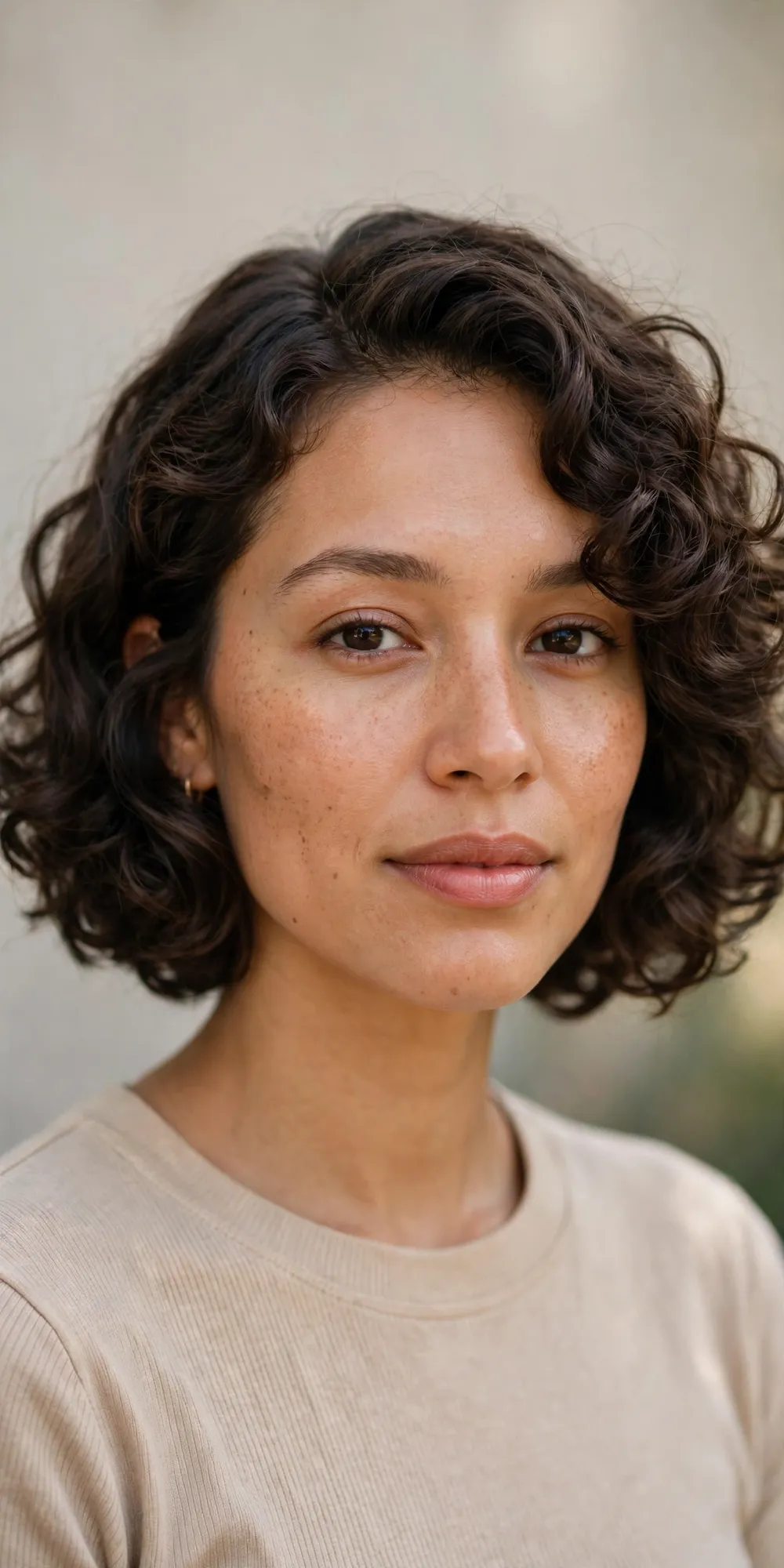
The French bob is short, chic, and far easier with curls than most people expect. It grazes the lips, the ends tuck under softly, and the whole shape feels deliberate rather than accidental. Petite faces and oval or heart shapes suit it best — the short length opens up the neck and jawline — and fine to medium curls, 2B to 3A, sit in the shape without too much bulk. Ask for lip length with minimal layering and ends that are cut to curl under on their own. A light mousse gives the curls bounce without weighing them down. It’s not a wash-and-forget cut: trims every five to six weeks keep the length exact.
13. Wispy-Bang Crop

Wispy bangs soften a short crop in a way a blunt fringe never could. The bangs are cut light and airy, so they fall in feathery pieces across the forehead instead of sitting as a solid block. Long faces benefit most, since the fringe shortens the forehead visually, and loose curls from 2C to 3A let the pieces separate naturally. Ask your stylist to cut the bangs on dry curls — wet bangs shrink and land far shorter than planned — and to keep them piecey rather than thick. Use a light cream on the bangs and skip heavy gel, which clumps them together. The trade-off is upkeep: wispy bangs need a trim every three to four weeks.
14. Faux Hawk Curl Style
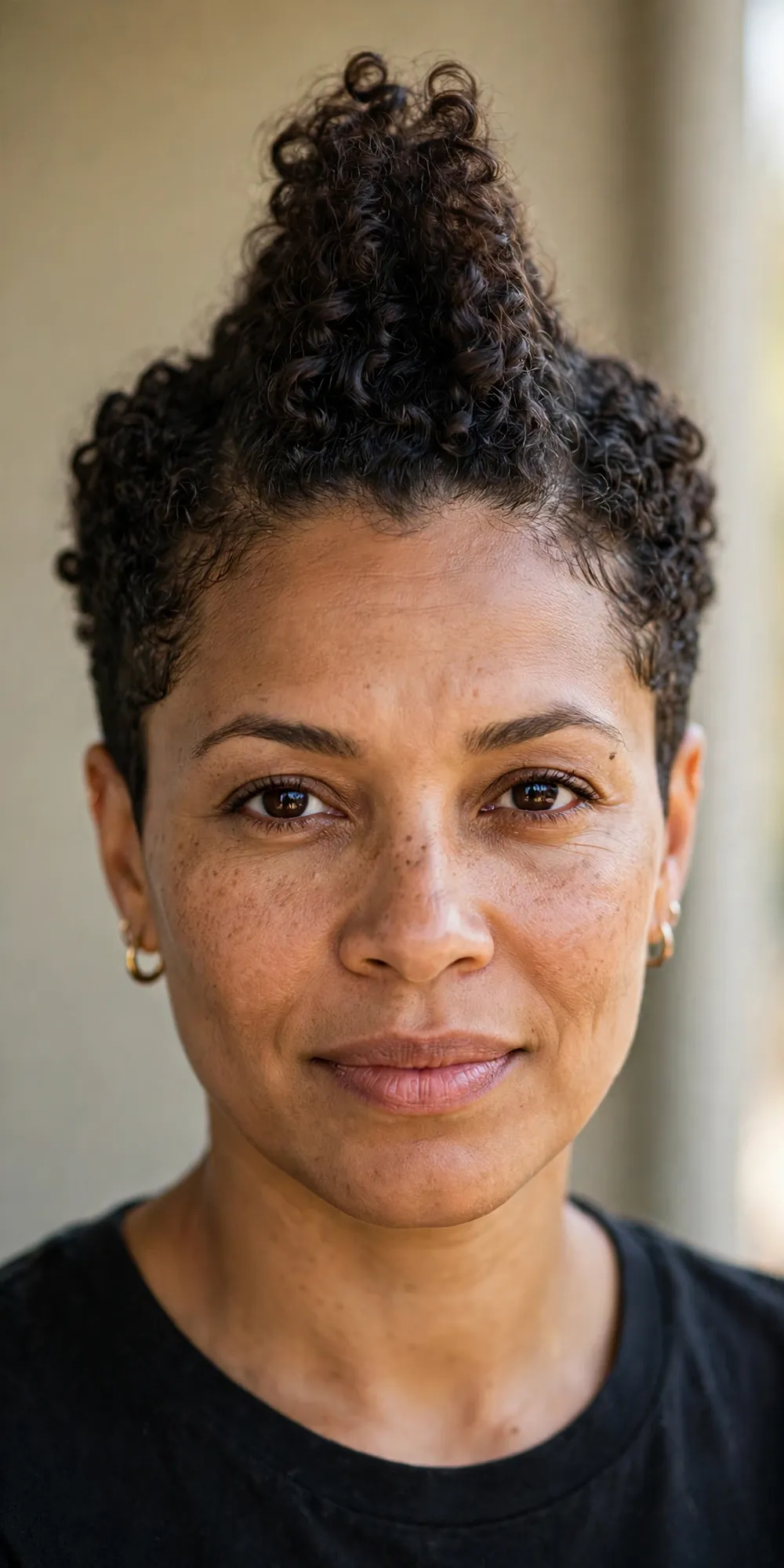
A faux hawk is the boldest style in this list, and curls make it better — the texture gives the centre ridge natural height without backcombing. The sides are tapered tight while the middle strip stays long and lifted, so you get the mohawk silhouette with a softer, wearable edge. Oval faces and medium to tight curls, 3A to 4A, carry it best. Ask your barber for short tapered sides and a centre strip of at least three inches, shaped to stand up rather than flop forward. Strong-hold gel or a matte pomade, worked through damp hair and diffused upwards, sets the ridge. It’s medium-high maintenance: the style needs product and a few minutes every morning.
15. Clip-Accented Side Sweep

Some days the best hairstyle is the one that takes thirty seconds. Sweep the curls on one side back, secure them with a decorative clip, and let the rest fall free — it instantly looks intentional, and it hides a multitude of sins, including bangs you’re growing out. It works on every curl type and every face shape, which is rare in this list. No cut is required, so there’s nothing to ask your stylist for; this is purely a styling trick. A light-hold cream keeps the swept side smooth, and the clip does the rest of the work. Choose a clip with a strong grip if your hair is thick. Maintenance is as low as it gets — it’s a five-second fix, not a commitment.
16. Wet-Look Curly Crop

The wet-look crop is pure evening glamour: curls gelled close to the head with a glossy, just-out-of-the-water shine. It’s a short crop at heart, but the finish transforms it into something red-carpet ready. Tight curls hold the look best, since they keep their definition under gel, and it suits anyone who wants a polished style for a night out. Ask your barber for a close crop with enough top length to show the curl pattern. Apply a strong-hold gel to soaking-wet hair, smooth it into place, and finish with a drop of shine serum — don’t touch it while it dries. Wash the gel out the same night; as a one-off style, the effort is low.
17. Double Space Buns

Double space buns are the most playful style here, and curls make them look better than straight hair ever could — the texture gives each bun natural fullness, and a few loose tendrils around the face keep it soft rather than severe. They suit medium-short curls with enough length to gather, and every face shape, since the height of the buns can be adjusted to flatter. Part the hair down the middle, gather each side into a high bun, and secure with elastics. A little gel on your fingertips tames flyaways, and pulling out two thin tendrils at the front finishes the look. It takes five minutes, needs no salon visit, and comes down without a trace.
18. Collarbone Curl Lob
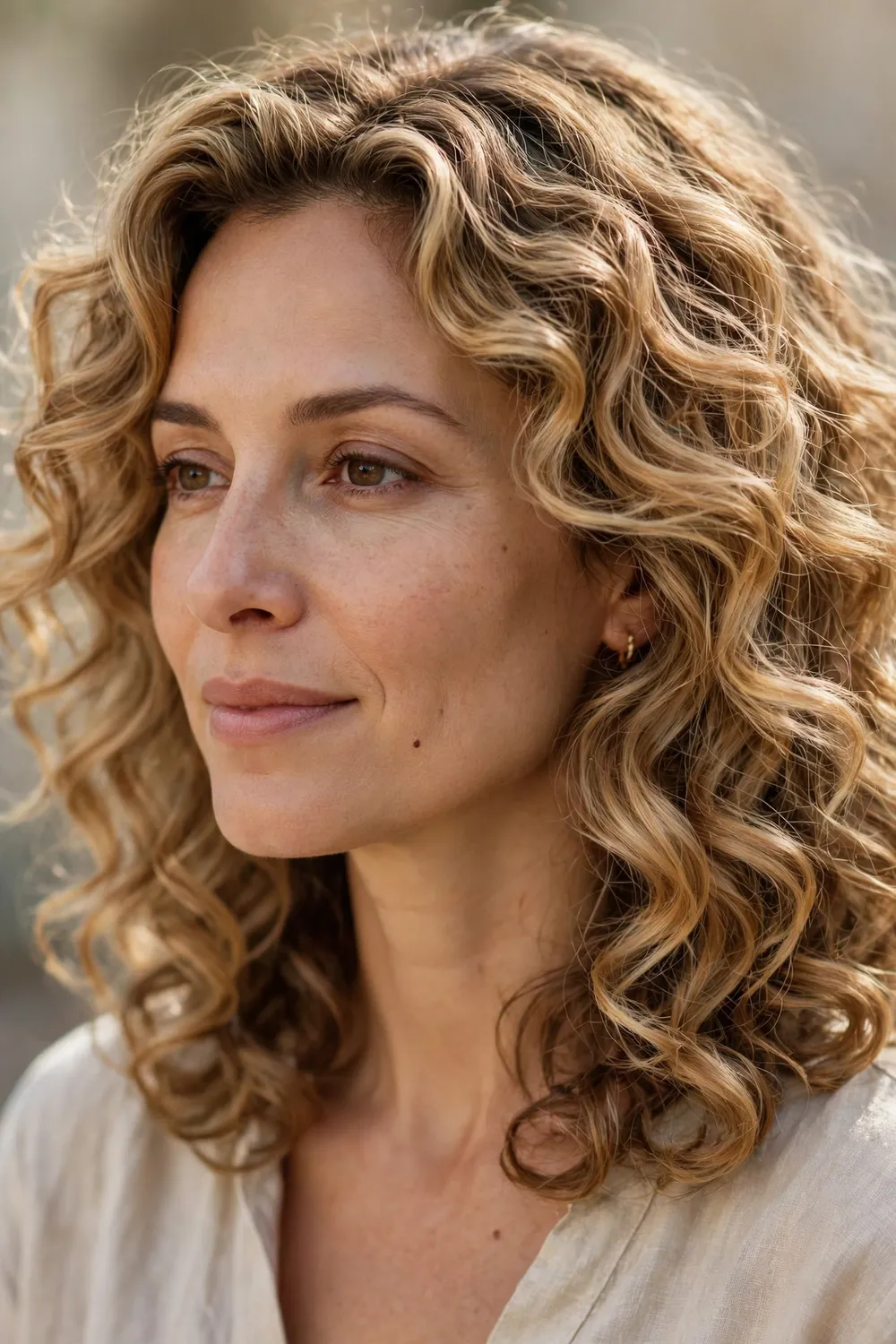
This is the longest cut in the round-up, and the one to pick if going properly short makes you nervous. The curls sit around your collarbone once they’ve sprung up. It suits loose to medium curls best, 2C through 3B, and flatters oval and long faces because the length gives the silhouette some weight at the bottom. Ask your stylist for long layers cut curl by curl, nothing blunt, with the front pieces a touch shorter to frame the face. A curl cream smoothed through soaking-wet hair, then a light gel scrunched in, gives definition without crunch. Air-dry if you can; diffusing on low heat keeps the volume in check. Trims every ten to twelve weeks keep it tidy, and the grow-out is graceful.
19. Curly Undercut
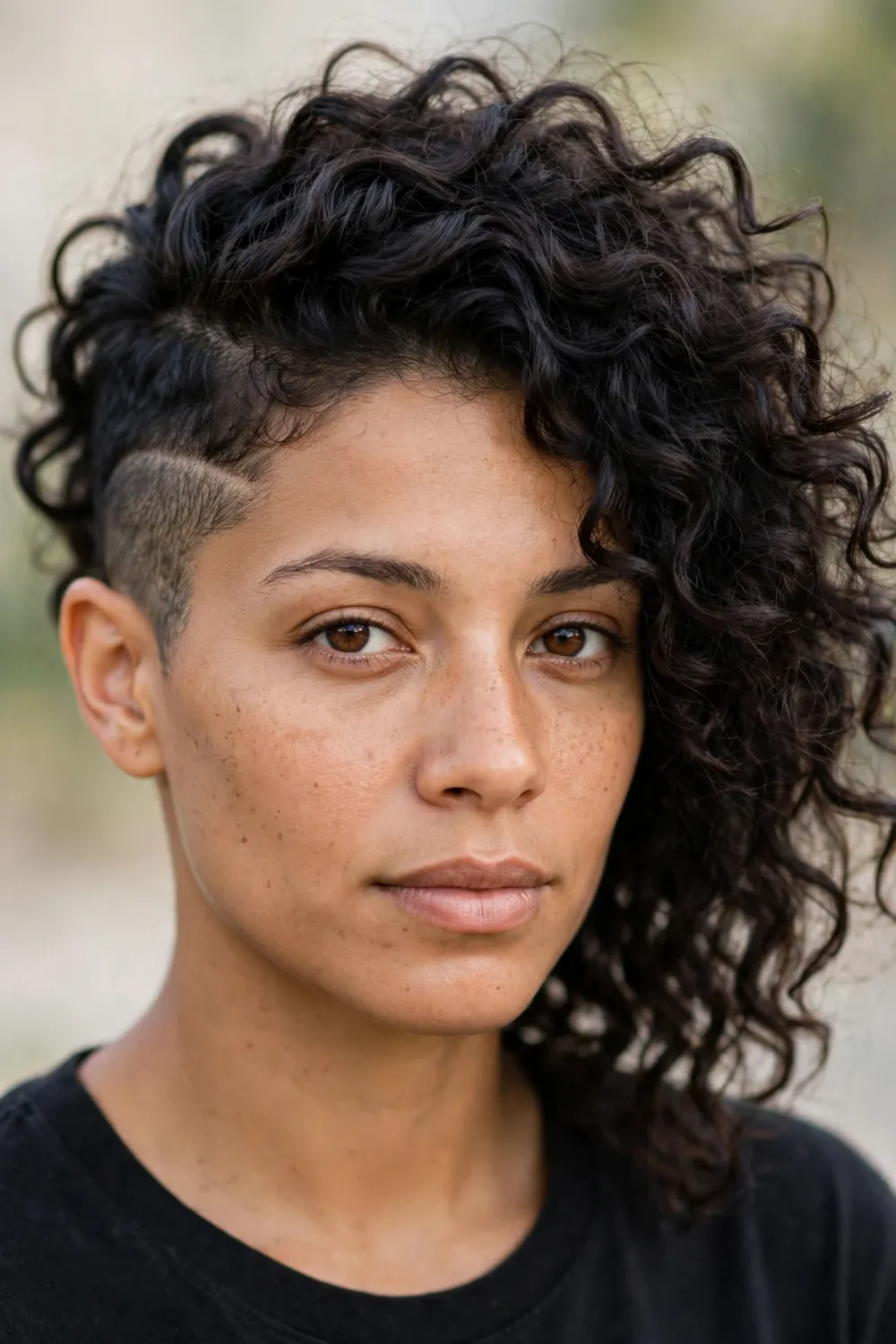
An undercut with curls on top sounds dramatic, and it can be, but the version that works day to day is subtler than you might think. One side — or the nape, to keep it hidden — is clipped short, while the curls above fall over it. It suits thick, springy curls, 3A to 3C, and flatters round faces — the height on top lengthens everything. Ask for the undercut to start where your hair naturally parts, and keep the top long enough to tuck behind the ear when you want it out of the way. A curl-defining cream and a little root-lift spray at the crown are all it needs. The honest catch: the undercut needs a tidy-up every three to four weeks.
20. Side-Swept Ringlet Bob
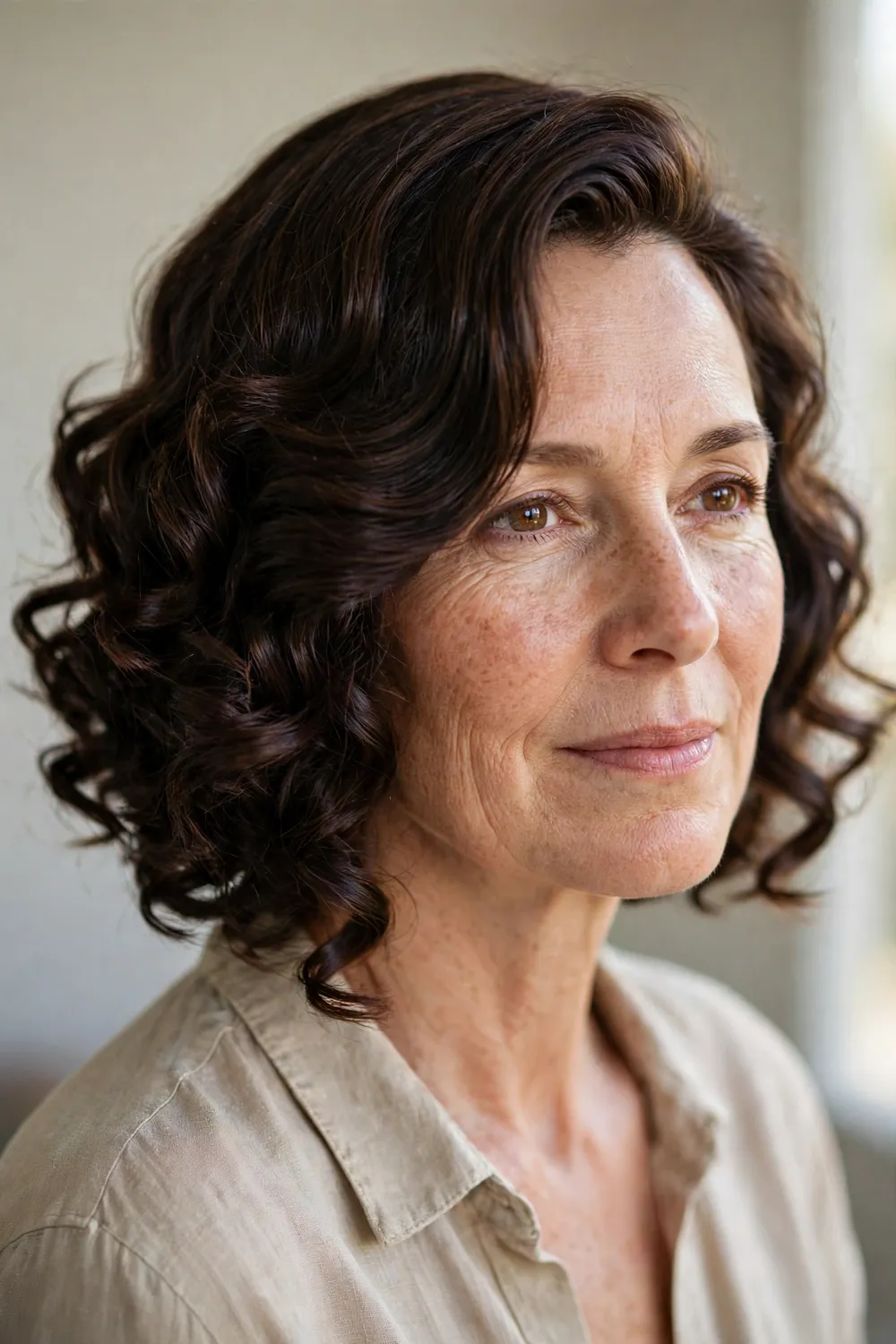
There’s something old-Hollywood about a bob where every curl falls in the same direction. A deep side part sends the ringlets sweeping across the forehead, and the length finishes just below the chin. It works best on defined curls, 3A and 3B, that hold a spiral — looser curls will need a wand or a twist set. Round and square faces benefit most, since the diagonal sweep softens the jawline. Ask your stylist to cut it slightly longer on the heavy side, with light layering underneath so the ends don’t puff out. Curl cream plus a little gel, applied section by section, keeps the ringlets separate. Diffuse on cool for shine. It needs a refresh on day two, but a mist of water and a little cream brings it straight back.
21. Soft Bowl Cut

The bowl cut has had a serious glow-up, and the curly version is genuinely charming when cut right. Instead of a harsh geometric line, the modern take is rounded and soft, with a light fringe and curls that fall just past the ears. It suits fine to medium curls, 2C through 3A, and flatters heart-shaped and oval faces — the curve mirrors the face. Ask for a rounded silhouette with the weight removed underneath, so it sits close at the nape. A lightweight curl cream is all you need; heavy products will flatten the fringe. Diffuse upside down for lift at the roots, then let it settle. A trim every six to eight weeks keeps the shape, and it grows out into a shag — no bad thing.
22. Pineapple Puff
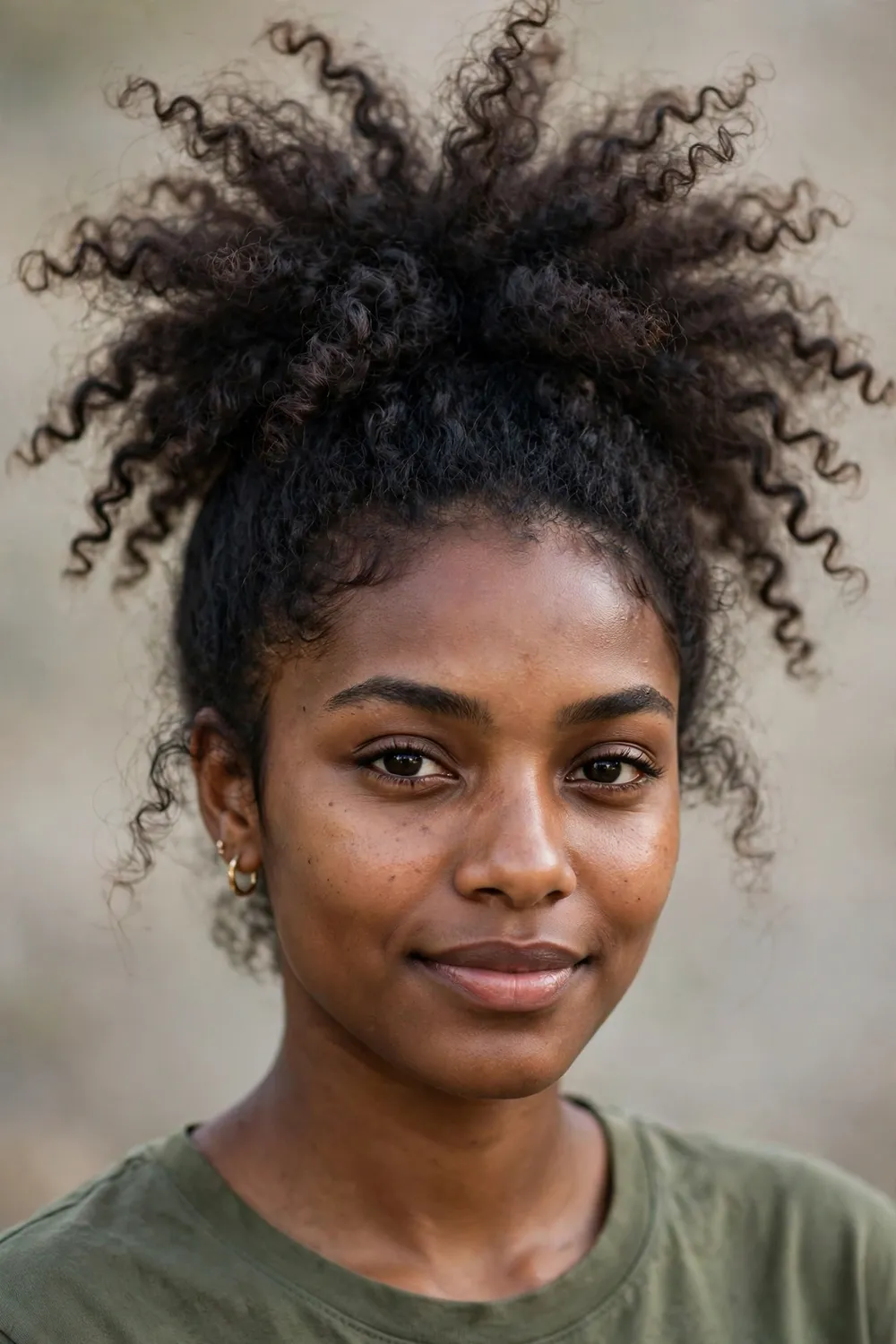
The pineapple puff is the easiest style here, and the most useful to have in your back pocket. You gather the curls high on the crown, secure them loosely, and let them fan out like a pineapple top — volume up top, clean edges at the sides. It suits medium to tight curls, 3B through 4A, and thick hair with a mind of its own. No stylist ask — just a satin scrunchie or loose band, since a tight elastic dents and breaks curls. Smooth the edges with a little gel on a soft brush, or leave them fluffy if that’s your thing. It doubles as a protective style overnight: sleep in it and your curls keep their shape till morning. Maintenance is basically nothing — ten seconds in the morning, done.
23. Braid-Trimmed Curly Bob
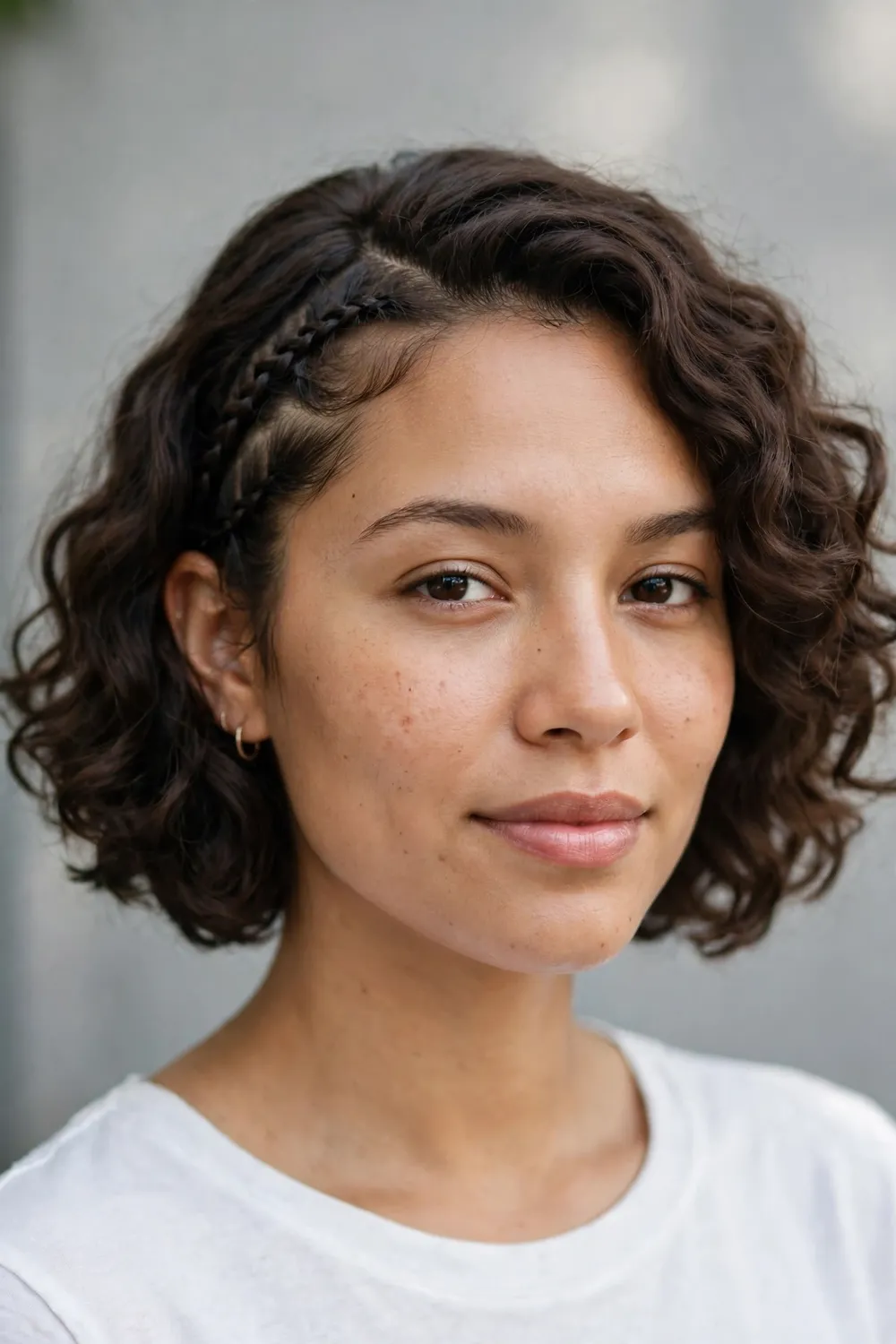
This bob has one small detail that changes the whole look: a thin braid along the hairline, like jewellery. The curls underneath stay soft and free, chin-length, while the braid adds a finished, put-together feel. It works on any curl type, though tighter curls hold the braid better without pins. It suits oval and round faces, and it’s ideal when your curls are having a messy day but you still need to look polished. Ask your stylist to keep the bob layered at the ends, so the braid sits flat instead of fighting bulk. Braid a thin section from one temple toward the other and pin it behind the ear; a dab of edge control keeps flyaways down. You re-braid it each morning — about two minutes once you’ve practised it.
24. Headband Tuck
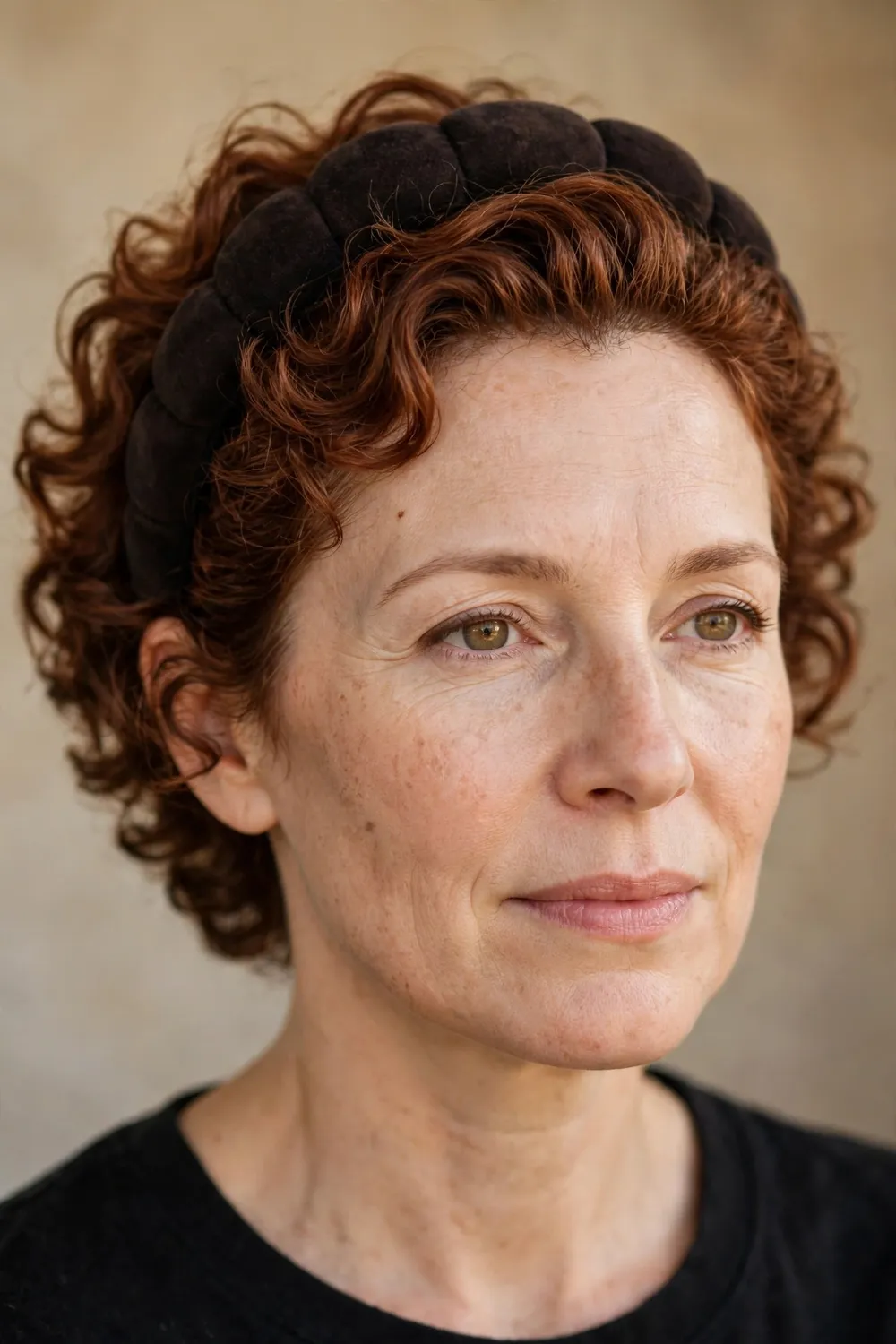
Some days you just need your curls out of your face, and the headband tuck does it better than a ponytail. A padded or fabric headband sits a few inches back from the hairline, and the curls are pushed up and over it so they spring forward at the front. It suits loose and medium curls, 2C to 3B, and flatters long faces — the crown volume balances the length. No cut needed — pure styling, and it works from a chin-length bob to a growing-out pixie. Put the headband on first, then lift the curls over it and fluff the front with your fingers. A light-hold cream keeps the shape without making the band slip. It doubles as a second-day rescue: flat overnight curls get instant lift and structure.
25. Pinned Curly Roll-Updo

When a short curly cut needs to look formal, the pinned roll is the answer — simpler than it looks. Sections of curl are rolled upward and pinned close to the head, building a soft, textured shape. It suits medium to tight curls, 3A to 4A — the curl pattern creates the texture; looser curls need pin-curling first. Round and square faces suit it, especially with a couple of tendrils left loose at the front. No specific cut needed — it works on any bob or lob — but ask for layered ends so they roll easily. Use a light pomade for grip, roll each section toward the crown and pin as you go, then finish with flexible-hold spray. It’s an occasion style, not an everyday one, but it holds well for a full evening.
26. Wash-and-Go Curly Crop
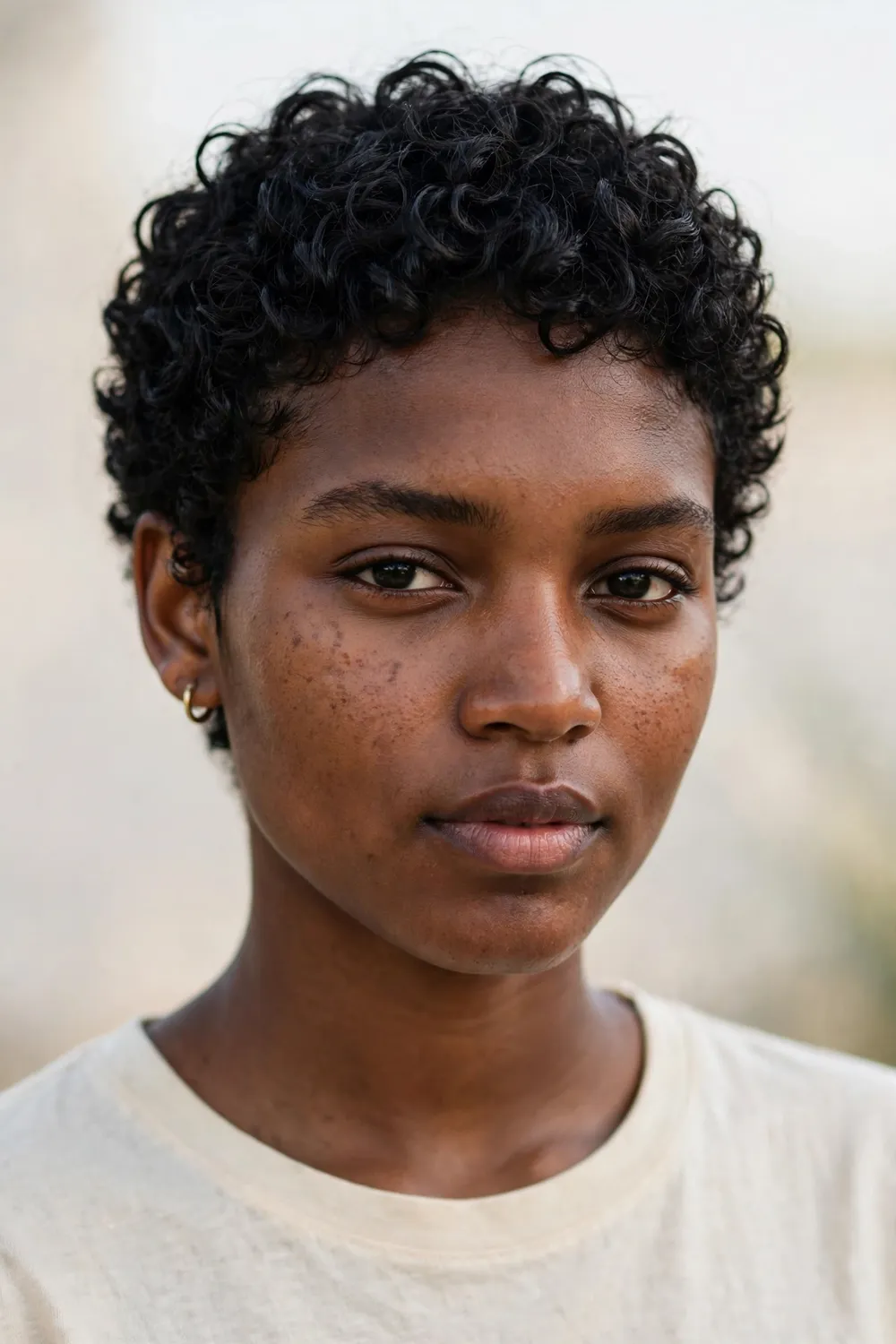
If the words “wash and go” make you suspicious, this is the cut that might change your mind. A wash-and-go crop is cut so the curls fall into place on their own — short layers, a shape that works with your pattern, no tricks required. It suits tight curls best, 3B through 4A — the shorter the hair, the more the pattern does the work; on looser curls it can look shapeless. Ask your stylist to cut it dry, curl by curl, leaving enough length on top for the curls to form — too short and they just frizz. After washing, smooth curl cream through soaking-wet hair, scrunch with a microfibre towel, and walk away. That’s it. Maintenance is the lowest of any cut here: wash, cream, done, plus a trim every six weeks.
27. Twist-Out Short Curls
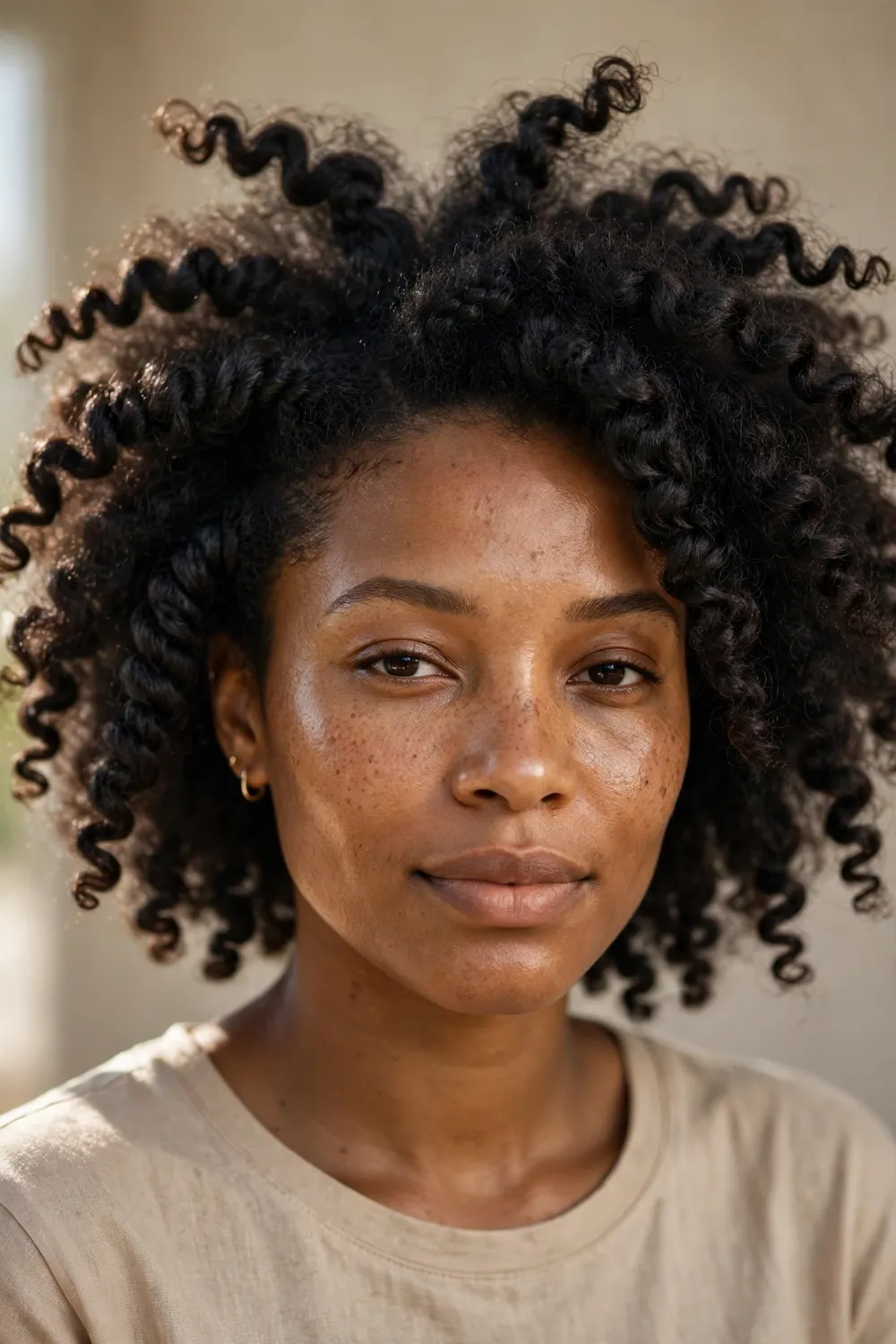
A twist-out gives you stretched, defined curls without heat — and on short hair, a shape a wash-and-go sometimes can’t. You twist damp, moisturised hair into two-strand twists, let them dry fully, then unravel them for elongated, bouncy curls. It suits tight curls and coils, 3C through 4B, and it’s a staple in our Natural Hairstyles for Black Women guide. Round faces benefit because the stretched curls add height at the crown. No special cut needed, though a tapered shape underneath stops it going too wide. Use a butter or cream with real slip, twist small sections for tighter definition, and don’t unravel until the hair is completely dry — that’s the rule that makes or breaks it. The style lasts two to four days; re-twist the front sections at night.
28. Mini Afro Tapered Cut
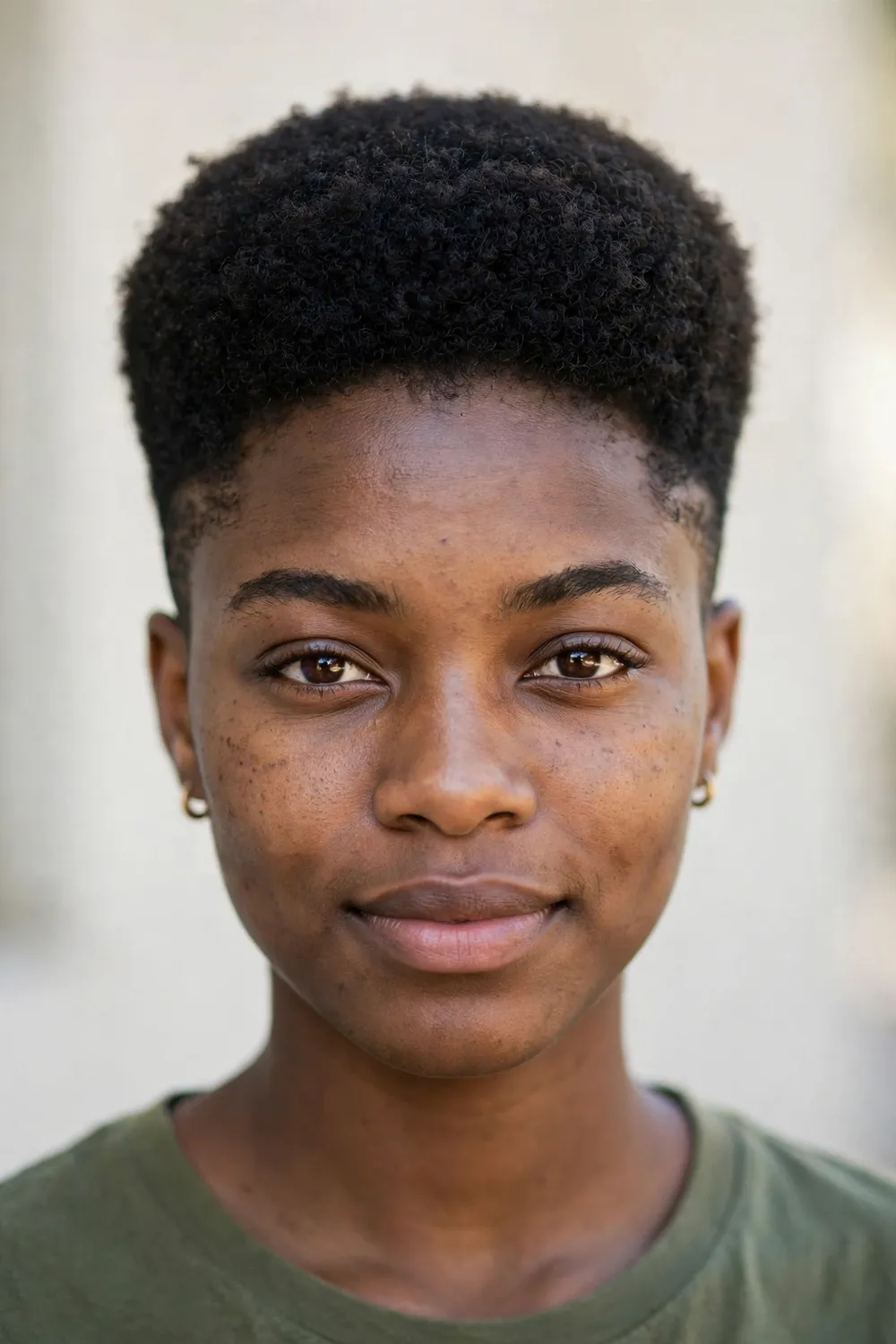
The mini afro with tapered edges is a shape cut, not just a length — rounded on top, neat at the sides and nape, fullness exactly where you want it. It suits coily and kinky hair, 4A through 4C, with enough density to hold a rounded silhouette; finer curls won’t get the same shape. It flatters oval and heart-shaped faces, and looks sharp with a defined hairline. Ask your barber for a taper fade at the edges and to shape the afro dry, picking it out fully before cutting — cutting it wet gives a lopsided result. A leave-in and a curl sponge or wide-tooth pick give definition and lift; a little oil on the ends stops it looking dry. A taper tidy-up every two to three weeks keeps the edges crisp.
29. Slicked-Back Curly Crop
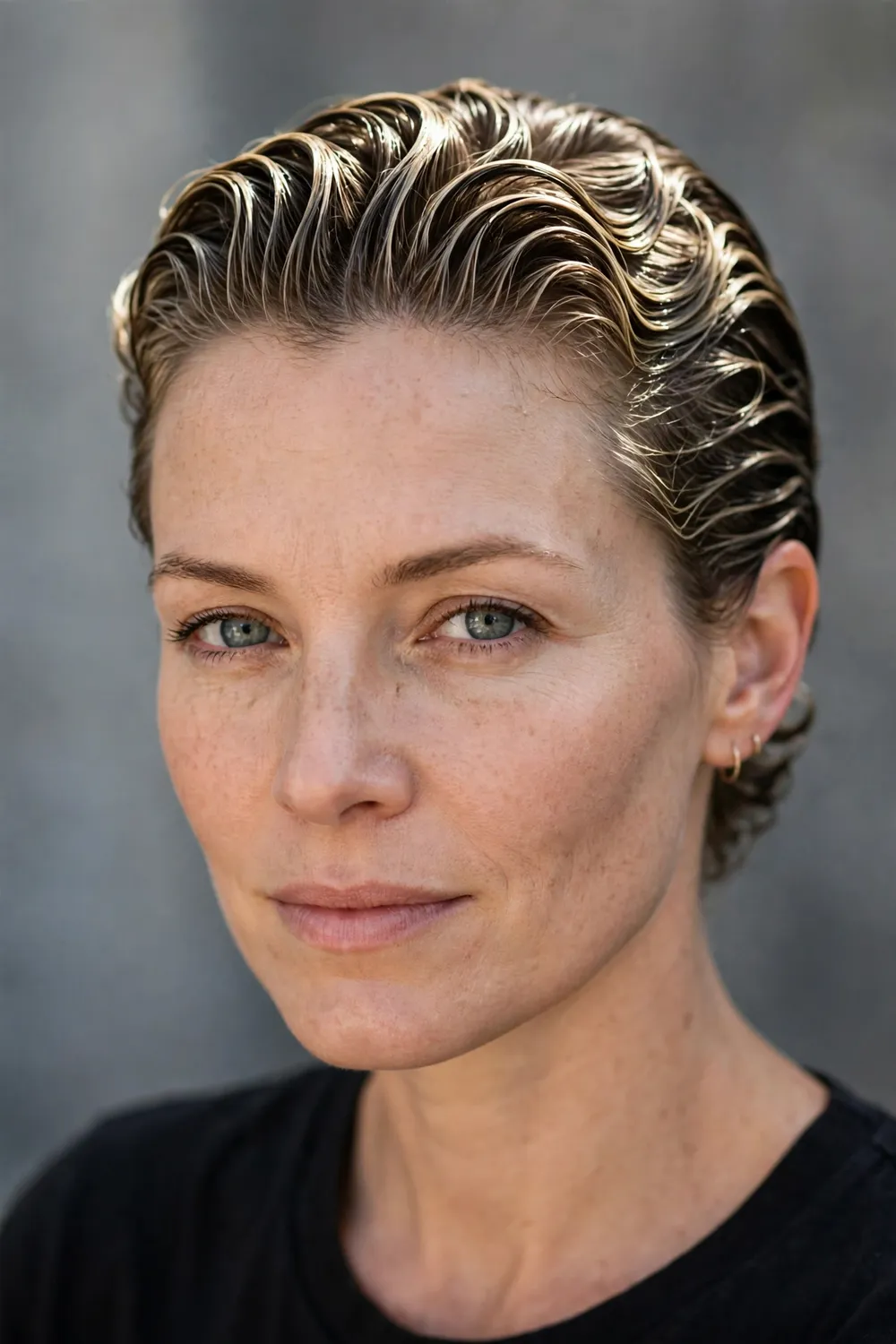
Slicked back doesn’t have to mean flat and severe — on curly hair it means polished, the curl texture still visible under the shine. The hair is combed back with gel, the sides kept close, and the curls on top left in a controlled, glossy sweep. It suits medium to thick curls, 3A to 3C, and works well on square and oval faces — it opens up the whole face. Ask for a short crop with enough length on top to slick back, and a clean taper at the sides. Apply strong-hold gel to damp hair, comb it back, and let it dry untouched — patience is the whole technique. It lasts all day, washes out easily, and a trim every four to six weeks keeps the taper tidy.
30. Curly Pixie with Forehead Tendrils

This is the pixie for anyone who loves the shortness but isn’t ready to show the whole forehead. The cut is close at the sides and back, like any pixie, but soft tendrils fall across the brow, making it feel gentler. It suits loose to medium curls, 2C to 3B, and flatters heart-shaped and oval faces — the tendrils soften the forehead line beautifully. Ask your stylist to keep the tendrils long enough to curl naturally, around two to three inches, and to taper the sides rather than buzzing them. A pea-sized amount of curl cream scrunched into damp hair is enough; too much and the tendrils clump and look stringy. The pixie shape needs a trim every four to five weeks, but the tendrils grow out gracefully in between.
31. Inverted Curly Bob
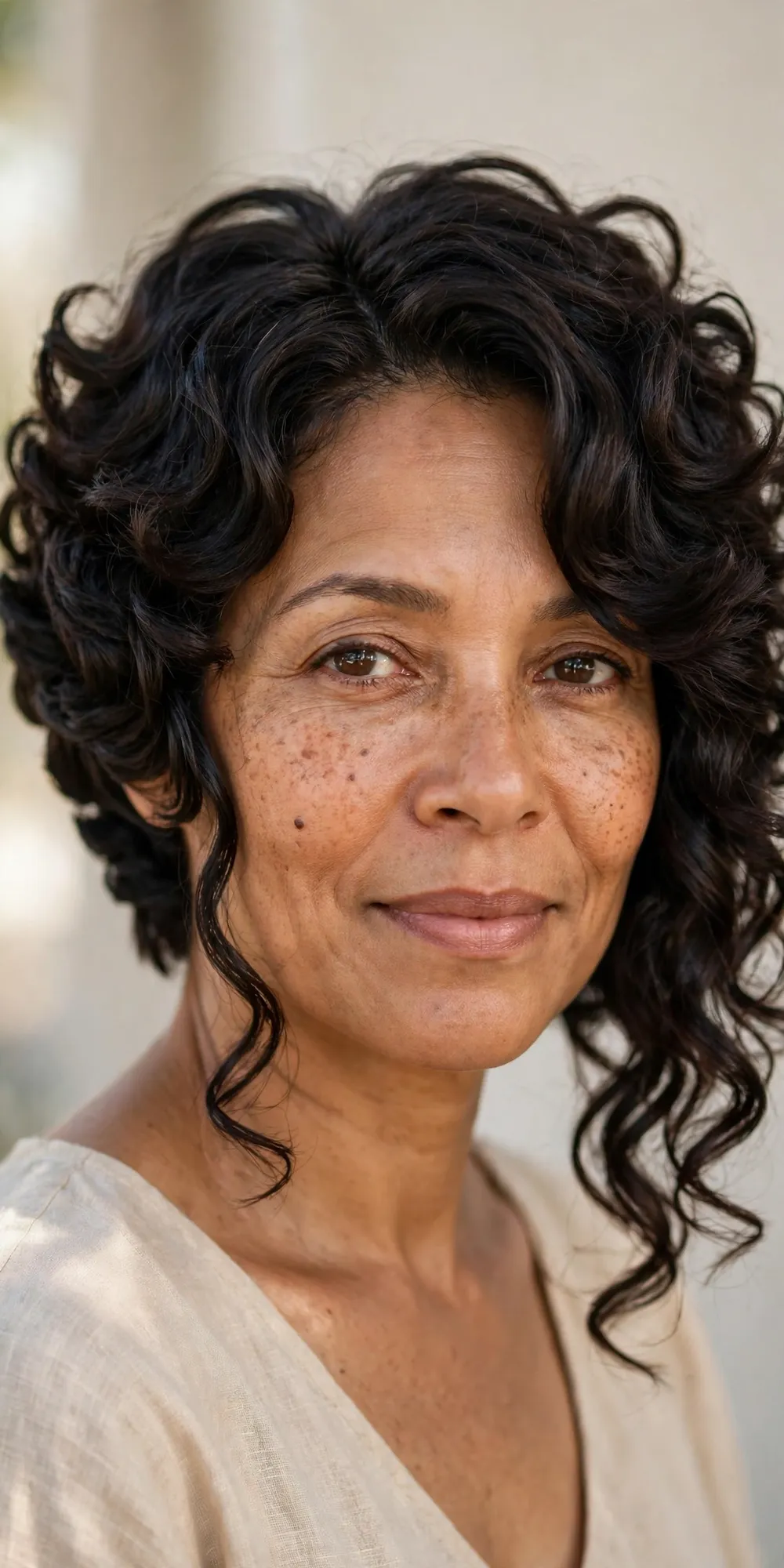
The inverted bob is stacked at the back and longer at the front — on curly hair, the weight at the back lifts the curls while the longer front pieces frame the face. It suits medium to tight curls, 3A to 3C, with enough density to hold the stacked shape — very fine curls can look thin at the back. Round faces benefit most — the longer front pieces create a slimming diagonal. Ask your stylist to cut the back shorter and stacked, front pieces reaching the chin, with layering underneath so the curls don’t bunch at the nape. Curl cream plus a diffuser on low heat gives volume at the back without frizz. The stacked back needs a trim every six weeks or it loses its shape and looks heavy.
32. Bantu Knots on Short Curls
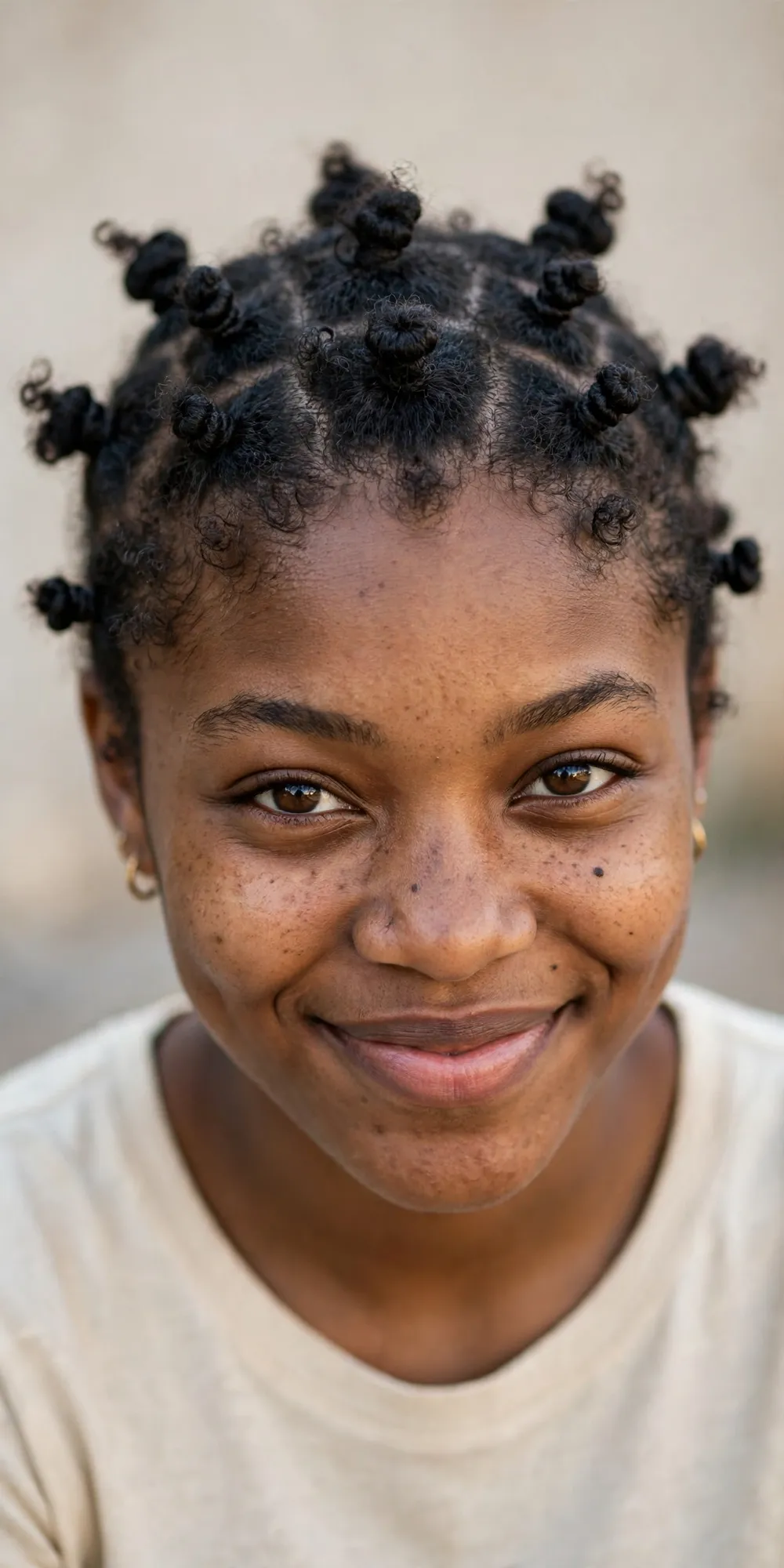
Bantu knots are playful and protective, and they double as a styling method — take them down and you get a gorgeous knot-out. On short hair the knots sit small and neat, looking intentional rather than half-finished. They suit tight curls and coils, 3C through 4C, and any face shape; the parting changes the look — centre feels classic, side feels modern. There’s no cut to ask for, but your hair needs to be at least three inches long to knot comfortably. Section the hair, twist each section into a small knot and tuck the end under; a little gel on the roots keeps them tidy. Knots last several days, and the knot-out afterwards is a whole second style for free.
33. Defined Ringlet Bob with Silk Scarf
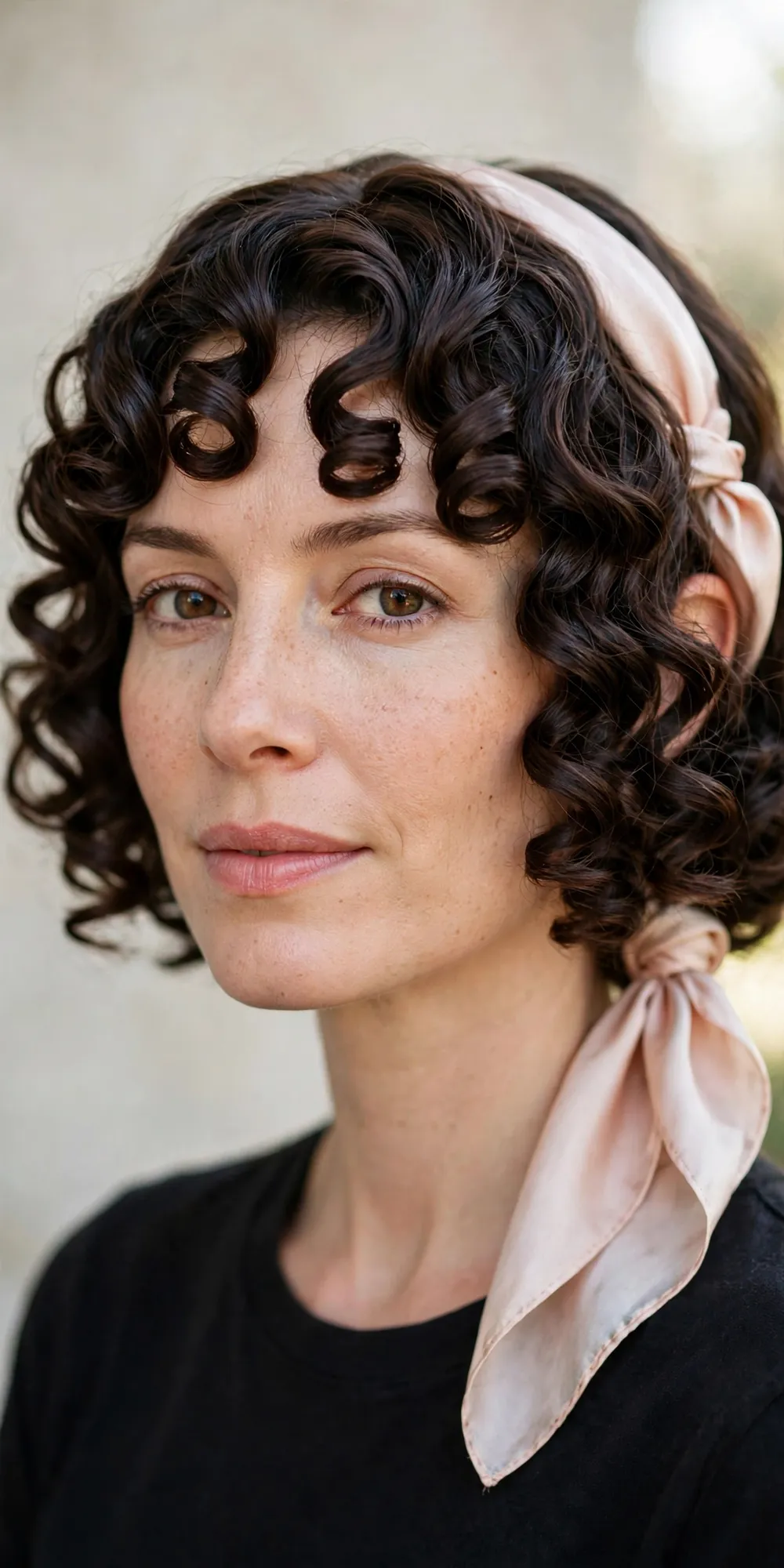
The last look is the most polished, and the scarf is what makes it. Spiral ringlets fall to chin length, defined and shiny, with a silk scarf tied at the side. It suits defined curls, 3A and 3B, that hold a spiral — looser curls need a few sections finger-coiled. Oval and heart-shaped faces suit it, and it’s ideal when a plain bob feels too plain. Ask for a chin-length bob with minimal layering, so the ringlets hang evenly. Define the curls with a cream-gel combo on wet hair, diffuse gently, then tie the scarf last — never before, or it flattens the crown. The ringlets need a day-two refresh with water and cream, but the scarf hides a multitude of sins on day three.
How to Style Short Curly Hair
Short curls are easier to style than long ones — less hair, less weight, faster drying — but they still need a routine that works with the curl pattern instead of against it. Curl patterns vary enormously, from loose waves to tight coils, and the Curly hair article on Wikipedia has a good breakdown of the types if you want to pin yours down. Here’s the wash-day routine that keeps short curly hair defined, soft, and frizz-free.
Step 1: Detangle while it’s wet. Never brush dry curls. In the shower, with conditioner in your hair, work through tangles gently with your fingers or a wide-tooth comb, starting at the ends and moving up. This is the only time detangling should happen.
Step 2: Apply cream and gel to soaking-wet hair. Straight after rinsing, while the hair is still dripping, smooth a curl cream through in sections, then scrunch in a light gel. Products spread evenly on wet hair and lock the curl pattern in as it dries — on damp hair they just sit on the surface.
Step 3: Scrunch out the excess water. Use a microfibre towel or an old cotton T-shirt, never a rough bath towel. Cup the curls upward and squeeze gently. This encourages the curl to spring up instead of being pulled straight by the towel’s weight.
Step 4: Diffuse or air-dry — hands off. If you’re diffusing, use low heat and low speed, cupping sections into the diffuser bowl and holding still for a minute at a time. If you’re air-drying, just leave it alone. Touching curls while they dry is the fastest way to create frizz.
Step 5: Scrunch out the cast. Once the hair is completely dry — and only then — scrunch the curls again with your hands, with a drop of oil on your palms if you like. The crunchy gel cast breaks apart and you’re left with soft, defined curls that actually move.
5 Mistakes to Avoid with Short Curly Hair
1. Dry brushing. A brush through dry curls breaks the curl pattern apart and turns it into a puffball. If you need to smooth something, do it with wet, conditioned hair and your fingers.
2. Cutting wet without a shrinkage allowance. Curls spring up as they dry — sometimes by several inches. A cut that looks perfect when wet can end up far shorter than you wanted. Always ask your stylist to cut dry, or to leave extra length for shrinkage.
3. Heavy layers. Too many short layers in curly hair can create a triangle shape: flat at the top, wide at the bottom. Layers should be long and well-blended, with the weight removed underneath rather than chopped in from the top.
4. Touching curls while they dry. Every time you run your fingers through drying curls, you break the cast and invite frizz. Set the style, then leave it alone until it’s fully dry.
5. Skipping trims. Short curly hair loses its shape fast as it grows, and split ends travel up the curl and make it frizzy. A trim every six to eight weeks — four to five for a pixie — keeps the shape crisp and the ends healthy.
Frequently Asked Questions
Which hairstyle is best for short curly hair?
It depends on your curl type and how much styling time you have. For loose curls, a rounded curly bob or a layered shag gives you shape without daily effort; for tighter curls, a tapered pixie or a wash-and-go crop lets the pattern do the work. If you only pick one thing, choose a cut that’s shaped for shrinkage — that’s what makes the difference between a cut that looks good on day one and one that still looks good on day thirty.
How do you make short curly hair look good?
The secret is working with your curl pattern, not against it. Get a cut designed for curls — dry-cut, shaped for shrinkage — then style on soaking-wet hair with a curl cream and a light gel, and don’t touch it while it dries. A good cut does most of the heavy lifting; the products just finish the job. If your curls look flat, the problem is almost always too much product or a cut with no layers, not the hair itself.
How do I style short curly hair after a shower?
Smooth curl cream through soaking-wet hair, scrunch in a light gel, then squeeze out excess water with a microfibre towel or cotton T-shirt. Diffuse on low heat or let it air-dry completely without touching it, then scrunch out the gel cast with a drop of oil on your hands. The whole routine takes about ten minutes of active work, plus drying time — and it works on every cut in this list, from a pixie to a collarbone lob.
How do I protect short curly hair while sleeping?
A satin or silk pillowcase is the simplest fix — it cuts down on friction, so you wake up with your curl pattern mostly intact instead of flattened and frizzy. For more protection, gather the curls into a loose pineapple puff on top of your head with a satin scrunchie, or wrap them in a silk scarf. In the morning, mist with water and scrunch in a little cream to bring the curls back.
What are the best products for defining curls in short hair?
A lightweight curl cream for moisture and a light-hold gel for definition are the two essentials — creams alone can leave curls soft but shapeless, and gel alone can feel crunchy. For looser curls, a mousse works well as a lighter alternative to gel. Skip heavy butters and oils on fine curls, since they weigh the pattern down; save those for thicker, tighter curls that need the extra moisture.
How do I refresh short curls between wash days?
Mist the hair lightly with water until it’s damp, then smooth a small amount of curl cream or leave-in through the flattened sections and scrunch. Focus on the pieces that have lost their shape — usually the crown and the front — rather than wetting the whole head. If a few curls are stubborn, twist them around your finger while they’re damp and let them dry; that usually brings them back. A silk scarf or a headband can hide anything that won’t cooperate.
How often should I wash short curly hair?
Most people with short curly hair wash two to three times a week — often enough to keep the scalp clean, but not so often that the curls dry out. If your hair is fine or gets oily quickly, you might wash every other day; if it’s thick or coily, once a week with a co-wash in between can work well. Watch how your hair responds rather than following a rigid schedule, and use a sulphate-free shampoo so you’re not stripping the natural oils every wash.
Final Word
Short curly hair is one of those things that looks effortless when it’s done right — and the reason it looks effortless is that the cut is doing the work, not you. Pick the style that matches your curl type and your real life, find a stylist who cuts curls dry, and give the wash-day routine a couple of weeks to become habit. Your curls already know what to do; they just need a cut that lets them. For more ideas, have a browse through the Hair Groom blog — and if you’re deciding between a bob and a pixie, our Bob Hairstyles and Pixie Hairstyles guides are a good next stop. If you’re weighing a shorter cut against a longer one, the Hairstyles for Short Hair round-up covers the full range, and if you’re curious how these same ideas translate to a men’s cut, our Curly Hairstyles for Men guide is worth a look.