

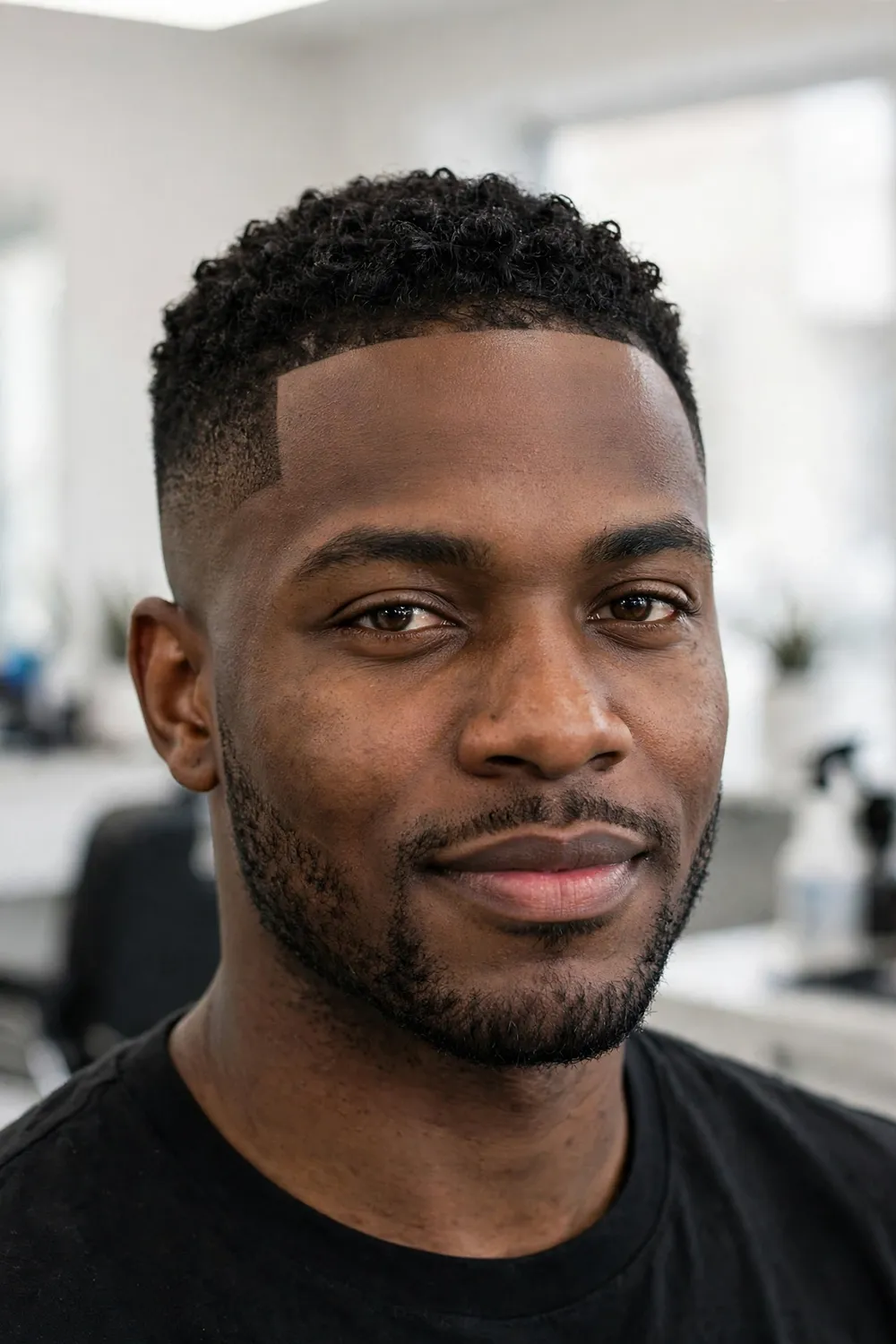
The best fade haircuts for Black men are the ones that work with your hair, not against it — a clean blend on the sides, a top that suits your curl pattern, and a hairline your barber can keep sharp for at least two weeks. If you only need three to take to the chair, start here: the Low Fade for everyday polish, the Mid Fade with Line Up for the sharpest contrast, and the Skin Fade with Curly Top when you want your texture to do the talking.
| Fade height | Where it starts | Best for | Upkeep |
|---|---|---|---|
| Low | Just above the ears and sideburns | Round and oval faces; first-timers; office-safe | 2–3 weeks between cuts |
| Mid | Around the temples, level with the eyebrows | Most face shapes; waves and curls; balanced contrast | 2 weeks, more if skin-blended |
| High | Above the temples, close to the crown | Square and oblong faces; bold, sharp looks | 10–14 days to stay crisp |
| Skin (bald) | Blended down to bare skin at any height | Maximum contrast; short curls and waves | 10–14 days; edges grow back fast |
| Taper | Gradual blend at the sideburns and neckline only | Longer tops; afros; the slowest, softest grow-out | 3–4 weeks between cuts |
1. Low Fade

The low fade starts just above the ears and climbs so gently you barely notice where the hair ends and the blend begins. That subtlety is the whole point — sharp without shouting, and the default for men who need to look polished at work and still good at the weekend. It suits oval and round faces best, and it works on every texture from 4A coils to 4C tight curls. Ask your barber for a low fade with a #1 guard fading into a #2, keeping the top at whatever length you already have. Finish with a light leave-in cream and a dab of shea butter on the edges. It grows out gracefully, so three weeks between cuts is realistic, and a quick line-up in week two keeps it alive.
2. Mid Fade

The mid fade sits halfway between subtle and bold — the blend starts around the temples, about level with your eyebrows, and gives you proper contrast between the sides and the top without going full skin. It’s the one I point most people toward when they can’t decide — it flatters nearly every face shape and handles both short curls and a taller top. On 4B and 4C hair it frames the texture beautifully; on 4A coils it keeps things tidy. Tell your barber: mid fade, #0.5 to #1 at the bottom fading to a #3, top left at 1–2 inches. A matte clay gives the top some grip without shine. The trade-off is maintenance — the fade line shows after about ten days, so book every two weeks if you want it consistently sharp.
3. High Fade
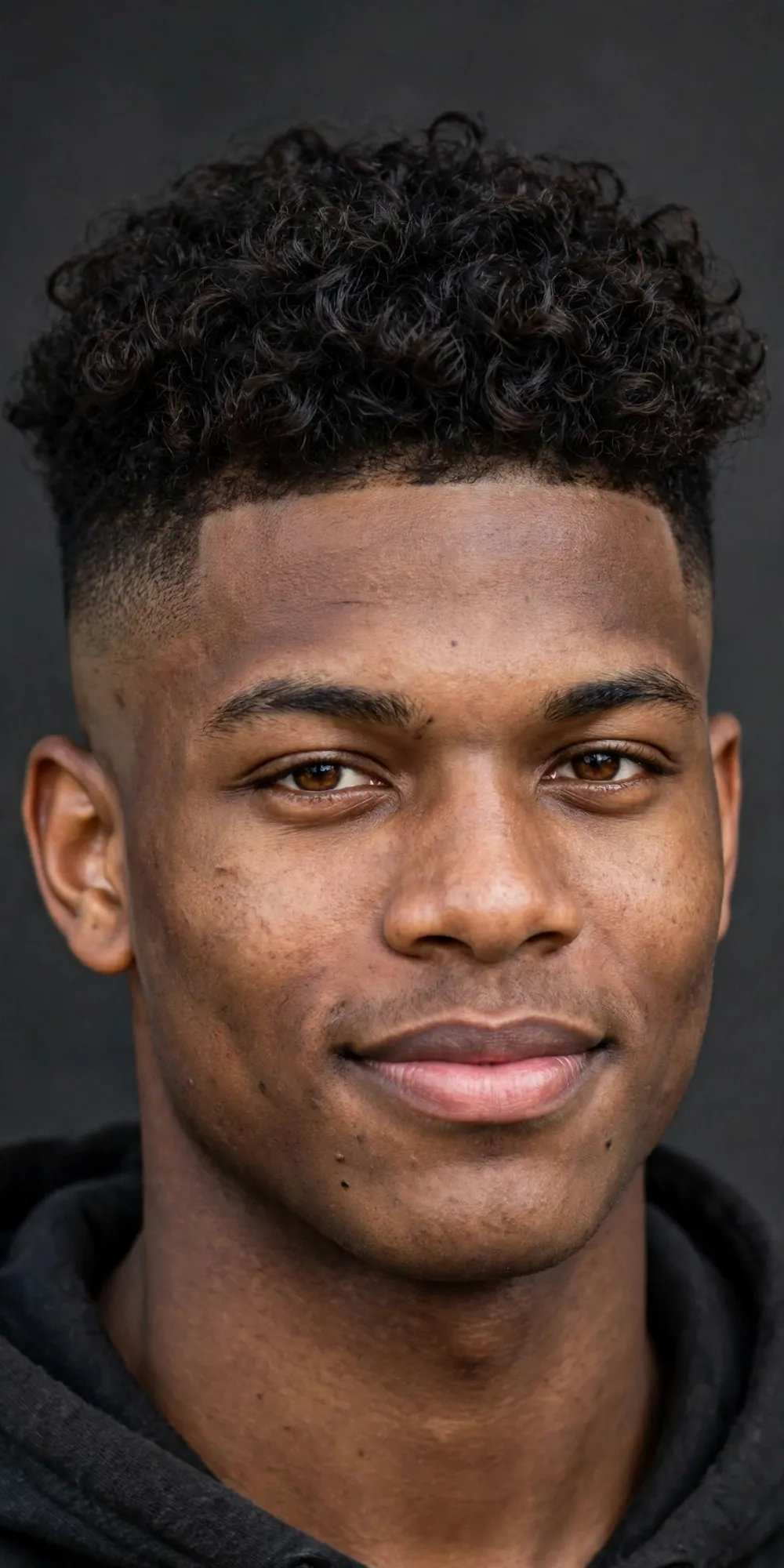
A high fade takes the blend up above the temples, close to the crown, and the contrast it creates is dramatic — the sides nearly disappear while the top takes all the attention. It’s a young, confident cut, and it suits square and oblong faces well because the height on the sides balances a longer face. It works best when the top has something to show: coils, curls, waves, or a tall afro. Ask for a high fade with a #0 or foil-shaved base blending into a #2, and be specific about how much top to keep. Finish with a curl-enhancing cream so the top doesn’t dry out. Be ready for the upkeep — a high fade loses its edge in about ten days, so it’s for men who don’t mind the chair every other week.
4. Taper Fade

The taper fade is the quiet professional of the fade family. Instead of taking the sides down to skin, it blends gradually at the sideburns and the nape, leaving the rest of the hair untouched. The result reads as neat and intentional rather than dramatic, which is why it survives boardrooms and weddings without a second thought. It suits every face shape and every texture — 4A through 4C, waves, locs, even a full afro — because it just tidies the edges without changing the silhouette. Ask for a taper with a #2 guard at the sideburns fading to a #4, and a clean taper at the neckline. Whatever you already use on top is fine; add a little edge control. It grows out so gracefully that three to four weeks between cuts is completely normal.
5. Drop Fade
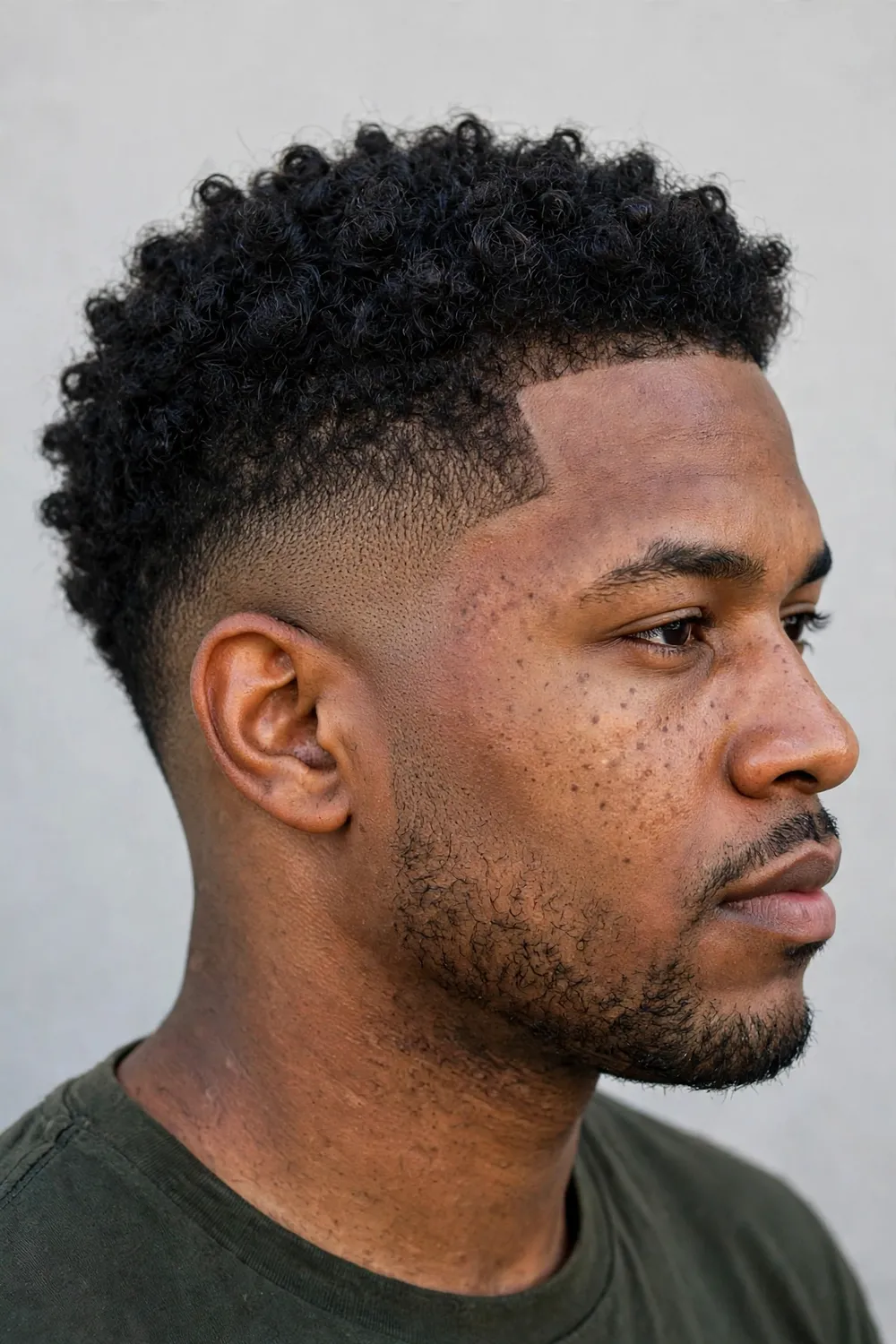
The drop fade is all about the curve. Instead of running straight around the head, the fade line dips down behind the ear, following the shape of your skull — from the front it looks like a regular mid fade, from the side it drops into something far more sculpted. That arc suits oval and round faces nicely, adding structure without adding height, and it pairs well with curly tops, waves and short afros. It’s especially good on 4B and 4C hair, where the curve shows off the texture contrast. Tell your barber: drop fade, starting at a #0.5 and dropping behind the ear, blended up to a #2. A light pomade or curl cream keeps the top defined. The curve means grow-out shows a little sooner than a straight fade, so plan on a touch-up every two weeks.
6. Skin Fade

The skin fade — or bald fade — takes the sides right down to bare skin before blending upward, and nothing else in this list delivers that much contrast. The top looks taller, the shape looks sharper, and the whole cut reads as deliberately done rather than just tidy. It flatters oval and square faces and works across all textures, though it looks especially good with short curls or a cropped top. Ask for a skin fade with a foil shaver at the base, blending from skin through a #0.5 into a #2. Aftercare matters here: a salicylic toner or gentle exfoliant a couple of times a week keeps ingrown hairs away. It’s the highest-maintenance fade on this list — ten to fourteen days and the skin line starts to blur.
7. Burst Fade
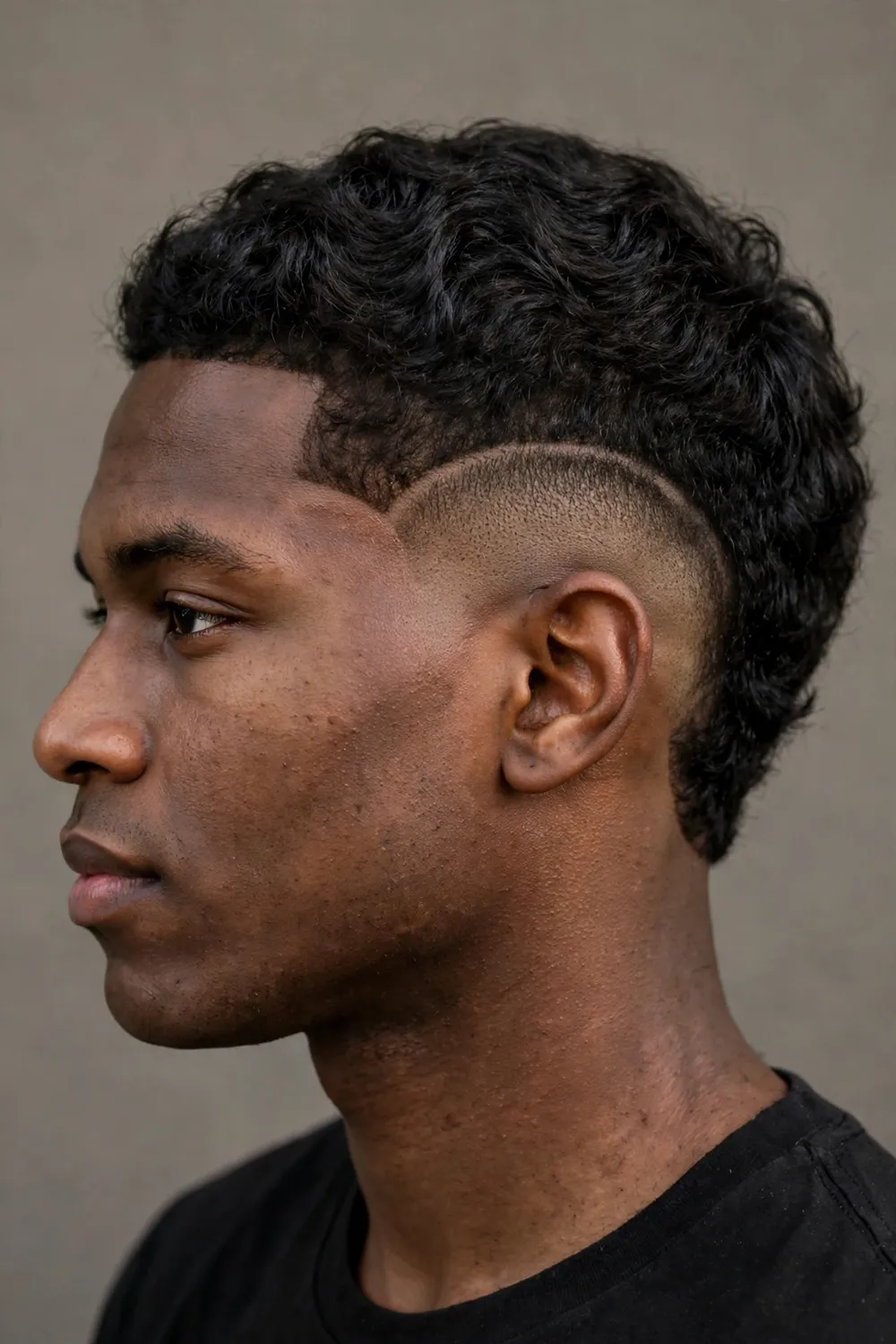
The burst fade arcs around the ear in a semicircle, fading out from the temple and round the back, while the hair at the nape stays longer. It’s the fade for men who want something distinctive without committing to a full high fade — the burst shape gives you that sculpted look from every angle. It suits round and heart-shaped faces, adding definition where a straight fade would disappear, and it works beautifully on 4A–4C curls, twists and locs. Ask your barber for a burst fade with a #0.5 base, keeping the length at the back of the neck untouched. A curl sponge or light cream defines the top nicely. The curved blend grows out unevenly compared to a straight fade, so expect to be back in the chair within two weeks to keep the arc clean.
8. Temp Fade
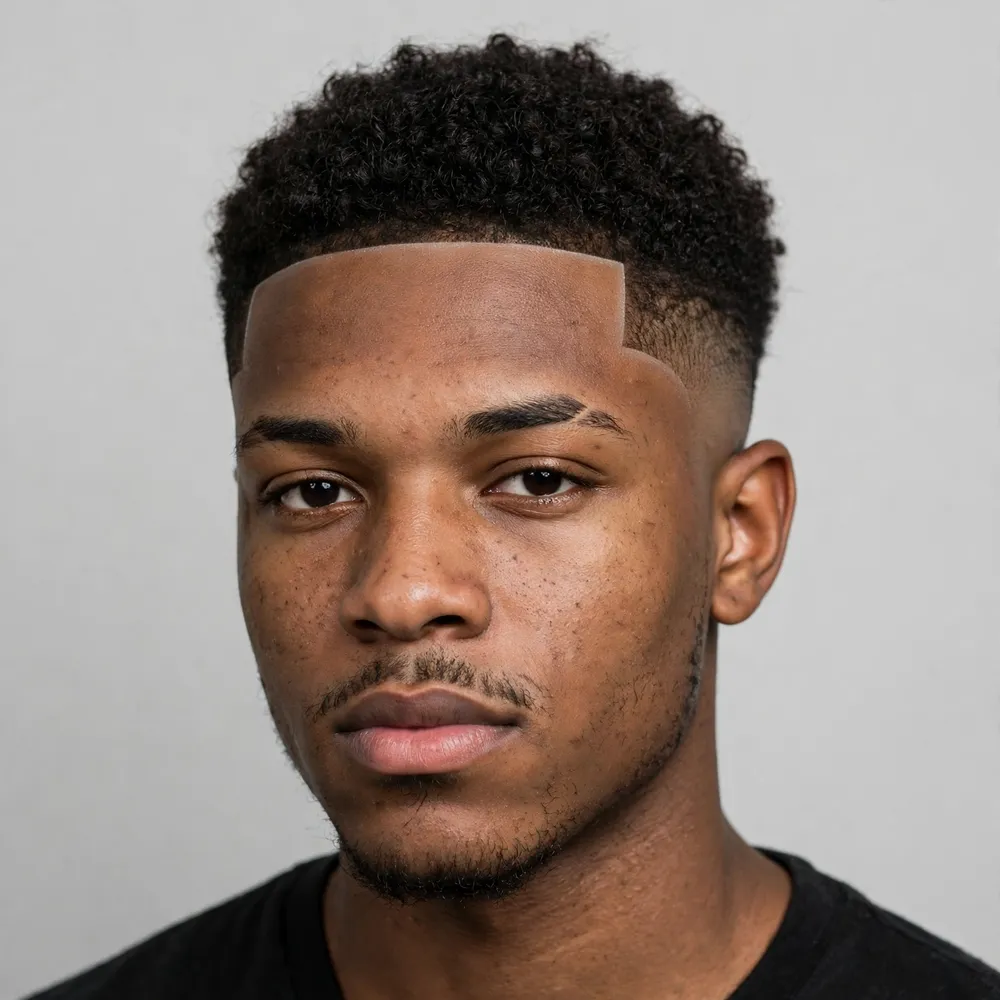
The temp fade — short for temple fade, also called the Brooklyn fade — concentrates all the fading at the temples and leaves the rest of the hair alone. It’s a small change with a big effect: the sharp fade at the corners of the forehead frames your face and makes everything else look intentional, whether the top is an afro, waves or short curls. It’s a great choice for square and oval faces, and it suits every texture from 4A to 4C. Ask for a temp fade with a #0 at the temple blending to a #2, with a clean line-up if you want the edges razor-sharp. Keep a little edge control in your kit for mornings. Since most of the hair is untouched, it stretches to three weeks easily, and a temple touch-up takes five minutes.
9. Afro Fade

The afro fade is exactly what it sounds like — a full, proud afro on top with the sides faded clean so the shape of the afro becomes the whole statement. The contrast between the height on top and the tight blend on the sides is what makes it work. It suits round and oval faces best, since the volume on top adds length to the face, and it needs 4B or 4C hair with enough density to hold the shape. Ask your barber for a mid or high fade — #1 fading to #3 — with the afro shaped to your head, not cut into a perfect circle. A pick and a leave-in moisturiser are non-negotiable. The fade needs a touch-up every two weeks, and the afro needs weekly picking at home.
10. High Top Fade
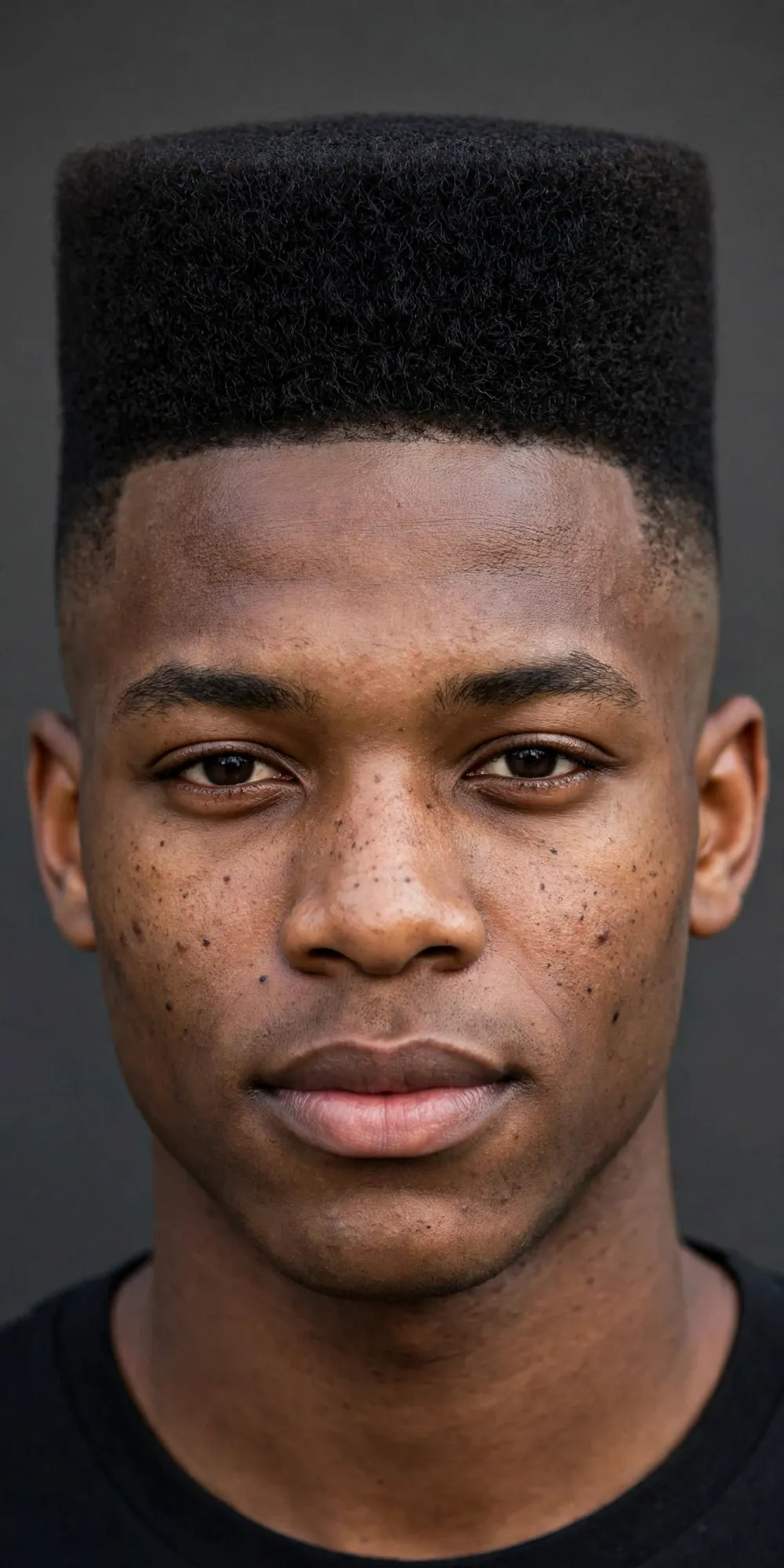
The high top fade is the old-school icon — a tall, flat-topped afro, four to six inches high, with the sides faded tight. It turned heads in the nineties and it still does now, because nothing else gives you that much vertical presence. It suits oblong and round faces, where the height balances the shape, and it needs 4C hair with serious density to stand up; finer 4A curls won’t hold the flat top. Ask for a high top with faded sides — #0.5 blending to #2 — and a flat, level top, cut with clippers over a comb. You’ll need a strong-hold pomade or styling gel, plus a pick to lift it daily. Honest word: this is a commitment — daily shaping, a durag at night to hold the line, and a barber visit every two weeks to keep the top level.
11. Fade with Line Up

The line up is the detail that turns a good fade into a finished one. A razor or trimmer carves your hairline into a sharp, squared edge — forehead, temples, sideburns — so the cut looks precise from across the room. It works with any fade height, more a finishing touch than a style on its own, and it suits every face shape, most dramatically square faces, where the angles echo the jawline. It works on all textures. Tell your barber which fade you want first, then add “with a line up” — and be clear whether you want a natural hairline or a fully squared one. Keep edge control and a soft brush for mornings, and don’t pick at the corners between cuts. The catch is regrowth: the line softens within a week, so weekly touch-ups are the price of the razor-sharp look.
12. Short Afro Curls with Low Skin Fade
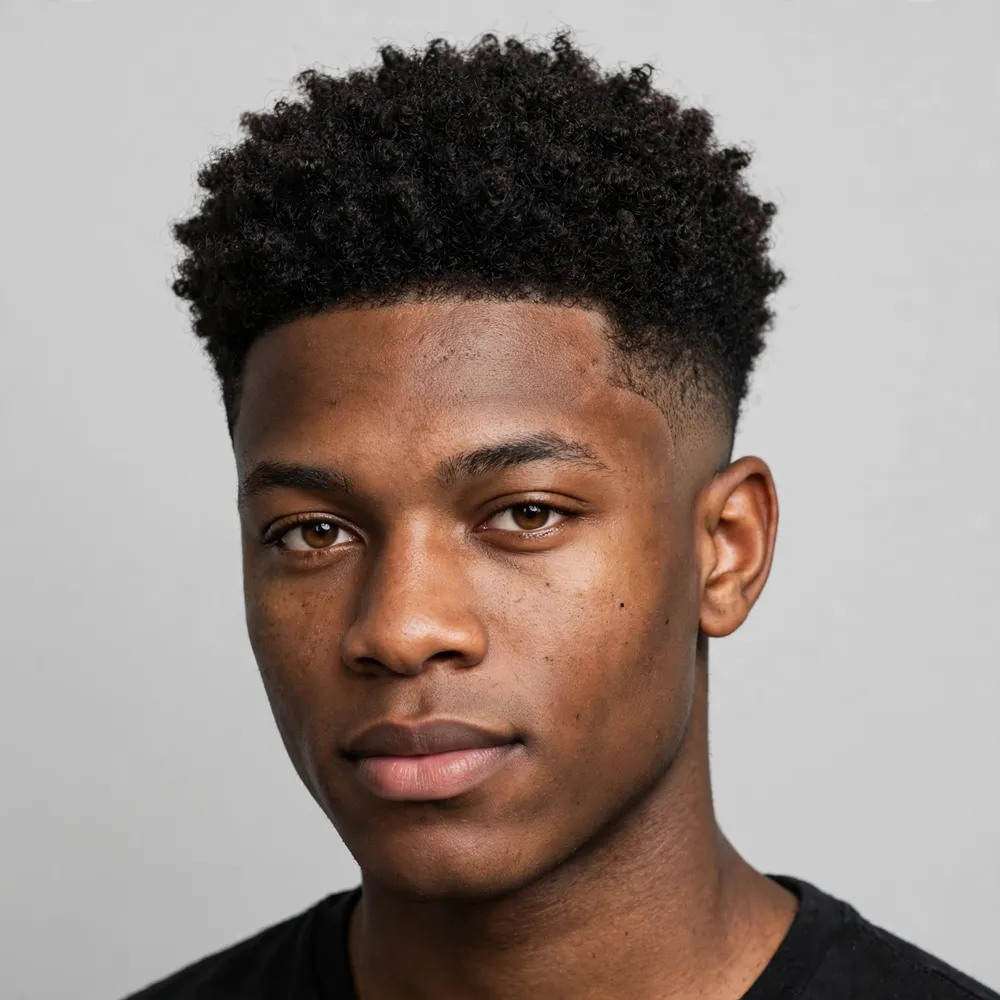
Short afro curls on top with a low skin fade underneath looks effortless but does a lot of work. The curls stay dense and textured on top while the skin fade, starting low near the ears, keeps the sides surgically clean — softness and sharpness in one cut. It suits oval and round faces, and it’s ideal for 4B and 4C hair, where the coils are tight enough to hold a dense, defined shape at short length. Ask your barber for a low skin fade — foil-shaved at the base, blending to a #1 — with the top left at about an inch and shaped with a sponge. A curl cream or sponge is your best friend here. The skin fade is the demanding part: ten to fourteen days and it needs re-blending, even though the curls on top will go longer.
13. Twists Fade

The twists fade pairs short two-strand twists on top with a low burst fade underneath — protective, textured and sharp all at once. The twists give you definition without needing a sponge or curl cream every morning, and the burst fade frames them so the whole head looks sculpted. It suits oval and heart-shaped faces, and it works best on 4B and 4C hair, which holds twists well; looser 4A coils can work too but the twists may unravel sooner. Ask for a low burst fade with a #1 base and twists of about an inch on top. A light oil or butter keeps the twists from drying out. Re-twist every two to three weeks, keep the fade touched up in between, and sleep in a durag or bonnet to keep them tidy.
14. Dread Fade
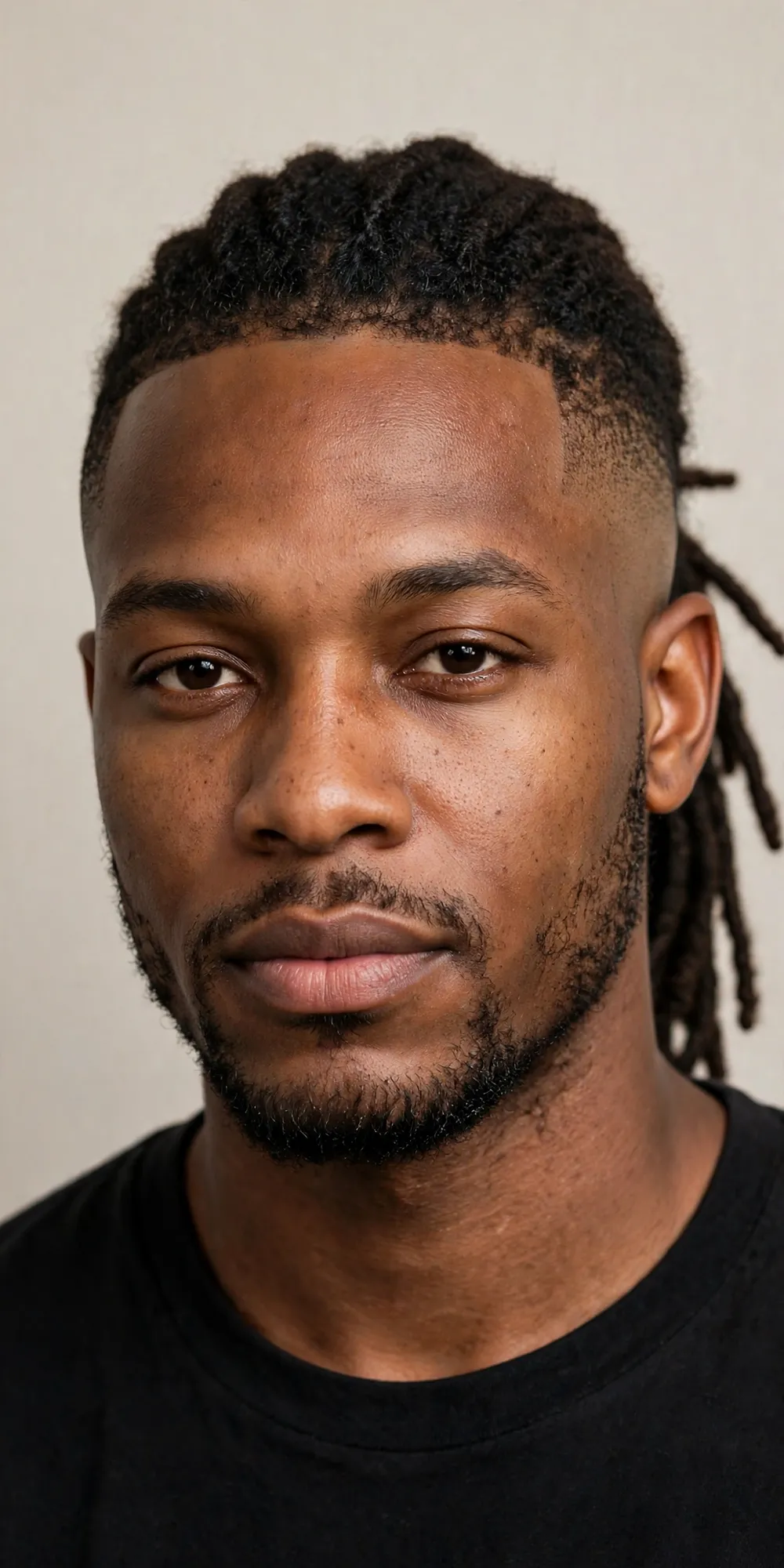
The dread fade — locs on top, faded sides — is the cut for men who’ve spent years growing their locs and want the sides to look as intentional as the length. Pull the locs back and the burst or drop fade underneath becomes the whole frame of the style. It suits every face shape, since the locs themselves set the silhouette, and it works with mature locs of any length; starter locs are usually too short to pair with a fade. Ask your barber for a burst or drop fade with a #0.5 base, and make sure they know to fade around the locs rather than cutting into them. A little loc butter and a regular retwist schedule keep the top looking groomed. The fade needs a touch-up every two weeks, but the locs themselves are gloriously low-maintenance.
15. Low Skin Fade
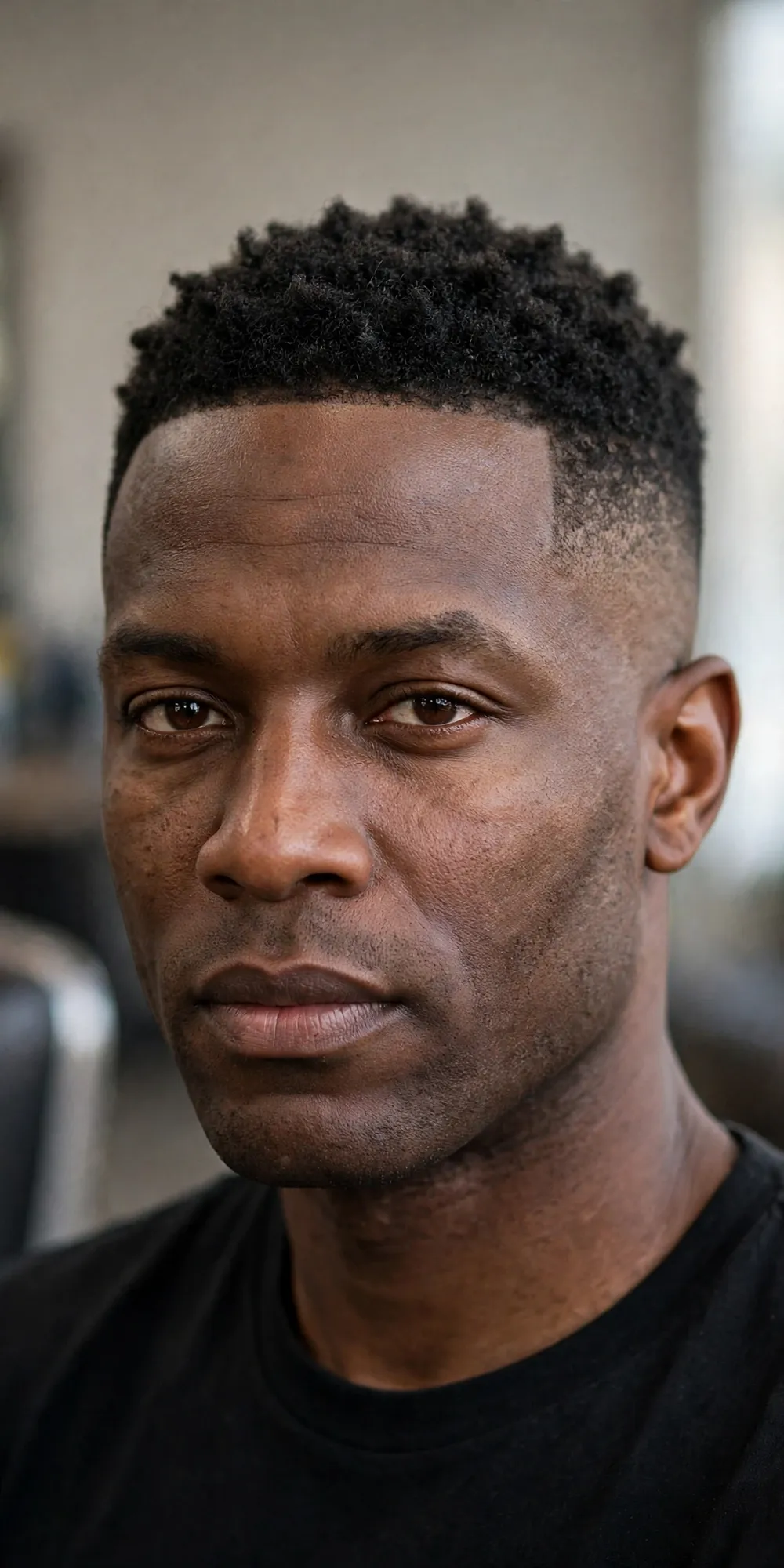
The low skin fade gives you the cleanest possible finish without the drama of a high fade — the skin blend starts low, just above the ears, so the contrast is there but it stays subtle. It’s the skin fade for men who want to look razor-sharp at work without looking overdone. It suits round and oval faces, softening the edges of the face rather than stretching it, and it works on every texture, from 4A coils to 4C curls and 360 waves. Ask for a low skin fade with a foil shaver at the base blending up through a #0.5 to a #2, keeping your top length as it is. A moisturiser on the faded skin stops it drying and flaking. The skin line is the weak point — it starts to blur after about ten days, so visit every two weeks.
16. Temp Taper Fade
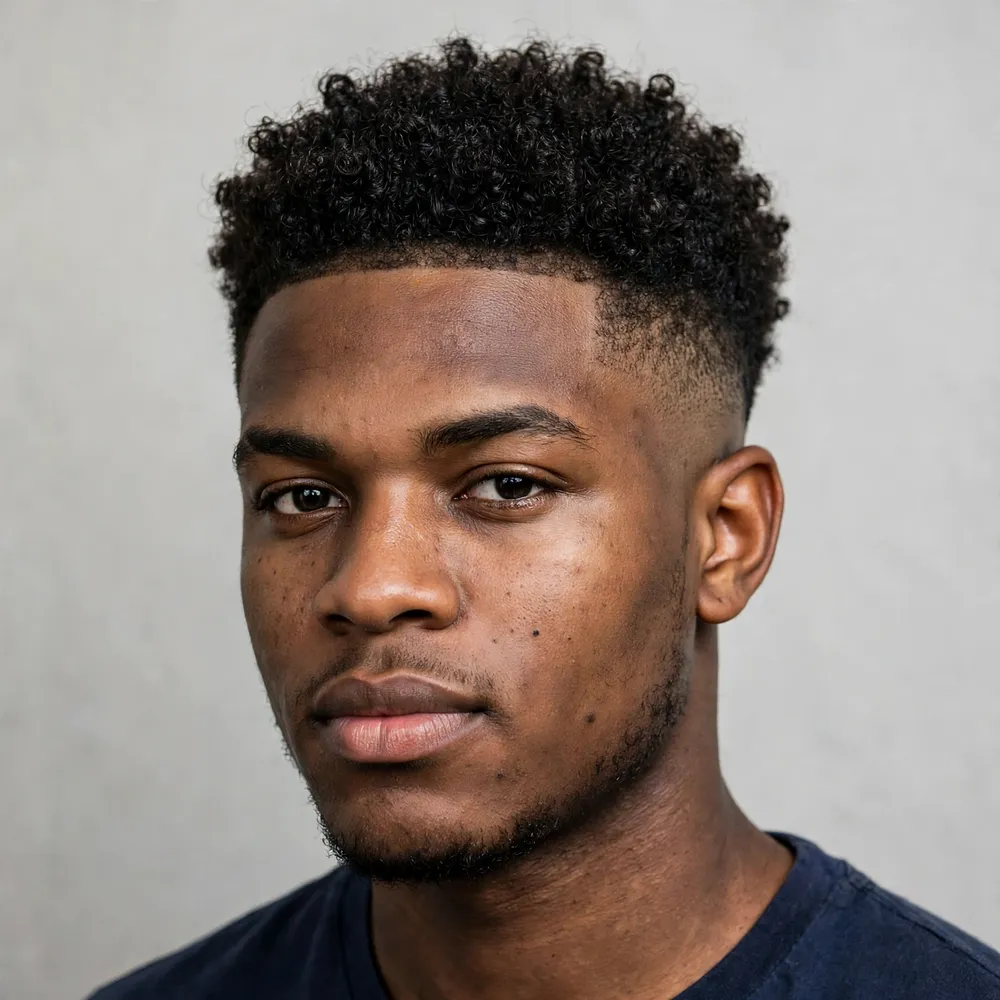
The temp taper fade is the gentlest fade in this list, and that’s its charm. The taper sits at the temples, softening the corners of the forehead, while the back stays long and natural — no skin, no hard lines, just a tidy frame around the face. It’s the cut for men who want to look groomed without looking “done”, and it suits square and heart-shaped faces especially well, softening a strong jawline or a wide forehead. It works on all textures, and it’s a good pick for men growing their hair out, since the taper doesn’t disturb the length. Ask for a temp taper with a #2 at the temples fading to a #4, with the back left alone. A little leave-in cream is all the product you need. Grow-out is the slowest of any fade here — three to four weeks.
17. Waves Fade

The waves fade is 360 waves on top with a mid skin fade on the sides, and it’s a cut that rewards patience. The waves take weeks of brushing to build, but once they’re in, the skin fade underneath makes them look even deeper by comparison. It suits oval and round faces, and it needs hair that waves naturally, which usually means 4A or 4B texture cut short; very tight 4C coils can wave too, but it takes longer. Ask your barber for a mid skin fade with a #0.5 base and the top cut to a #1 or #2 with the grain. The routine is the real work: brush daily, use a wave pomade, and wear a durag every night. The fade needs re-blending every two weeks, but the waves only get better the longer you keep the routine going.
18. Low Taper Fade

The low taper fade is the fade for men who don’t want to think about their haircut too much. The taper sits low at the sideburns and the neckline, blending so gradually you could miss it — but it makes the difference between looking groomed and looking like you forgot to book. It suits every face shape and every texture, and it’s especially good with waves or short curls on top, where the soft taper keeps the attention on the texture rather than the sides. Ask for a low taper with a #2 at the sideburns fading to a #3, and a tapered neckline rather than a hard line. A light cream or wave pomade is enough. This is the longest-lasting fade on the list: three to four weeks between cuts, and even then it still looks presentable.
19. Mid Temp Fade with Short Hair and Beard

This cut is really two cuts working together: a mid temp fade on the head and a beard blended into it, so the sideburns, cheeks and jawline form one continuous line. The fade starts at the temples and drops to mid-height, while the beard is shaped to meet it — the result looks designed rather than just cut. It suits square and oval faces best, where the beard adds structure, and it works on all textures, though short wavy or curly tops show the blend best. Ask your barber for a mid temp fade with a #1 base, and have them blend the beard from the sideburns down with a #2 guard, shaping the cheek line. Beard oil daily, and a trimmer at home for the neckline. The beard makes the upkeep real — two weeks, or the blend between face and beard starts to look messy.
20. Buzz Cut Fade

The buzz cut fade is the lowest-maintenance cut on this list. The top is clipped to a #1 or #2 guard — an eighth to a quarter of an inch — while the sides fade down, usually low or mid. It suits oval and square faces, and every texture from 4A to 4C, because there is barely any length to fight with. Ask for a “#1 on top, low fade, foil shaver on the edges.” No product is needed, though moisturiser stops the scalp looking dry. The catch is regrowth: book a touch-up every 10 to 14 days, or learn a quick at-home pass with your own clippers. See our Buzz Cut Hairstyles for Men guide for every guard length.
21. Sponged Long Afro Fade
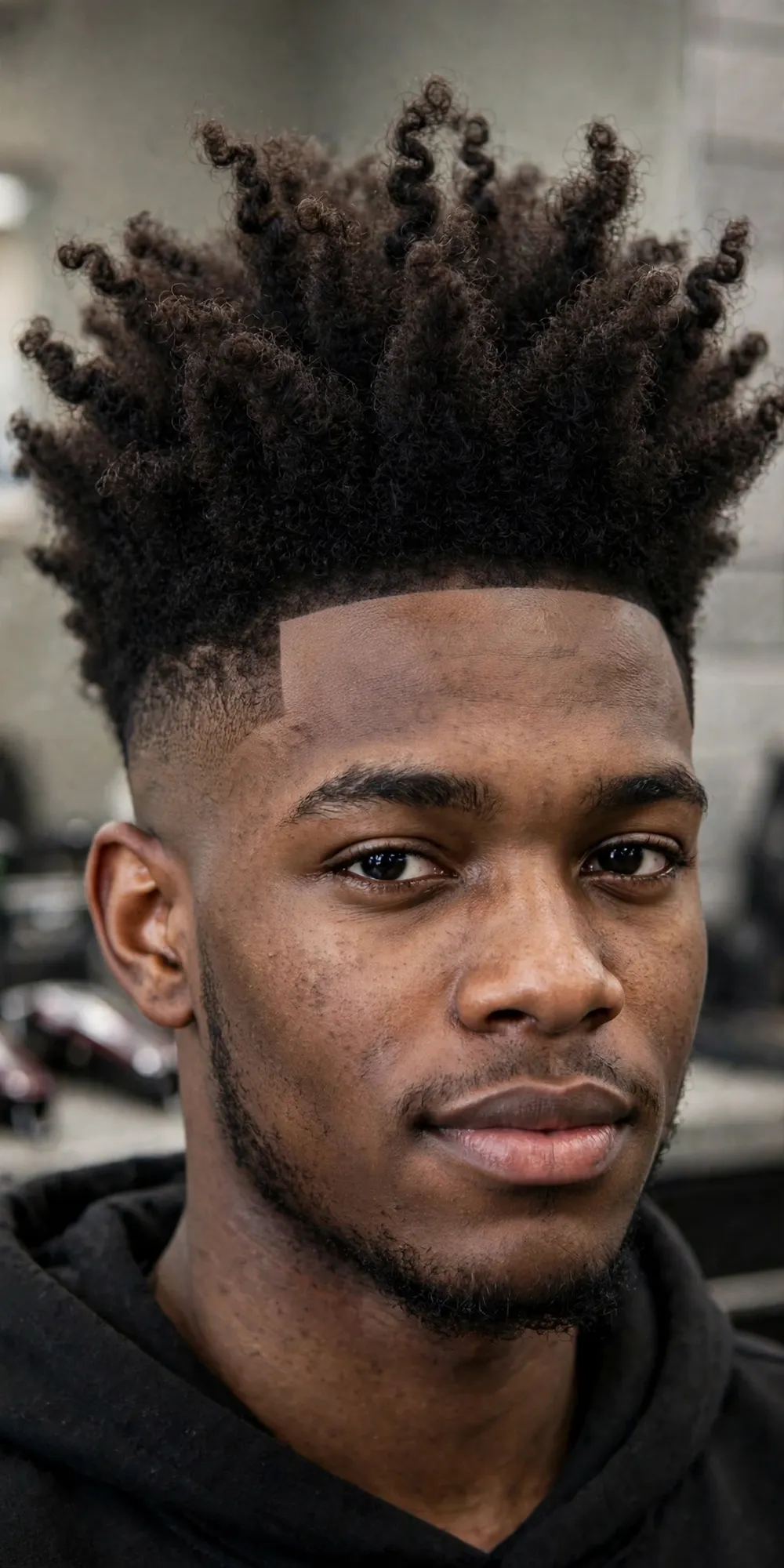
A sponged long afro fade lets your afro grow tall while a sharp temp fade frames it. The top is twisted into shape with a curl sponge, giving defined coils and serious height, while the temples stay clean so the cut looks intentional rather than overgrown. It flatters round and oblong faces because the height stretches the face out, and it is made for 4B and 4C hair — looser textures will not hold the sponge pattern as well. Ask for a “sponge twist on top, keep the height, temp fade at the temples.” Finish with leave-in conditioner and a pick, not a brush. Daily care matters: re-sponge the top every two or three days, keep it moisturised, and get the fade touched up every two weeks before the temples blur.
22. Low Temp Fade with Thick, Medium Curls

If your curls are thick and sit at medium length, this cut lets them do the talking. The top keeps two to three inches of dense curl, and the fade only appears at the temples — low and tight — so the sides never compete with the texture. It suits oval and heart-shaped faces, and it is a natural fit for 4A and 4B hair, where curls clump into defined sections. Ask for “curls on top, low temp fade, tapered neckline, no hard line.” A curl cream worked through damp hair is all you need; air-dry or use a diffuser on low heat. The curls need regular moisture, and the fade needs a refresh every two to three weeks.
23. Burst Fade Mohawk

The burst fade mohawk is the loudest cut on this list. A strip of curly hair runs down the centre, two to three inches wide, while a high burst fade curves around each ear and leaves some length at the back. Add a full beard and the whole look has real presence. It suits square and oval faces, and 4B and 4C hair holds the shape better than looser curls. Ask for a “burst fade around the ears, mohawk strip kept curly, beard faded in.” A strong-hold cream keeps the strip standing through the day. Be honest before booking: the mohawk needs styling every morning and the fade needs a touch-up every 10 to 14 days. Our Burst Fade Haircuts guide has more variations.
24. Faux Hawk Fade
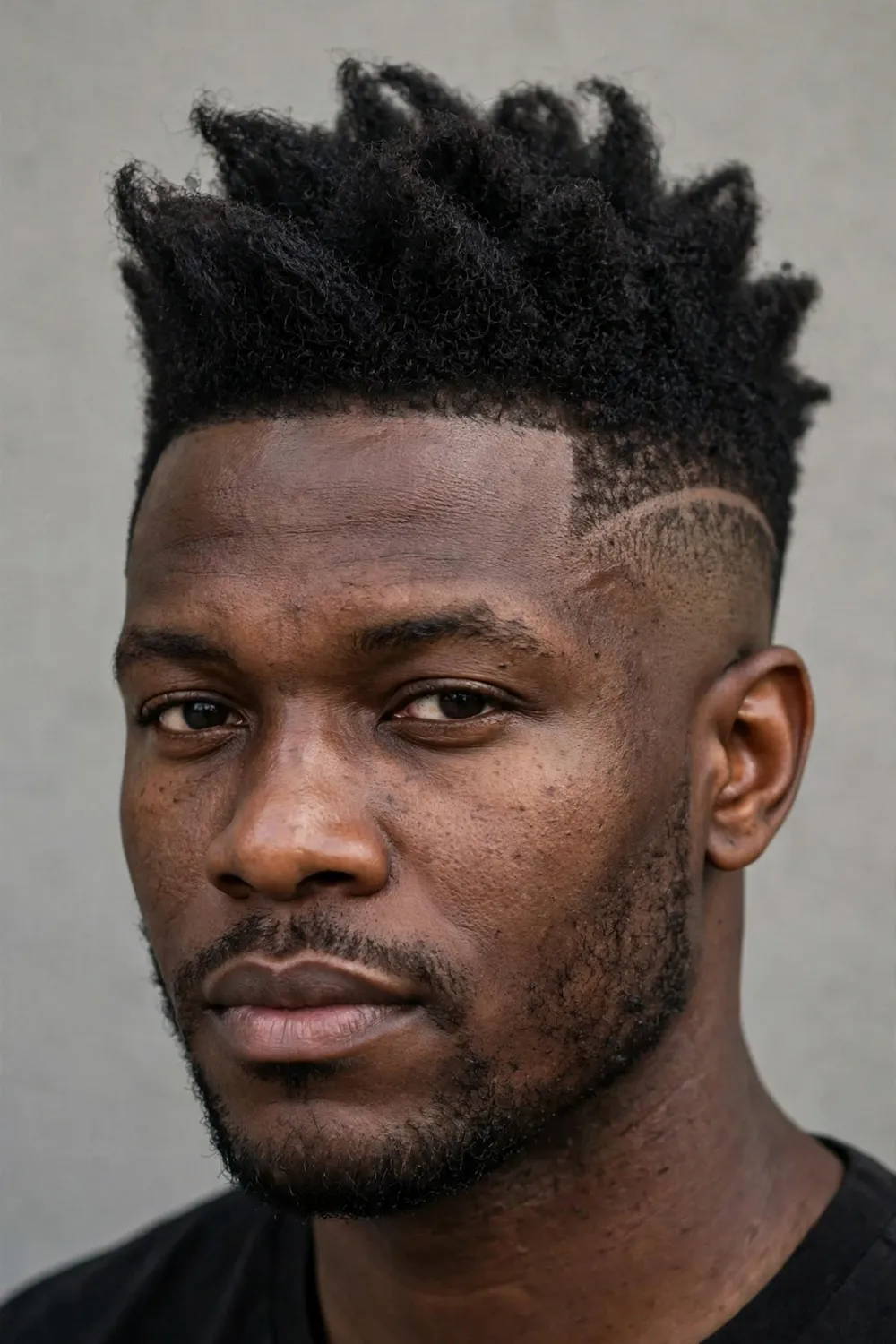
The faux hawk fade is the mohawk for men who want the attitude without the full commitment. The top is left around three inches and pushed into a soft centre ridge, while a drop fade cleans up the sides. Because the ridge is textured rather than spiked, it reads more grown-up than a true mohawk. It suits round and oval faces, since the height lengthens the face, and it works best on 4A and 4B hair. Ask for a “faux hawk, drop fade, three inches on top, textured finish.” A matte clay gives hold without shine. Styling takes ten minutes, and the fade needs refreshing every two weeks. If you like extra length at the back, our Mullet Haircut guide shows how that shape works.
25. Wavy Buzz Cut Fade with Shape Up
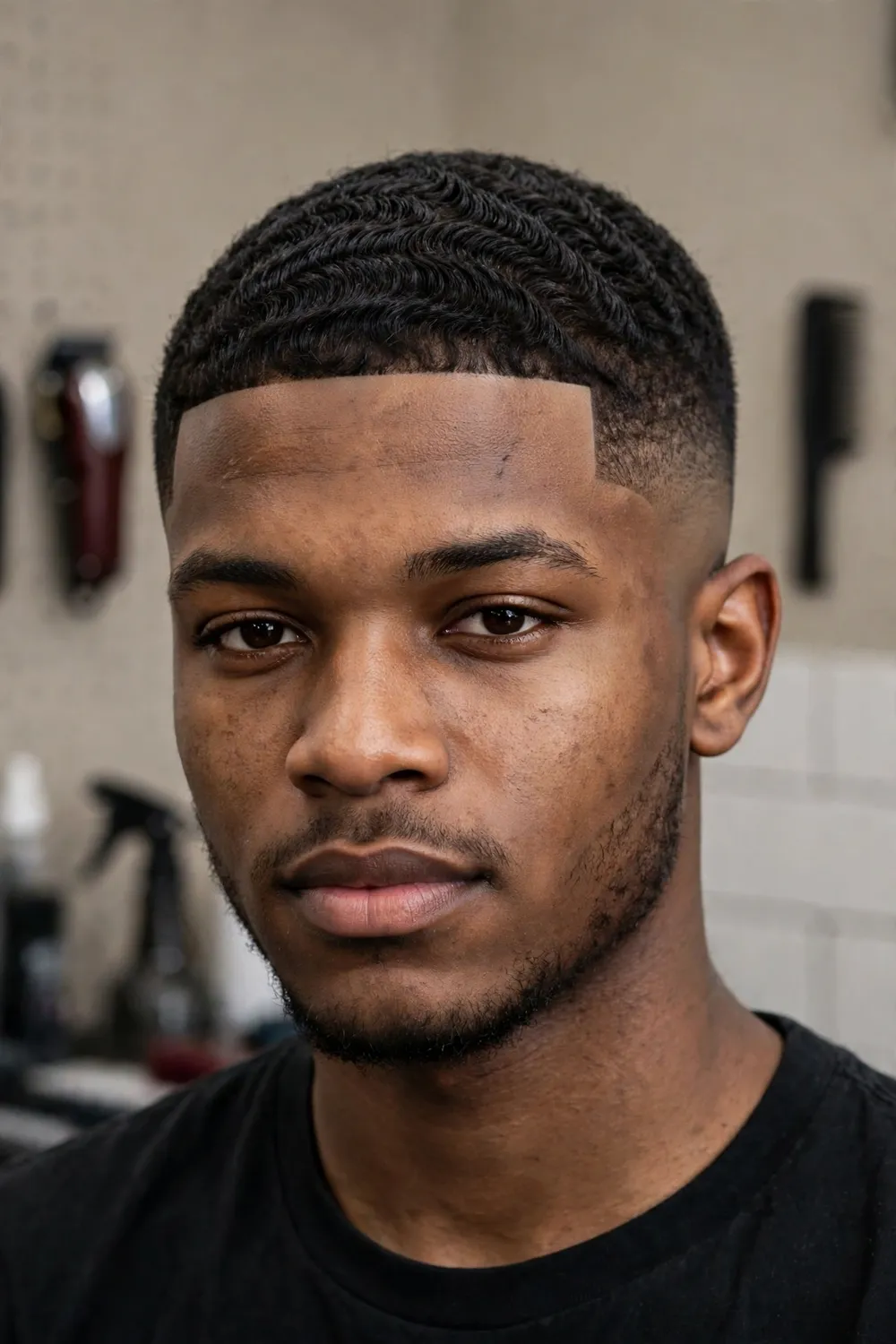
This cut is built for men training 360 waves. The top is clipped to a #1.5 guard, so the wave pattern stays visible, the sides drop into a mid skin fade, and a razor-sharp shape up squares off the hairline. It suits oval and square faces, and any texture that can be brushed into waves with patience. Ask for a “#1.5 buzz, mid skin fade, shape up the hairline.” The real work is at home: wave pomade, a hard brush for ten minutes a day, and a durag every night. Skip the durag and the waves will not form. The fade needs a touch-up every 10 to 14 days, and the shape up every week to stay razor-clean.
26. Short Curly Hair with Low Fade and Goatee
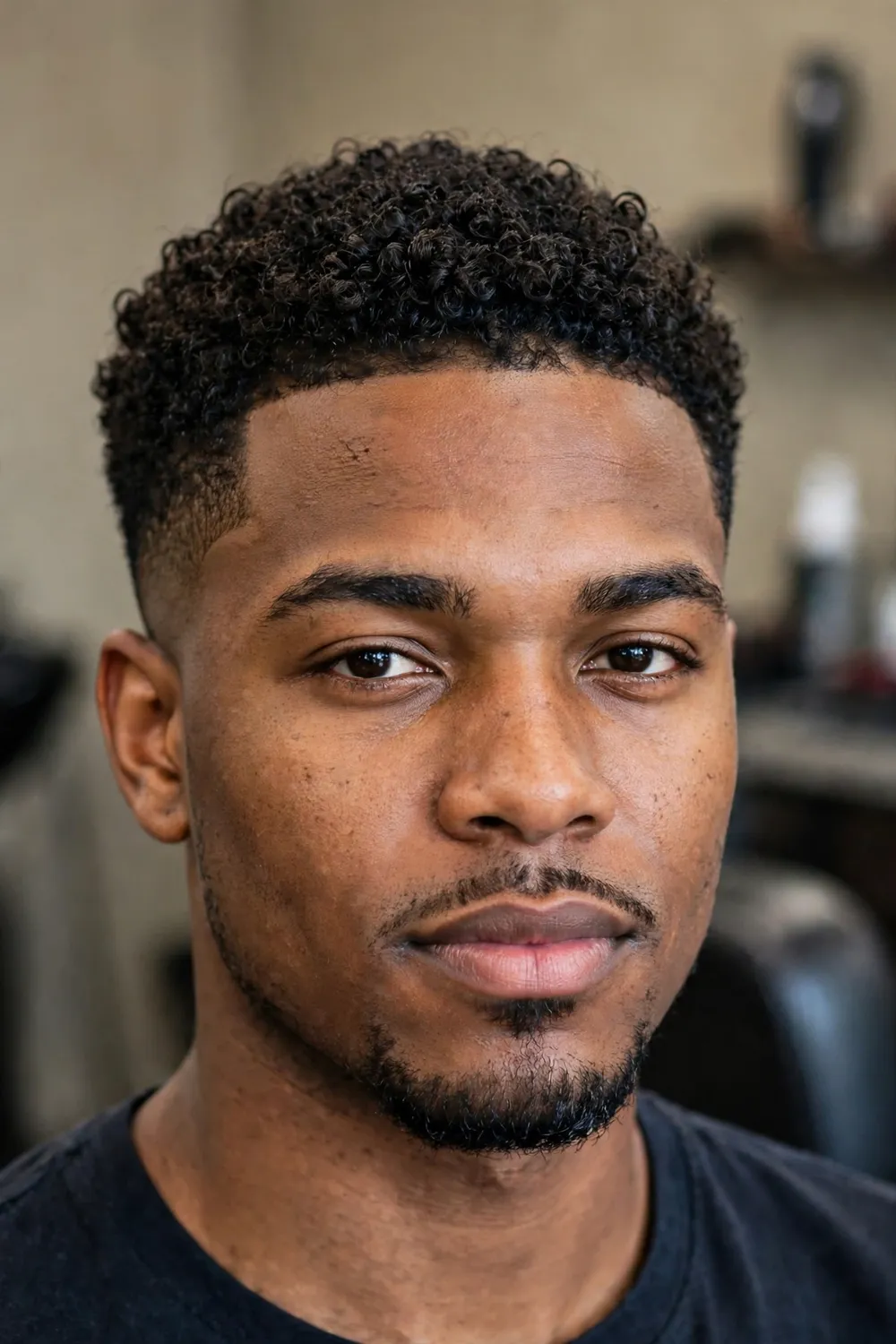
Short curls, a clean low fade and a neat goatee is a combination that just balances out. The curls sit close to the head, the fade starts low so nothing looks harsh, and the goatee frames the jaw without taking over. It suits round and square faces — the goatee adds length to a round face and softens a strong jaw — and it is ideal for 4A and 4B hair. Ask for “short curls on top, low fade, goatee shaped to the jawline.” Curl cream on top, beard oil on the goatee, done in five minutes. The fade needs a refresh every two to three weeks, and the goatee a weekly trim to keep its edges from creeping. Our Low Fade Haircuts for Men guide breaks down every variation.
27. Afro Temp Fade with Line Up

This is the classic afro shape, sharpened with a temple fade and a razor line up. The afro keeps its full volume and rounded silhouette, the temp fade hugs the temples, and the squared corners give the cut a finished edge. It suits oblong and oval faces best — the volume adds width where a long face needs it — and it is made for 4B and 4C hair, which holds the round shape. Ask for an “afro shaped round, temp fade, line up the corners sharp.” A pick and a light leave-in are your daily tools; a brush will flatten the shape. The line up is the high-maintenance part — it softens within a week, so budget for a touch-up every seven to ten days to keep it razor-clean.
28. Professional Afro Fade with Groomed Beard

If you need a cut that works in a boardroom and still looks like you, this is it. The afro is kept healthy and shaped rather than huge, the fade precise, the hairline clean, and the beard groomed and blended at the cheek line. It suits oval and square faces, and it works across 4A to 4C hair because the emphasis is on shape and condition, not volume. Ask for an “afro fade, keep the curl length, beard blended at the cheek line.” Curl cream on top, beard balm below, and a brush to keep the beard lying flat. The beard needs a weekly trim and the fade a refresh every two weeks. Moisturise properly and this cut looks expensive without trying.
29. Skin Fade with Curly Top
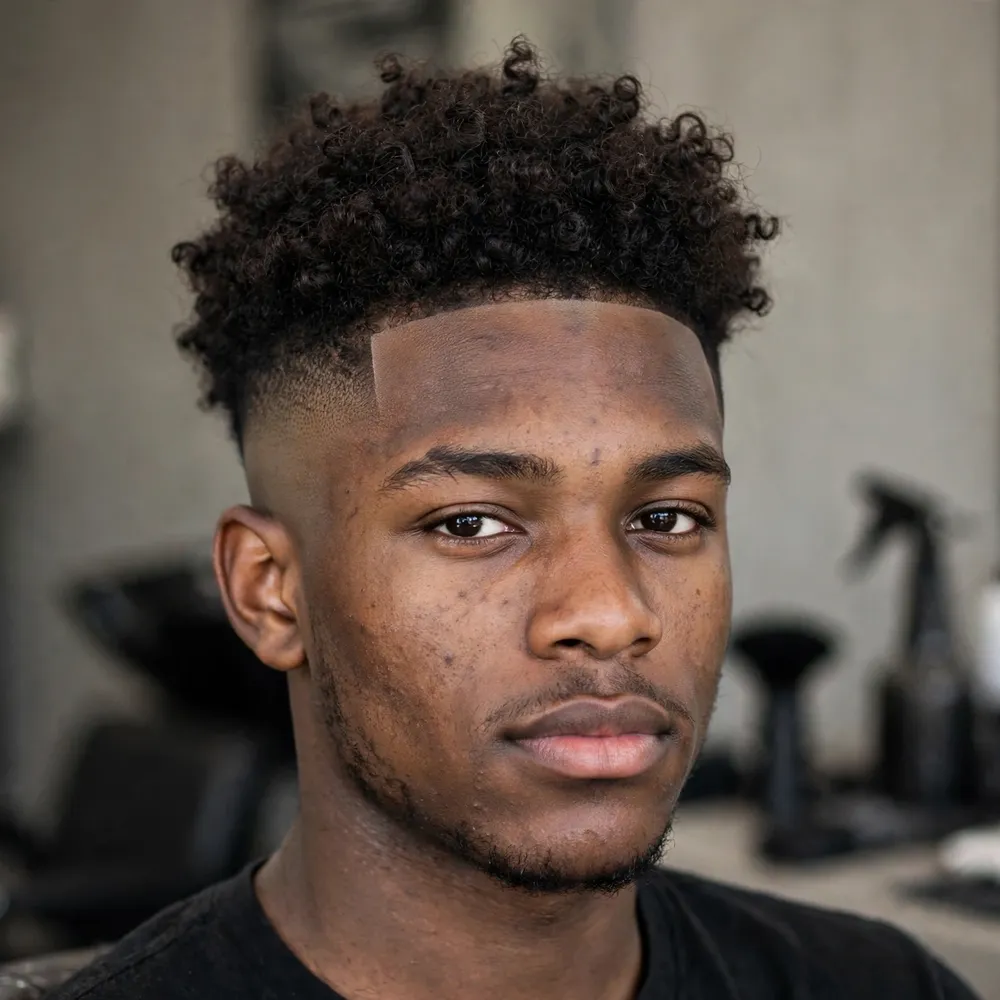
The skin fade with a curly top is pure contrast — bare skin on the sides, defined curls left long on top — and one of our top three picks. The sides blend right down to zero with a foil shaver, so the curls on top look even fuller by comparison. It suits oval and heart-shaped faces, and it is at its best on 4A and 4B hair, where curls clump into definition. Ask for a “skin fade to zero, two to three inches of curls on top, foil finish.” A curl-defining cream through damp hair is the only product you need. The trade-off is upkeep: the skin fade shows growth within days, so you are back every 10 to 14 days, and the curls need nightly moisture or they frizz.
30. Fade with Hair Design
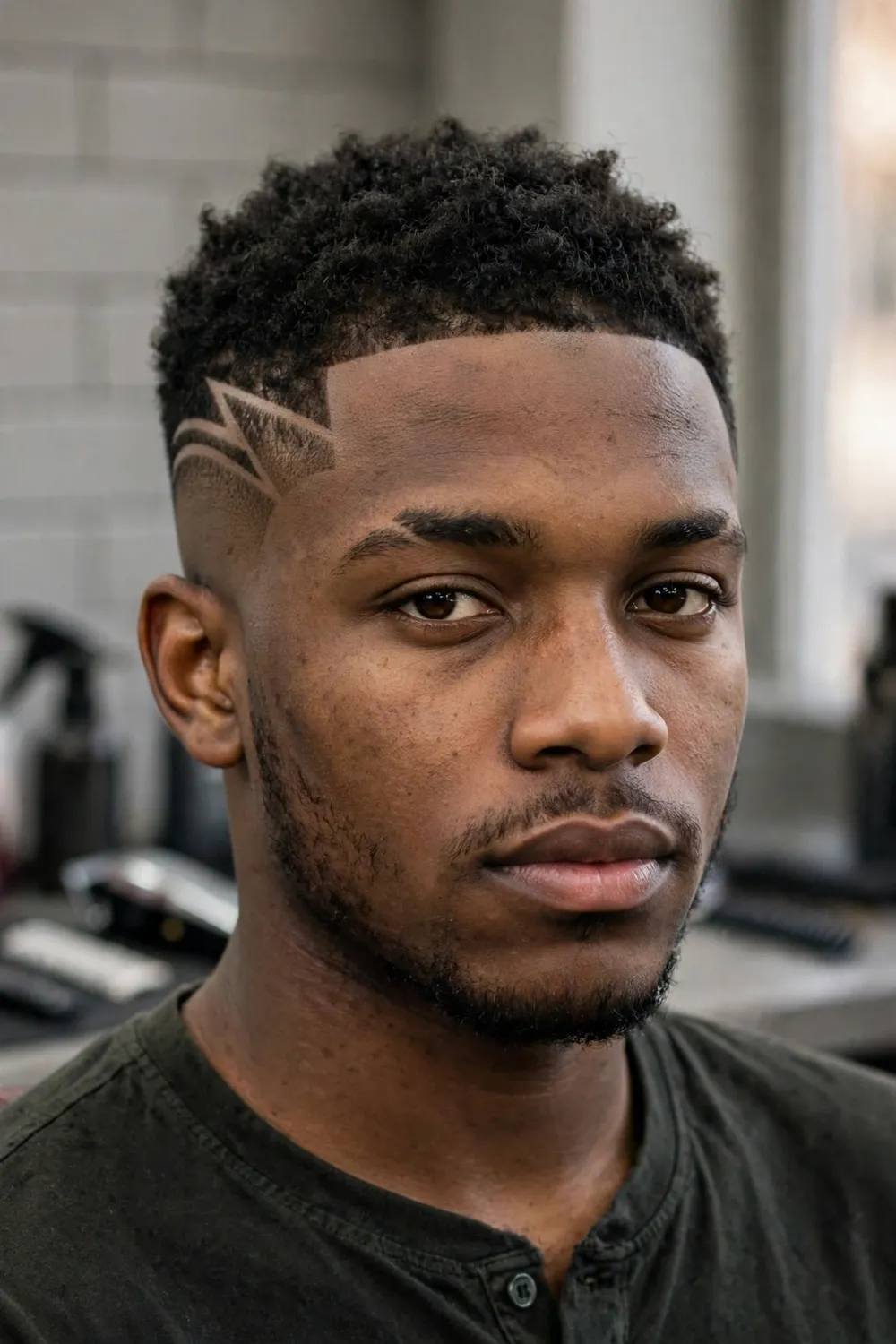
A hair design turns a standard fade into something nobody else has. Your barber carves a line or pattern into the fade — a curved line, a lightning bolt, a geometric shape, whatever you show them. It works on any face shape and any texture because the design sits in the fade, not the top. Ask for a “mid fade, then carve the design in — here is the photo.” Bring a reference picture; describing a pattern in words is how designs go wrong. The design is the shortest-lived part of any cut here — it starts growing out within a week and is gone in two — so save it for an event or a weekend you want to remember. Budget for a weekly touch-up to keep it sharp.
31. Fade with Hard Part

A hard part is a razor-sharp line shaved where your natural part sits, and it makes an ordinary fade look cut by someone who cares about detail. The top is combed over from the part, the fade sits at mid height, and the line gives it a classic, precise finish. It suits square and oval faces, and works best when the top has length to comb over — wavy or loosely curled hair takes it well. Ask for a “hard part on the left, mid fade, comb the top over.” A pomade and a comb are all you need in the morning. The part line softens as hair grows back, so it needs re-cutting every seven to ten days — ask your barber to keep it subtle if you work somewhere conservative.
32. Curly Frohawk Fade
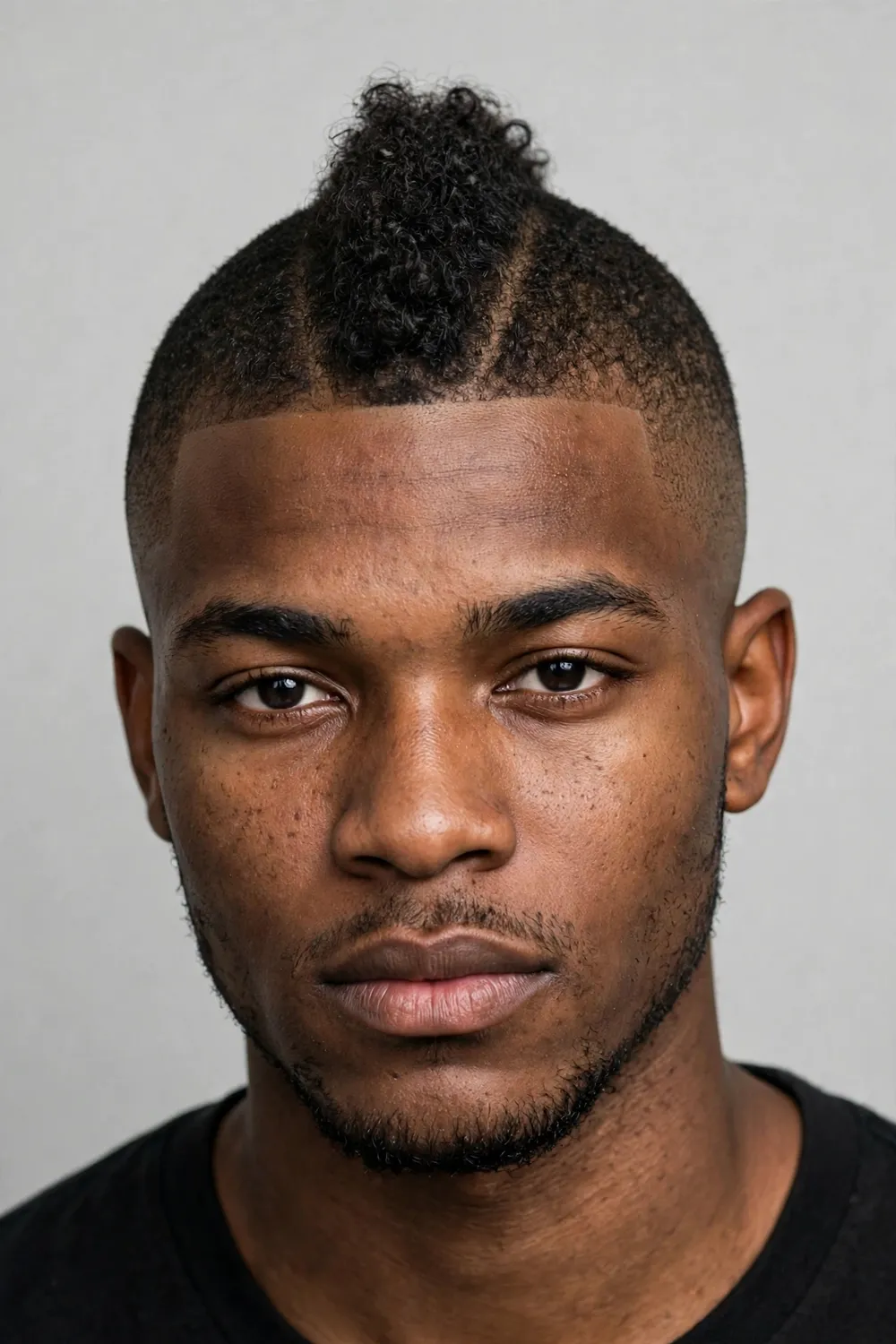
The curly frohawk is the mohawk idea with natural texture doing the work. A strip of curls runs down the centre, about three inches wide, while the sides fade down to keep the attention on the strip. Soft and rounded rather than spiked, it reads bold without looking like a costume. It suits round and oval faces — the height stretches a round face — and it is built for 4B and 4C hair, which holds the strip’s shape. Ask for a “frohawk strip, three inches wide, mid fade on the sides, keep the curls.” Curl cream and a pick are the daily tools. The fade needs a refresh every two weeks, and the strip a trim every month to stop it going wide.
33. Shadow Fade
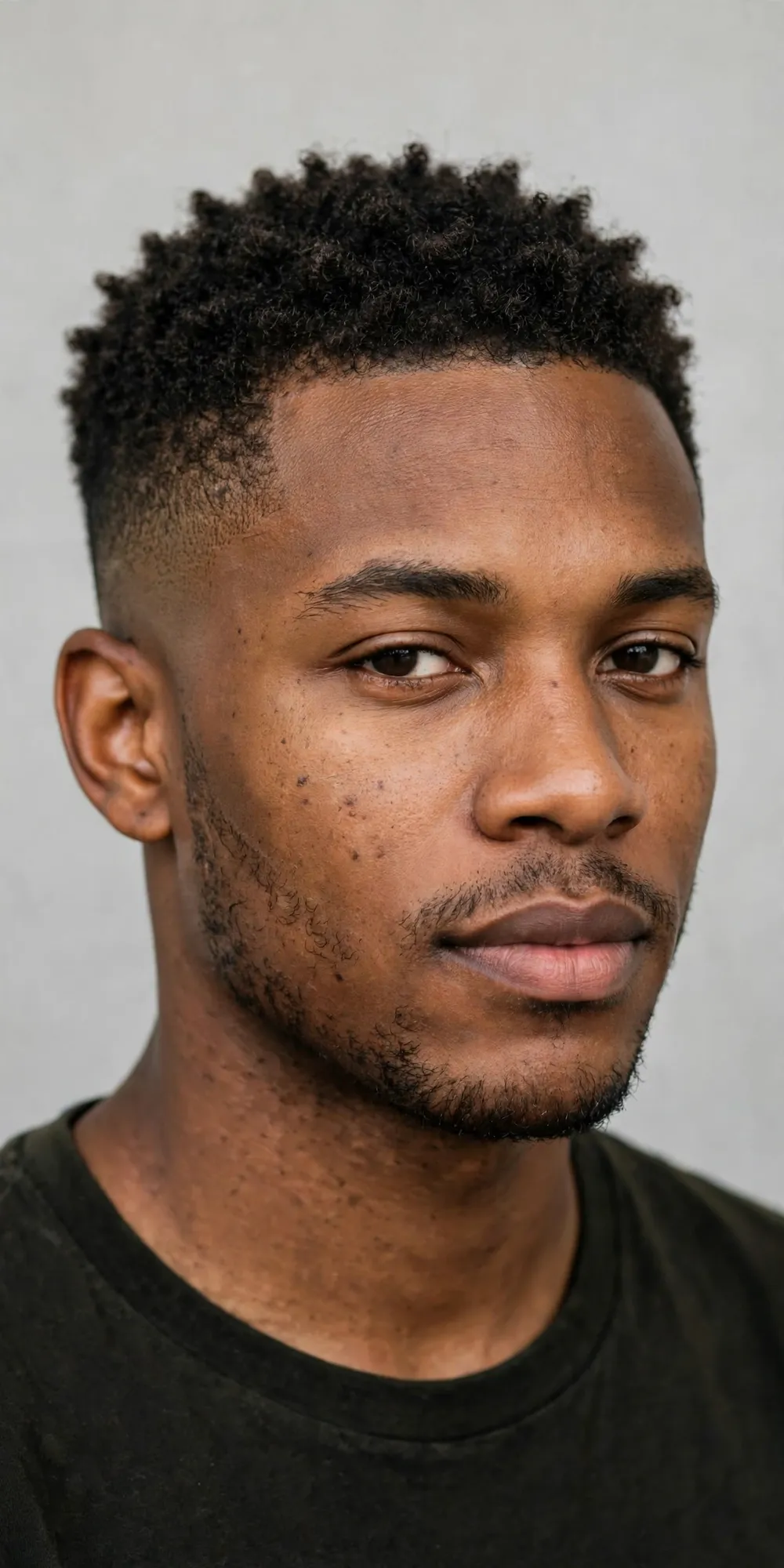
The shadow fade is the quiet achiever of this list. Instead of blending down to skin, it fades from a #2 to a #4 guard, so the sides keep a soft shadow of hair and the cut looks slightly grown-in. No harsh line, no bare skin, no obvious grow-out stage, which makes it the most forgiving fade you can get. It suits every face shape and every texture from 4A to 4C, and it is the best choice if you cannot get to the barber often. Ask for a “shadow fade, #2 to #4 blend, no skin.” A matte paste is the only product you need. The payoff is time: this is the longest-lasting fade on the list, and three to four weeks between cuts is realistic.
34. Fade with Box Braids on Top

Box braids on top with a clean fade underneath gives you a protective style and a sharp cut. The braids carry the length and the personality, the fade keeps the sides tidy, and the contrast is what makes the cut stand out. It suits oval and round faces, and it is a natural fit for 4B and 4C hair. Ask for “box braids on top, low fade underneath, braids tied back or loose.” Braid care matters more than the fade: scalp oil twice a week, a silk scarf at night, and never pull the braids tight at the hairline. The braids last four to six weeks, while the fade needs a touch-up every two. Our Natural Hairstyles for Black Women guide covers braids and twists in depth.
35. Fade with Cornrows on Top
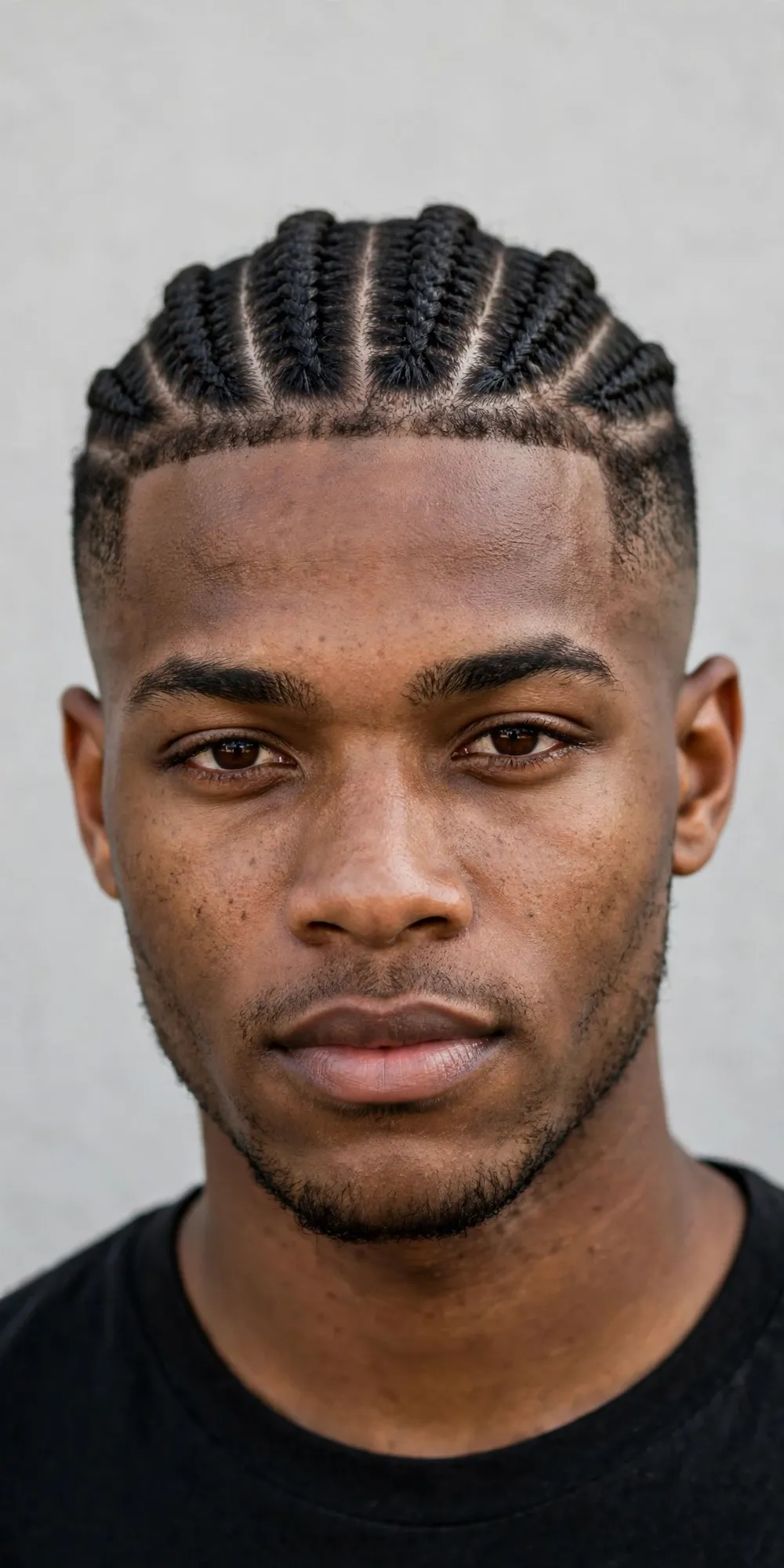
Cornrows running straight back over a low fade is one of the neatest cuts a Black man can wear. The rows sit flat and precise and the edges frame the whole head. It suits oval and square faces, and it works best on 4B and 4C hair, which holds a cornrow without slipping. Ask for “cornrows straight back, low fade, clean edges.” Edge control keeps the hairline tidy and scalp oil stops the rows drying out — do not skip either. Cornrows last two to three weeks before they fuzz, and the fade needs refreshing on the same schedule, so book both together. If the braider pulls too tight, say so on the spot — a sore hairline is not something to tough out.
36. Bald Fade with Full Beard
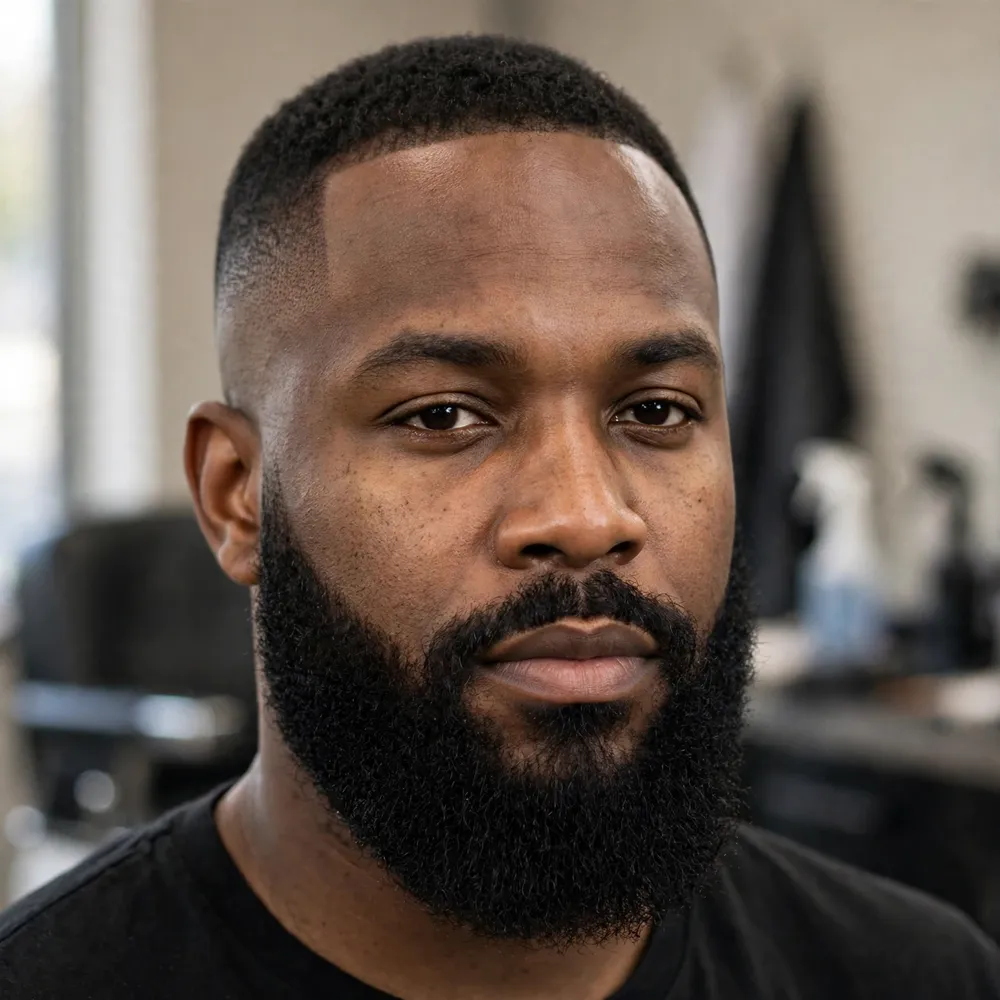
The bald fade with a full beard is all about one clean line from scalp to jaw. The sides are shaved to bare skin, the fade disappears into a shaped beard, and the contrast makes both look more deliberate. It suits square and oval faces, and it works with any texture because the top is barely there — the beard is the star. Ask for a “bald fade to skin, beard shaped and blended at the jawline.” Beard oil daily, beard balm for shape, and a razor for the fade line between visits. The fade grows out fast, so expect a touch-up every seven to ten days, and trim the beard weekly to keep the neckline and cheek line from creeping. It is high maintenance, but the result is hard to beat.
37. Fade for Receding Hairline
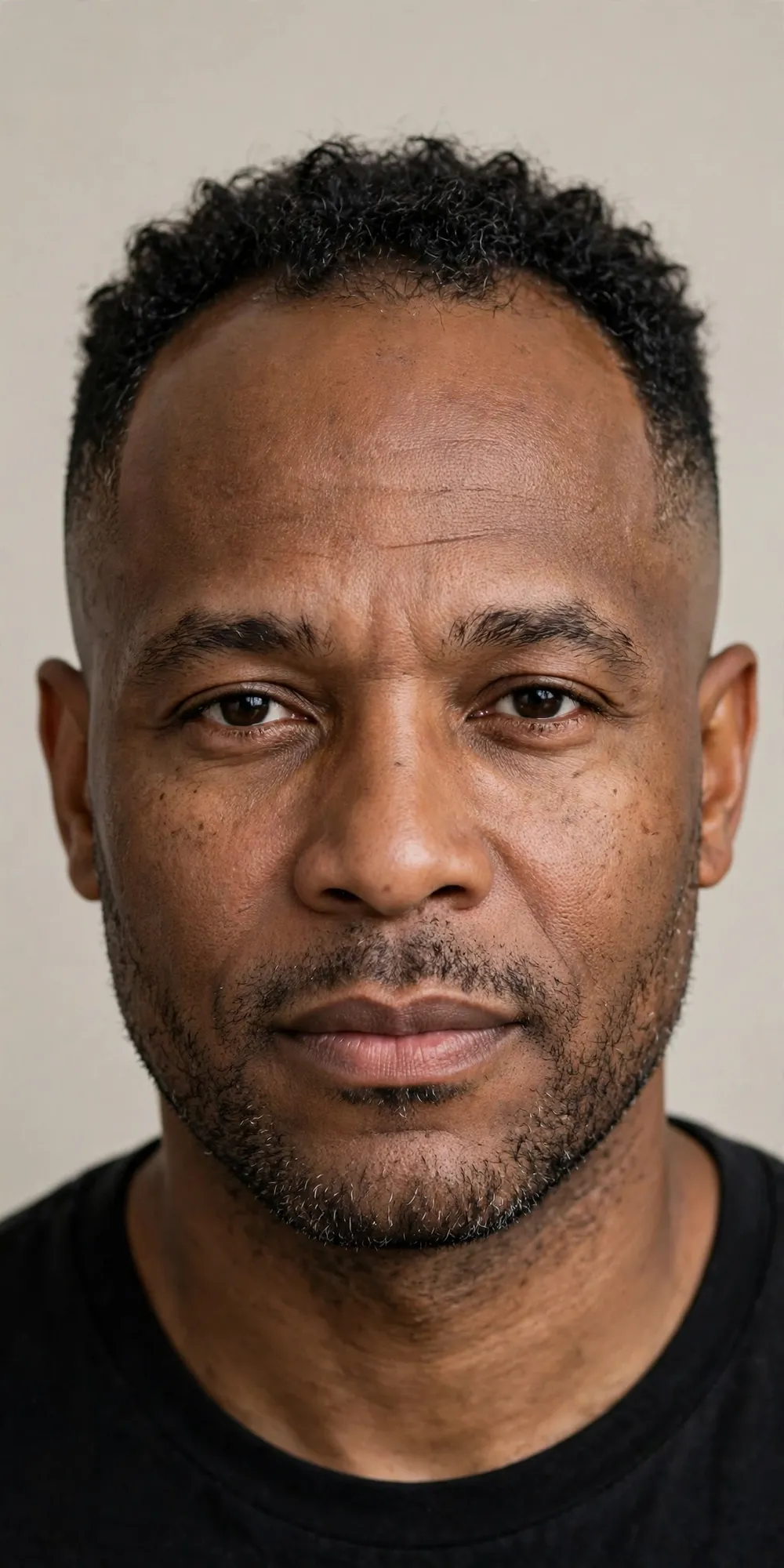
A receding hairline does not mean giving up on a good cut — it means picking one that works with it. A low fade with a short, textured top takes the eye away from the temples and puts it on the texture and the clean sides. The top stays short and pushed slightly forward, so nothing draws attention to the thinning. It suits any face shape and any texture. Ask for a “low fade, short textured top, no line up pushing the hairline back” — a hard line up only highlights it. Matte clay gives the top grip without shine. A refresh every two to three weeks keeps it looking intentional. No haircut regrows hair, but the right one makes the hairline a non-issue.
How to Choose the Right Fade for Your Face Shape
The fade itself is only half the cut — where it sits on your head decides whether it flatters your face or fights it. Start by working out your face shape in the mirror: pull your hair back, look straight ahead, and check whether your face is longer than it is wide, and where it is widest.
Oval faces have the easiest time of it. The proportions are already balanced, so almost any fade works — low, mid, high or skin. If you have an oval face, pick based on your lifestyle and how often you want to visit the barber, not on rules.
Round faces need height on top and clean sides. A high fade or a mid fade with some length left on top stretches the face out, and styles like the high top fade or the frohawk do this well. Avoid a low fade with a flat top — it adds width where you do not need it.
Square faces already have a strong jaw, so the goal is to soften it slightly rather than sharpen it further. A mid fade with textured length on top works well, and a taper fade keeps things refined without adding more angles. A hard line up is fine, but keep the top soft.
Oblong faces are long, so height is the enemy. Skip the tall afros and high tops and go for a low or mid fade with the top kept short and a little width at the sides — the afro temp fade is a good example. Anything that adds vertical length will only make the face look longer.
Heart-shaped faces are wider at the forehead and narrower at the chin, so you want a little volume around the sides to balance the jaw. A low fade with curls or waves on top does this nicely, and a beard blended into the fade can fill out the lower half of the face.
Which Fade Suits Your Hair Type?
Your curl pattern decides what the top of the cut can actually do, so it is worth matching the fade to the texture you have rather than the one you wish you had.
4A hair has loose, defined coils that clump well. Curls-on-top styles are your strength — the skin fade with curly top, the low temp fade with medium curls — because the coils hold their shape with just a curl cream. A skin or mid fade gives you the contrast that shows the curls off.
4B hair has a Z-pattern that does not clump as easily, which makes it perfect for sponge work, twists and textured tops. The sponged afro fade, the twists fade and the frohawk all suit 4B hair, and a temp or burst fade frames the texture without fighting it.
4C hair has the tightest coils and the most shrinkage, which is actually an advantage for volume styles: afros, high tops and the professional afro fade all hold their shape because the coils lock together. Keep the fade low or mid so the top stays the focus, and moisturise properly — 4C hair dries out faster than any other type.
360 waves are less about curl pattern and more about training. A mid skin fade shows the wave pattern off best, and the cut itself is the easy part — the brushing routine and the durag do the real work. See the waves section below for the full routine.
Locs and twists pair best with a burst or drop fade, because those fades curve around the ear and leave length at the back where locs usually sit. The dread fade is the obvious pick, and keeping the fade low means you can go longer between visits without the locs looking untidy.
How to Ask Your Barber for the Fade You Want
Most bad fades are not bad cutting — they are bad communication. Walk in knowing four things and say all four out loud: the fade height, the finish, the top length in inches, and the hairline shape. “Mid fade, skin finish, two inches on top, line up” is a complete instruction. “Just fade me up” is not, and it is how you end up with a high skin fade when you wanted a low taper.
The classic fade haircut is a gradual blend from short to shorter, and the guard numbers are how your barber builds it. Keep this cheat sheet in your phone:
| Guard | Length | What it does |
|---|---|---|
| Foil shaver / 0 | Bare skin | Skin finish, sharpest line |
| #0.5 | 1/16 inch | Stubble blend at the bottom of a skin fade |
| #1 | 1/8 inch | Short buzz, bottom of a low fade |
| #2 | 1/4 inch | Standard short blend |
| #3 | 3/8 inch | Mid-length blend |
| #4 | 1/2 inch | Longest guard in most fades, top of the blend |
Bring a reference photo on your phone — one photo of the exact cut, from the front and the side if you can find it. Barbers work from pictures far better than from descriptions, and a photo settles arguments about what “mid” means before the clippers start. Finally, know the difference between a touch-up and a full reset. A touch-up is just the fade and the line up, takes fifteen minutes, and costs less. A full reset is the whole cut again. If the top still looks good and only the sides have grown out, ask for the touch-up and save yourself time and money.
How to Keep Your Fade Sharp
A fade looks its best on day one and then starts a slow slide. How fast it slides depends on the fade, so here is the honest schedule:
| Fade type | Touch-up every | Why |
|---|---|---|
| Skin fade / bald fade | 10–14 days | Bare skin shows growth within days |
| Line up / shape up | 7–10 days | The hairline softens first |
| Mid fade / low fade | 2–3 weeks | The blend holds longer |
| Taper fade | 3–4 weeks | Grows out the most gracefully |
| Shadow fade | 3–4 weeks | Already looks grown-in |
| Hair design | 7 days | The pattern blurs fast |
What you can do at home: clean up the neckline with a trimmer, keep the line up honest with a foil shaver, and moisturise. What you should leave to the barber: re-blending the fade itself — see the mistakes section below for why.
Wash and moisturise on a real routine, not when you remember. Shampoo once or twice a week, condition every wash, and work a leave-in or light oil through the top while it is still damp. A dry fade looks dull and the skin underneath flakes, which is the fastest way to make a good cut look cheap.
If you are training waves, the routine is non-negotiable: brush with a hard brush for ten minutes a day, use a light wave pomade, and wear a durag every night. The durag is not optional — it lays the hair down while you sleep and locks the pattern in. Skip it for a week and you will spend the next two rebuilding what you lost.
5 Mistakes to Avoid When Getting a Fade
- Going too high too fast. If you have always had a low fade, do not jump straight to a high skin fade in one appointment. Go mid first, live with it for two weeks, and then go higher if you still want to. A fade that is too high cannot be undone — you are waiting for hair to grow back.
- Picking the wrong fade for your face shape. A high fade on a long, oblong face makes it look longer. A low flat fade on a round face makes it look wider. The cut has to suit the face underneath it, not just the photo you saved.
- Getting a skin fade with an uneven hairline. A skin fade puts all the attention on the hairline, so if yours is uneven or receding, the fade will advertise it. Either keep the hairline natural and skip the hard line up, or choose a lower fade that draws less attention to the top of the forehead.
- Skipping post-shave care. A skin fade is a close shave, and close shaves cause ingrown hairs — especially on curly hair, where the hair curls back into the skin. After a skin fade, use a salicylic acid toner on the faded area for a few days and moisturise daily. If you get painful bumps or they keep coming back, see a dermatologist rather than picking at them.
- Re-blending the fade yourself at home. Cleaning up a neckline is fine. Trying to re-blend a fade with drugstore clippers is how you end up with a visible step in the blend and a barber who has to cut the whole thing shorter to fix it. Leave the blend to the professional and book the touch-up instead.
Fade Haircuts for Black Men FAQs
What is the best fade haircut for Black men?
There is no single best fade — it depends on your face shape, hair type and how often you want to visit the barber. If you want one safe answer, the low fade is the best starting point: it suits every face shape, works with every texture from 4A to 4C, and grows out gracefully over two to three weeks. From there, go higher or sharper — a mid fade with a line up, or a skin fade with a curly top — once you know what suits you.
How often should Black men get their fade touched up?
It depends on the fade. A skin fade or bald fade needs a touch-up every 10 to 14 days, because bare skin shows regrowth within days. A mid or low fade lasts two to three weeks, and a taper or shadow fade can stretch to three or four weeks. The line up is the first thing to soften, so expect to refresh it every seven to ten days if you want it razor-sharp. The full maintenance schedule is in the table above.
What is the difference between a low fade and a mid fade for Black men?
The difference is where the fade starts. A low fade begins just above the ears and the neckline, so most of the side keeps its length — it is subtle, professional and easy to grow out. A mid fade starts at the temples, around the middle of the side of the head, so there is more contrast between the faded sides and the top. The mid fade looks sharper and bolder, but it also shows regrowth sooner and needs touching up more often.
What fade suits 4C hair best?
4C hair suits fades that let the tight coils do the work on top. The afro fade and the professional afro fade are the strongest choices, because 4C coils hold volume and shape without much product. A low taper fade is the low-maintenance option — it keeps the sides tidy while the top stays natural. Whatever fade you choose, moisture is the real deciding factor: 4C hair dries out faster than any other type, so a leave-in conditioner used properly matters more than the fade height.
What should I ask my barber for a fade with waves?
Ask for a mid skin fade with a short top — a #1.5 guard is the usual sweet spot — and a shape up on the hairline. Tell your barber you are training 360 waves so they keep the top even all over rather than texturing it. The cut is only half the job, though: the waves come from brushing with a hard brush for ten minutes a day, using a light wave pomade, and wearing a durag every night. Expect it to take four to six weeks of that routine before the pattern really shows.
Can I maintain a fade at home between barber visits?
Yes, but only the edges. You can clean up your neckline with a trimmer, tidy the line up with a foil shaver, and keep the top moisturised — all of that stretches the time between visits. What you should not do is try to re-blend the fade itself. Home clippers and a bathroom mirror are how good fades get a visible step in the blend, and your barber will have to cut everything shorter to fix it. Book a fifteen-minute touch-up instead; it costs less than a full cut.
Which fade lasts longest between cuts?
The shadow fade and the taper fade last longest, at three to four weeks between cuts. Both keep some length on the sides — the shadow fade blends from a #2 to a #4 guard with no skin showing — so regrowth blends in instead of standing out. Skin fades and bald fades are the shortest-lived at 10 to 14 days, because bare skin shows even a few days of growth. If you cannot get to the barber often, a taper or shadow fade is the honest choice.
Final Word
A fade is one of those cuts where the details matter more than the idea — the height, the finish, the hairline and how often you go back. Get those four right and almost any of these 37 styles will look good on you. Start with a low or mid fade if you are unsure, bring a photo to your barber, and give the cut two weeks before you judge it. For more ideas in the same spirit, browse our more haircut guides — there is a cut in there for every length, texture and occasion.