


If you want the short version first: the best black men haircuts right now are the Mid Fade, the 360 Waves, and the Rounded Afro — one for a clean, low-effort look, one for texture you can build at home, and one for pure presence. There’s a reason Black hair holds fades and lineups better than any other texture: coily hair grips its shape, so a crisp edge stays crisp for days instead of collapsing by lunchtime. The 39 cuts below cover every length and lifestyle, from a five-minute buzz to locs you’ll grow for years, and each one comes with the exact words to say in the chair so you walk out with the cut you actually pictured.
Classic Fades
1. Low Fade

The low fade starts just above the ears and blends down to skin over about an inch of hair. It suits round and oval faces best, because it adds no height, and it works on type 3 curls and type 4 coils alike. Ask your barber: “Low fade, #1 to skin at the bottom, keep the top about an inch and the lineup natural.” A pea-sized amount of light pomade or a dab of curl cream keeps the top tidy without shine overload. Maintenance is honest: the fade starts looking soft around day 10, so book every two weeks, and a quick brush with a soft boar-bristle brush in the morning keeps the blend looking intentional rather than grown out.
2. Mid Fade
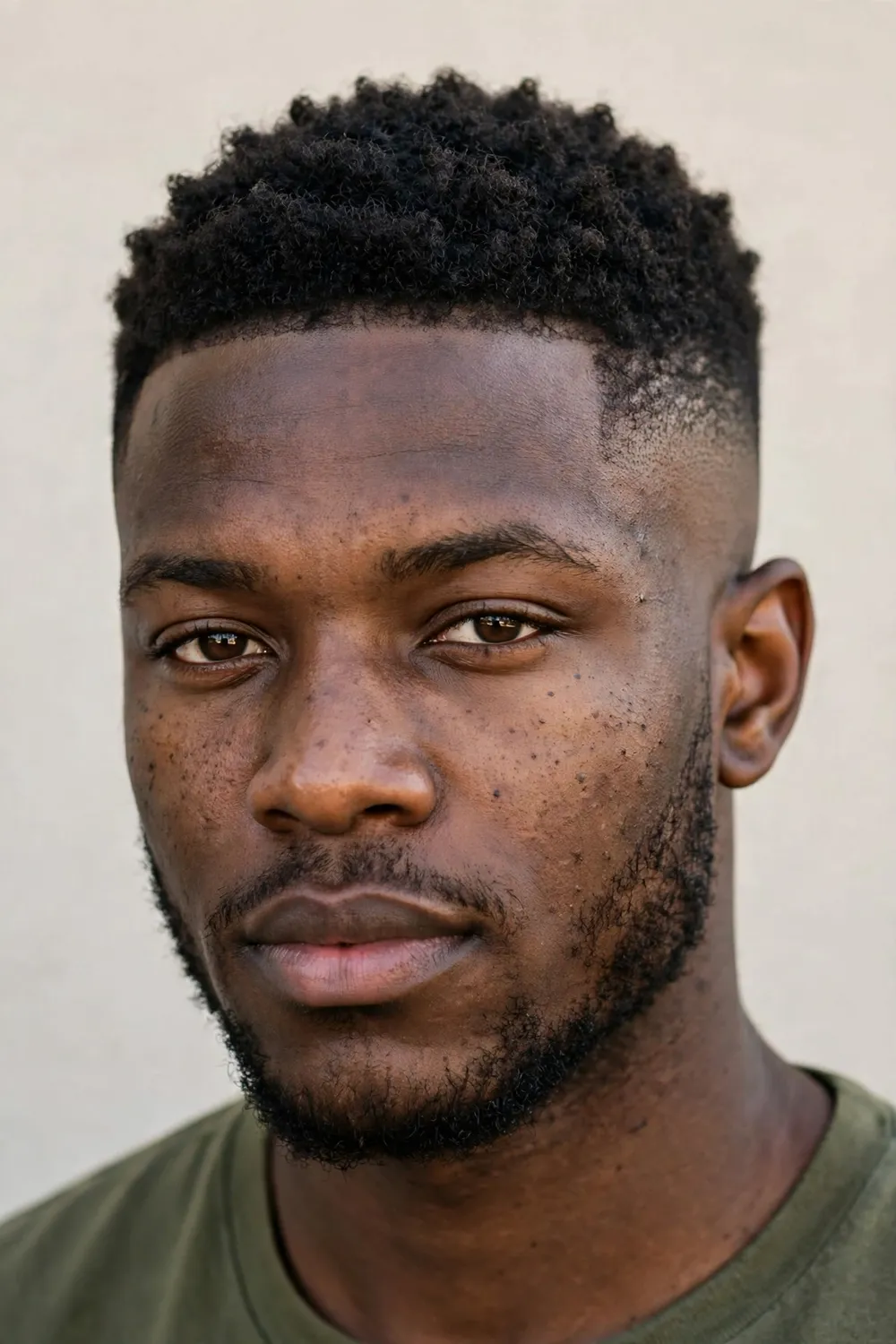
The mid fade sits at temple height, which makes it the most versatile cut on this list. It flatters oval, square and heart-shaped faces because the fade line draws the eye sideways and balances a strong jaw or a wider forehead. Type 4 hair holds the blend beautifully, while type 3 curls on top give it a softer finish. Ask your barber: “Mid fade, start the blend at the temple, #0.5 at the bottom, keep two inches on top with a sharp lineup.” Work a matte clay through the top for texture that doesn’t move. The trade-off is the schedule: a mid fade shows growth faster than a low one, so expect a touch-up every 12 to 14 days.
3. High Fade

A high fade pushes the blend up to the crown, leaving a full top to carry the look. It’s best on oval and square faces, and on guys with a fuller head of type 3 or 4 hair. If your hairline is already receding at the temples, think twice; the height of the fade draws attention straight to it. Ask your barber: “High fade, skin at the sides up to the parietal ridge, leave three inches on top, lineup crisp but not pushed back.” A curl sponge or a little leave-in cream defines the top in under two minutes. The fade grows out visibly in about a week, so expect a cut every 10 days unless you’re happy letting the blend soften into a taper between visits.
4. Taper Fade
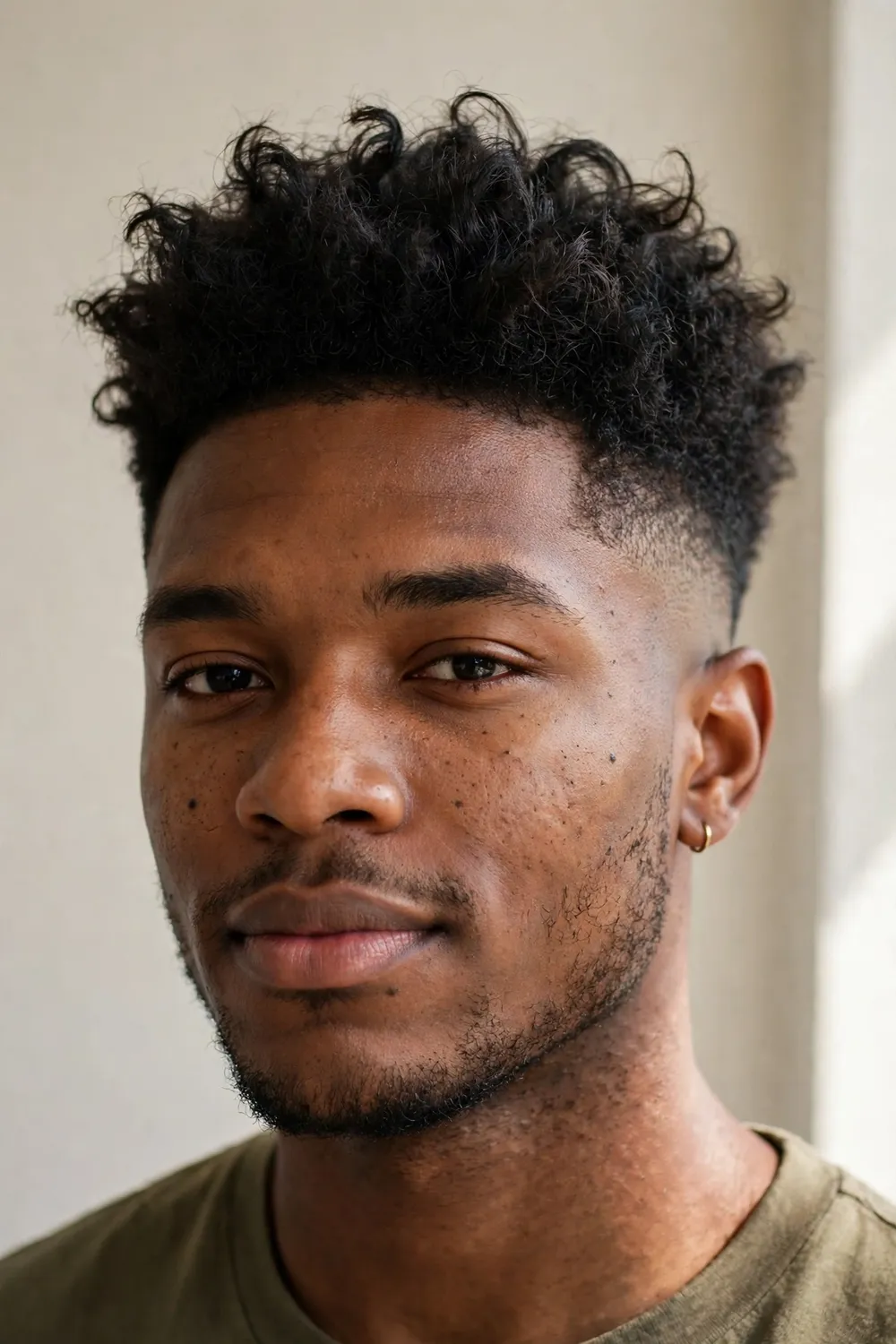
The taper fade is the quiet professional of the group: it only fades at the sideburns and the neckline, leaving the rest of the sides at full length. It’s the easiest fade to grow out and the safest pick for a conservative office. It suits every face shape, and it’s a lifesaver for thick type 4 hair at the sides — the taper takes the bulk out exactly where it poofs. Ask your barber: “Taper fade, just the sideburns and the nape, #2 to skin at the edges, keep the length on top.” A light oil sheen or water-based pomade is all the product you need. Maintenance is the lightest of any fade here — three to four weeks between cuts is fine, and the grow-out still looks deliberate.
5. Temp Fade

The temp fade — short for temple fade — fades only around the temples, framing a sharp lineup while the back stays full. It works best on oval and diamond faces and on type 3 or 4 hair where the temple area can be blended cleanly without the fade eating into the top. If you’ve got a wide forehead, the temple fade actually helps, because it breaks up the hairline. Ask your barber: “Temp fade around the temples only, skin at the very edge, keep the back and the top untouched, lineup sharp.” A touch of edge control on the hairline keeps it razor-clean. The catch is precision: the fade is small, so any unevenness shows, and you’ll want it touched up every 10 days to two weeks.
Waves & Twist Textures
6. 360 Waves
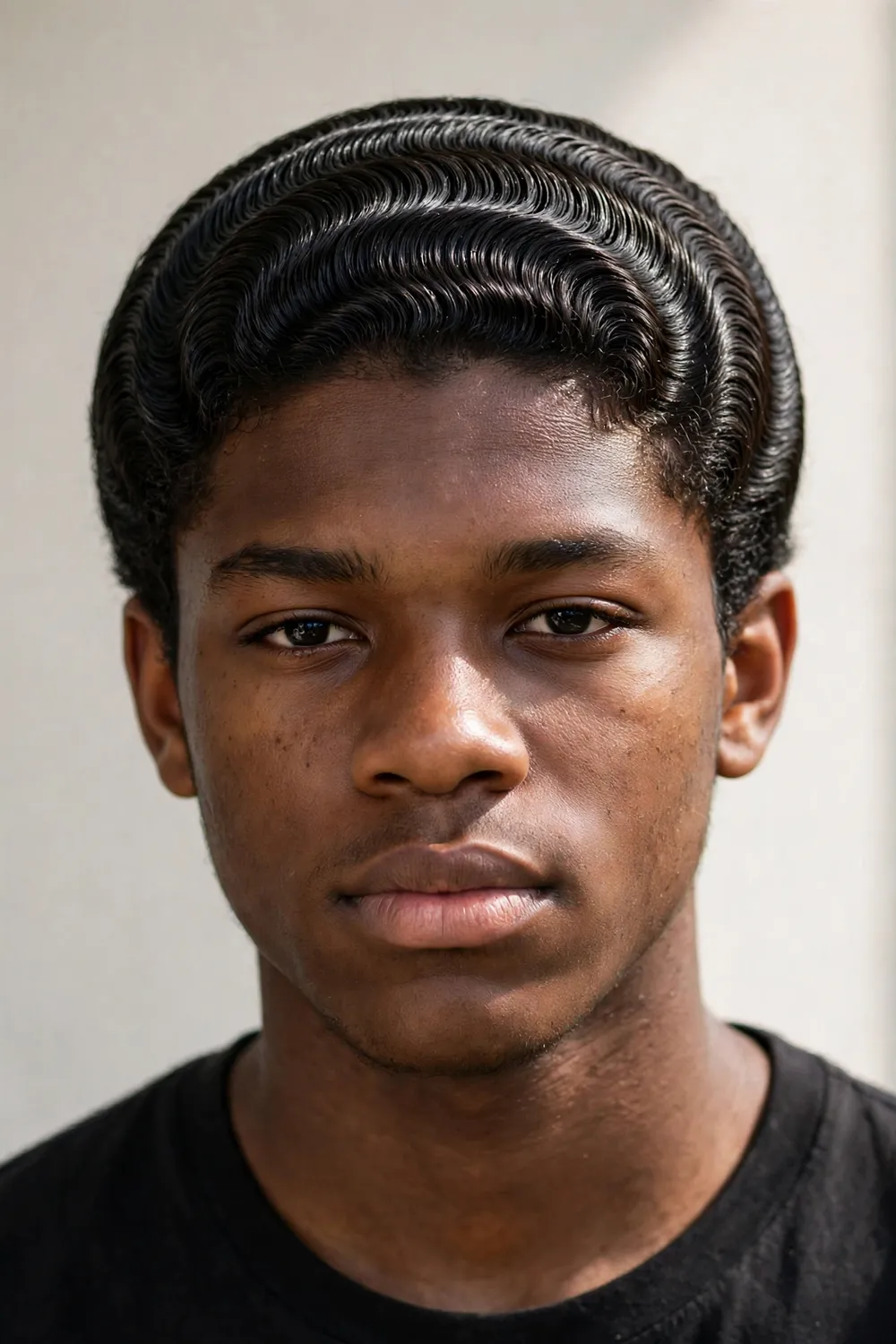
360 waves are the ripple pattern brushed all the way around the head. They suit oval and round faces, and they need type 3 or type 4 hair with enough length — about an inch and a half — to actually bend. The honest truth is that waves are a project, not a haircut: expect four to six weeks of dedicated brushing before the pattern locks in. Ask your barber: “Waves cut, #1.5 with the grain all over, low taper at the edges, lineup clean.” Then the real work starts at home: brush 15 to 20 minutes a day, pomade to train the pattern, and a durag every single night. Skip the durag and you lose a week of progress.
7. 720 Waves
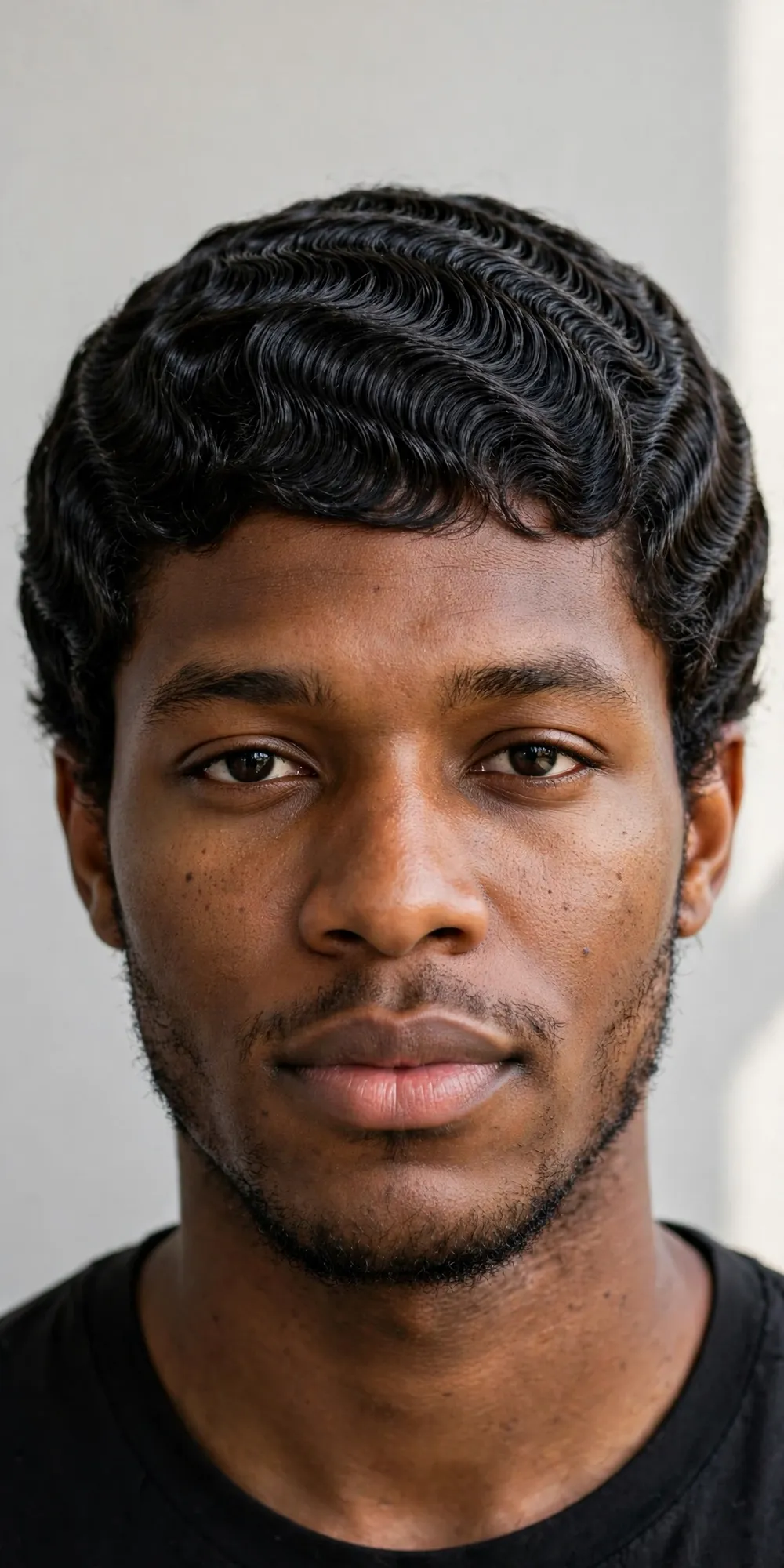
720 waves take the 360 pattern and spin it — the ripples circle the head in a continuous swirl instead of running front to back. It’s an advanced look that demands patience: six to eight weeks of brushing before it reads properly, and it only works on type 3 or 4 hair trained from a fresh cut. Oval faces carry it best, since the circular pattern adds width on the sides. Ask your barber: “720 waves cut, #1 with the grain, taper at the nape, no hard lineup against the swirl.” You’ll brush in the circular direction daily, use a light pomade, and sleep in a durag. The maintenance never really stops — waves are a lifestyle — but once the pattern sets, ten minutes a day keeps it spinning.
8. Sponge Twists
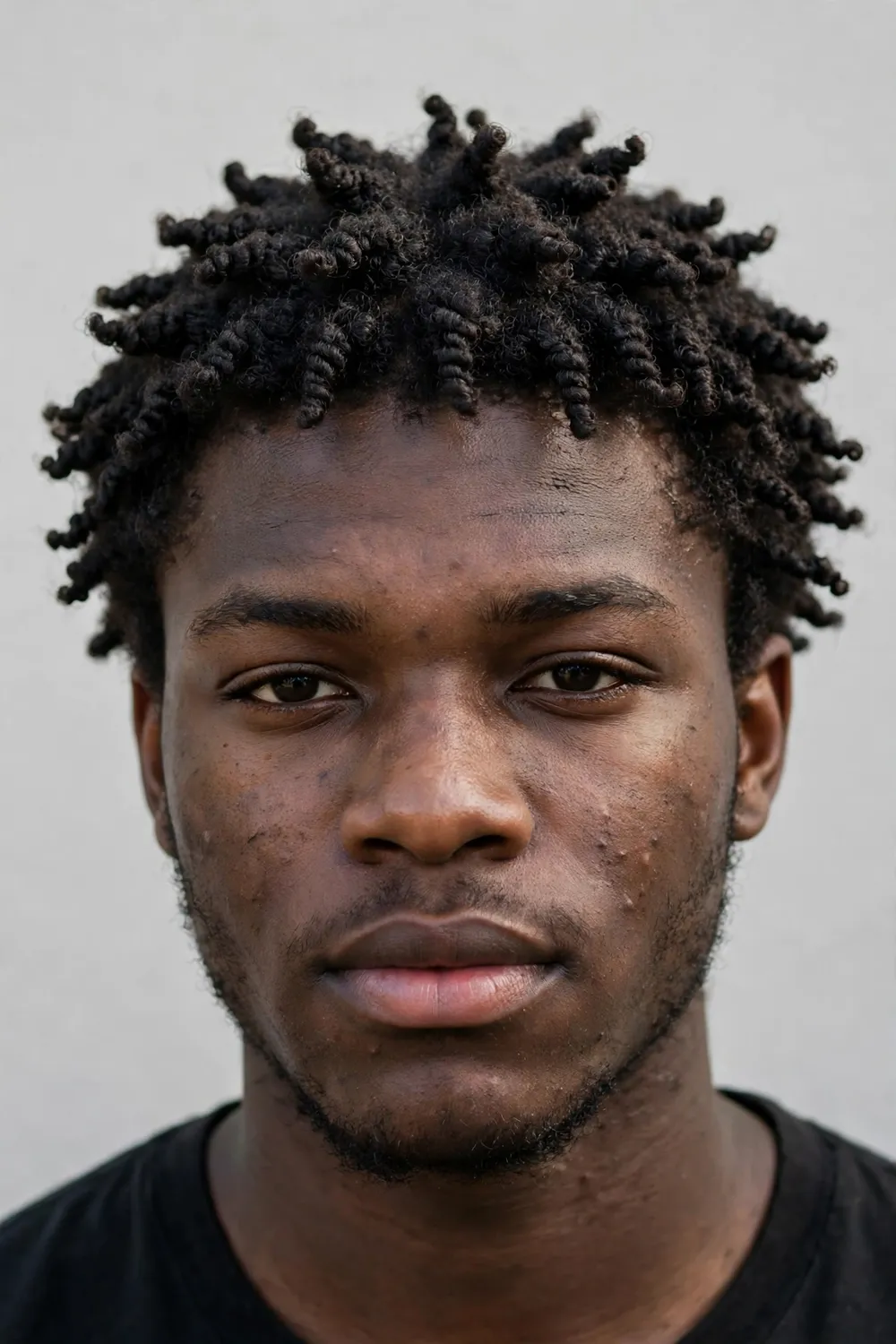
Sponge twists are the fastest texture on this list: a curl sponge worked in small circles over damp hair pulls type 4 coils into neat little twists in about ten minutes. They suit round and square faces, and they’re perfect for hair between half an inch and an inch long. This is the cut for a guy who wants definition without a 45-minute routine. Ask your barber: “Sponge twists, keep the top an inch, low taper on the sides, lineup sharp.” At home, dampen the hair, add a little curl cream, and work the sponge in one direction for a few minutes. The twists last three to five days before they loosen, so you’ll redo them a couple of times a week — quick, but not set-and-forget.
9. Two-Strand Twists
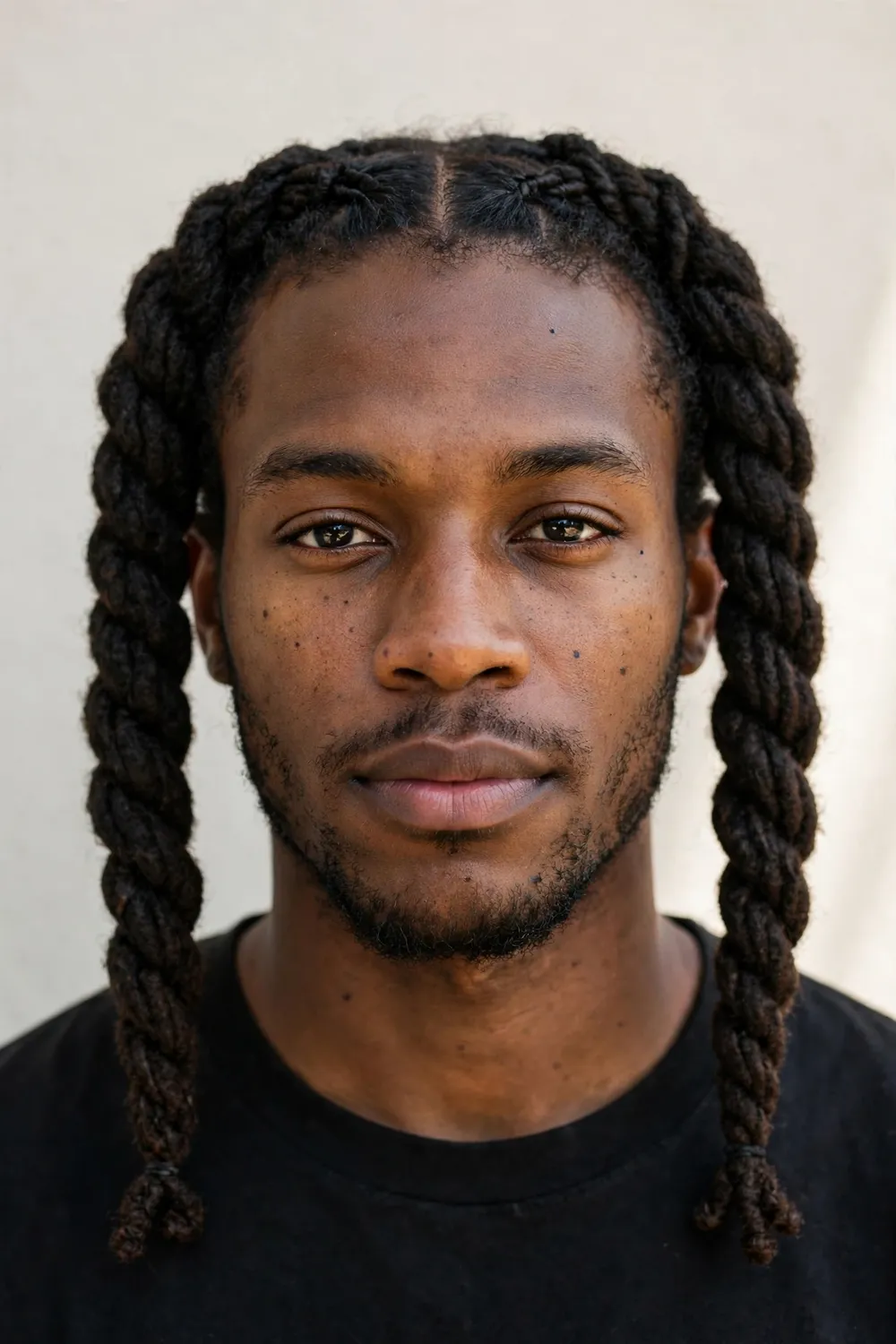
Two-strand twists split the hair into two sections and wind them around each other, a protective style that lasts two to three weeks without daily effort. They work on type 3 and type 4 hair from about two inches long, and they flatter longer faces especially well because the twists hang and add softness around the jaw. Ask your barber or loctician: “Two-strand twists, medium size, low fade on the sides, not too tight at the hairline.” A light butter or cream keeps them moisturised. The honest maintenance is gentle handling: sleep in a satin bonnet or on a satin pillowcase, don’t pull them tight at the roots, and take them down carefully after three weeks. Done right, they’re one of the healthiest styles here.
10. Twist-Out Fro
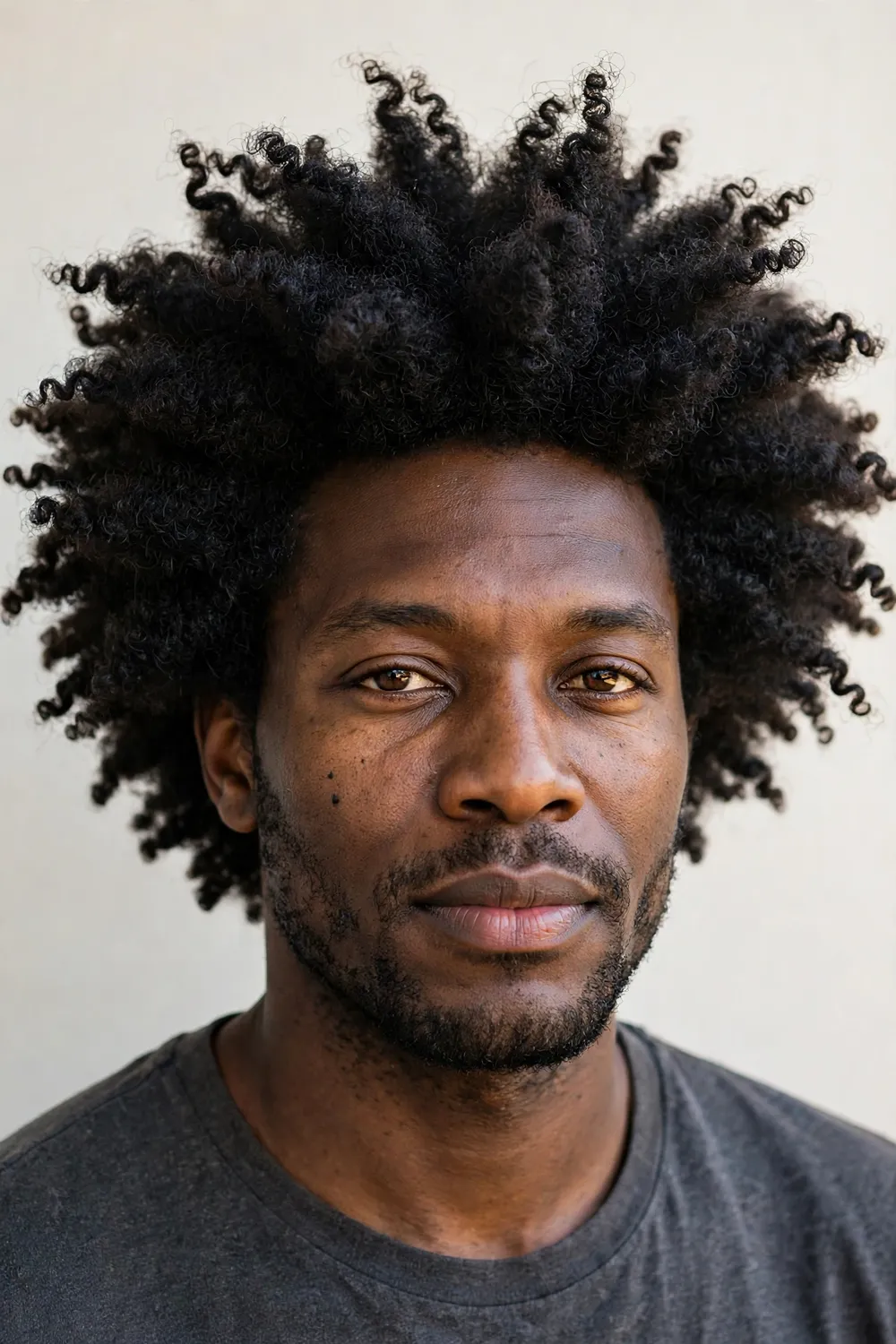
The twist-out fro is what you get when you untwist two-strand twists and let the curls spring into a big textured afro. It suits oval and heart-shaped faces, and it needs type 3 or 4 hair at least three inches long. Ask your barber: “Shape it into a fro, even all round, keep the length on top, taper the sides lightly.” The twist-out itself takes an evening: twist damp hair with cream, sleep on it, then separate each twist gently in the morning with oiled fingers — never a comb, or you’ll get frizz instead of definition. It holds for three to four days, and a pick at the roots revives the shape. It’s a weekend look that earns compliments, but it asks for that one evening of prep.
Afros & Natural Length
11. Rounded Afro
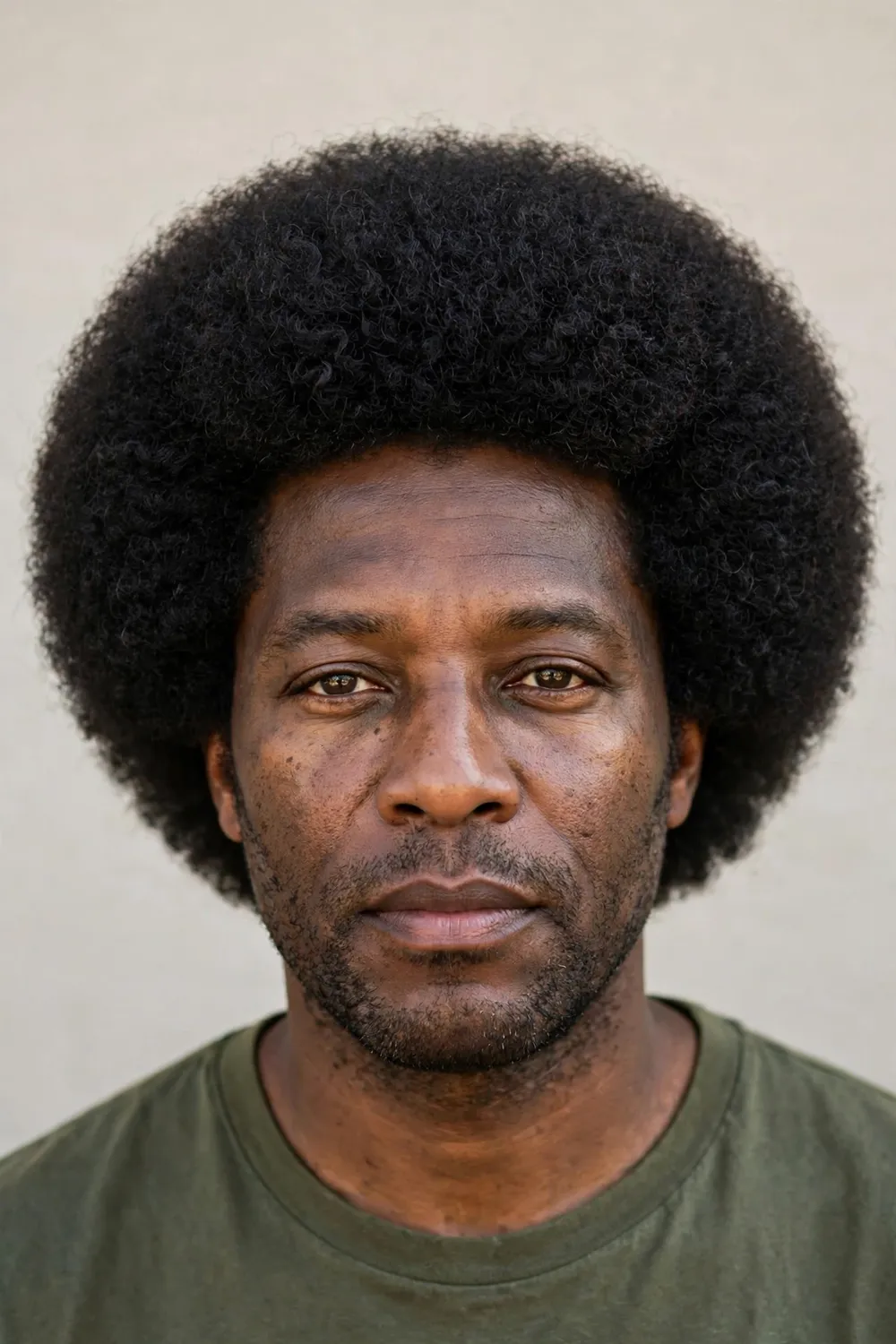
The rounded afro is the classic — a full, even circle of hair, shaped the same all the way round. It suits oval and round faces best, and it needs type 4 hair with enough density to hold the shape; thinner type 3 curls can work too, but the silhouette won’t be as full. Ask your barber: “Rounded afro, even all round, shape it with the pick, keep the length about four inches, lineup clean at the forehead.” A leave-in conditioner and a wide-tooth pick are your daily tools — pick it out in the morning, moisturise, and you’re set. Maintenance means a shape-up every three weeks to stop one side growing heavier than the other, and a satin pillowcase at night so the shape doesn’t flatten overnight.
12. Tapered Afro
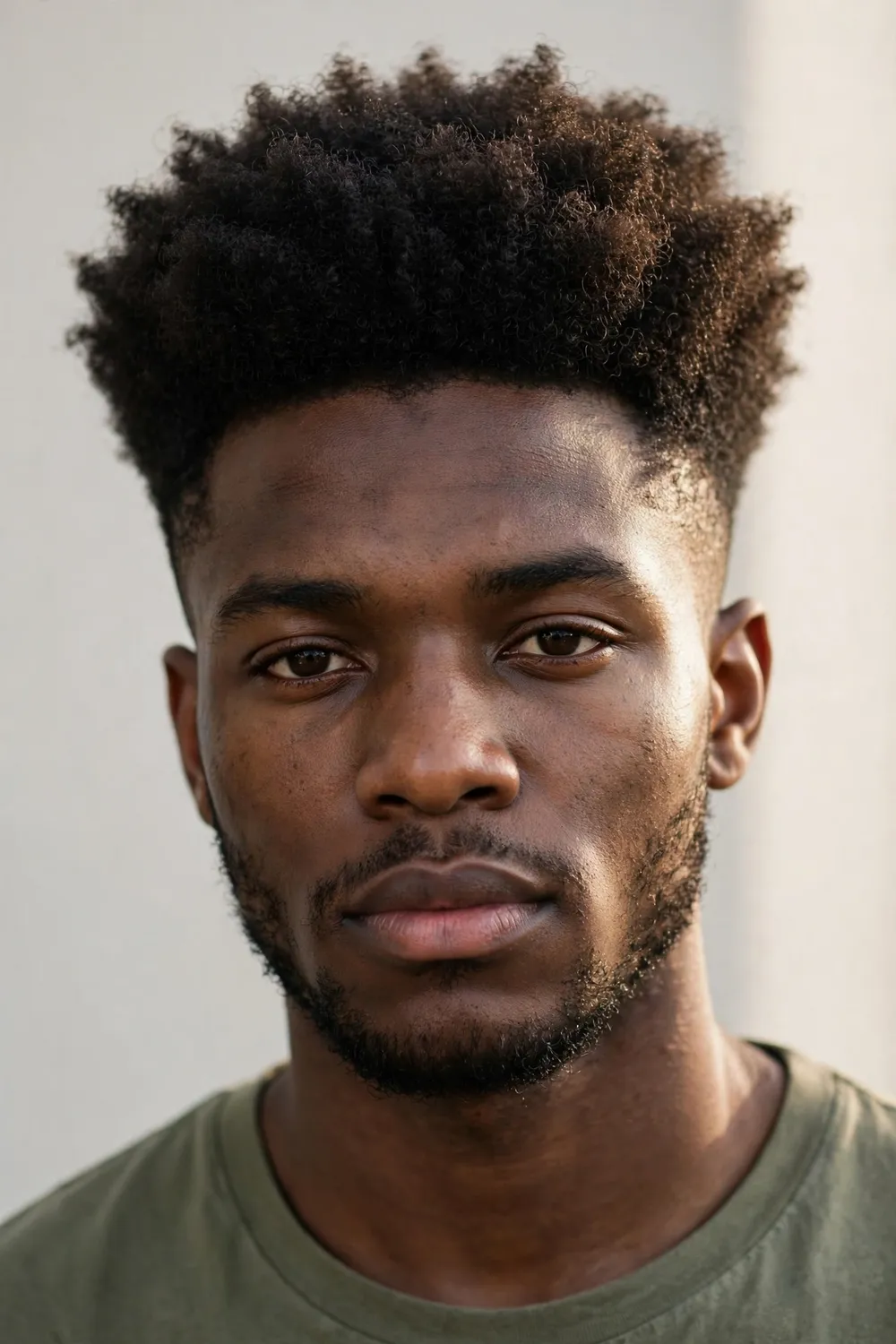
The tapered afro keeps the full top but gradually shortens the sides, so you keep the afro’s presence with a cleaner outline. It’s the best afro option for square and oblong faces, because the taper slims the sides while the top adds balanced height. Type 4 hair holds the shape effortlessly; type 3 curls give it a softer, looser edge. Ask your barber: “Tapered afro, full on top, gradually shorter down the sides, #2 at the bottom, lineup sharp.” Moisturise daily with a cream or butter, and pick the top out. The taper grows out faster than the top, so a tidy-up every two to three weeks keeps the silhouette crisp — let it slide to five weeks and the taper disappears, leaving a regular afro.
13. Curly Fro
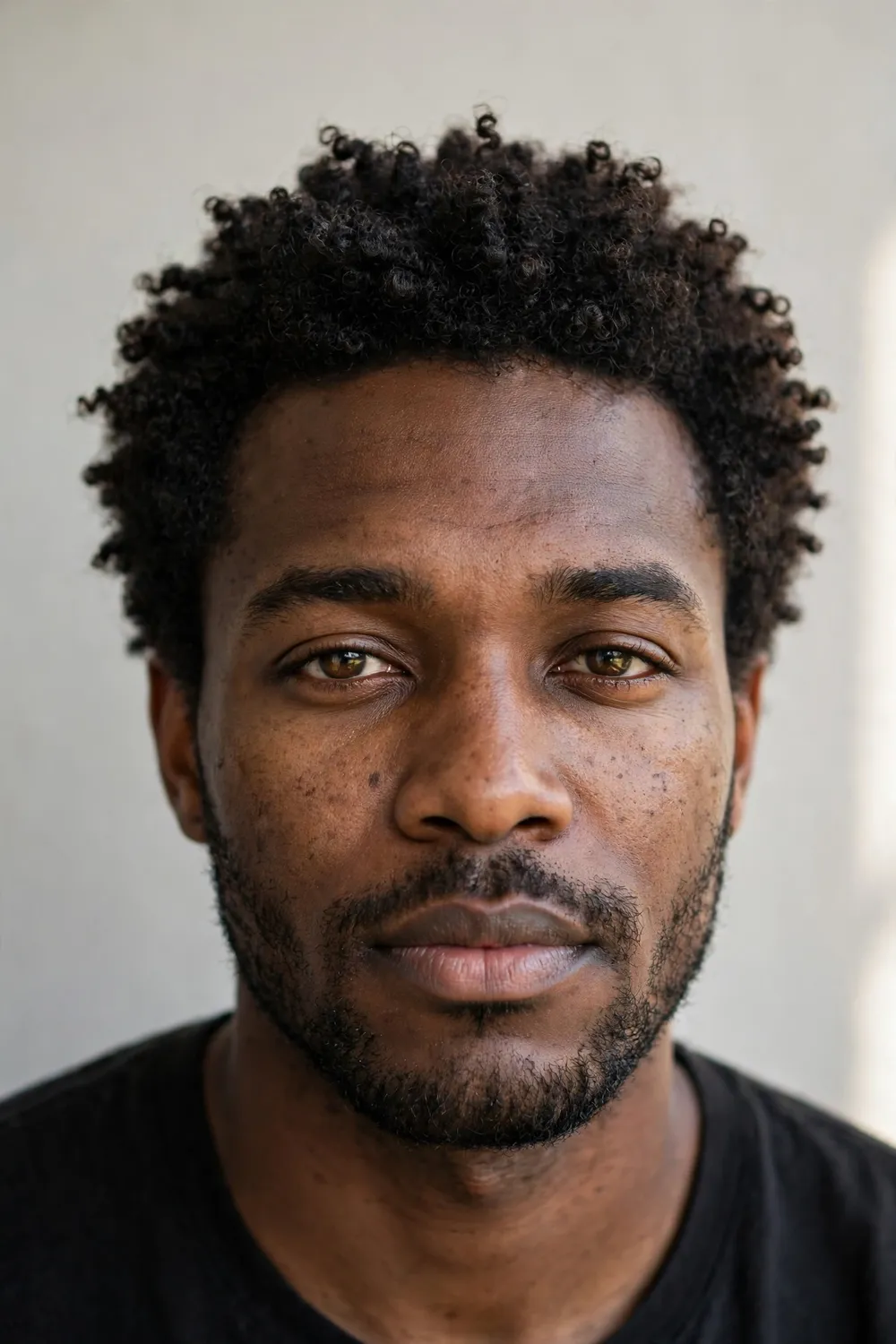
The curly fro is a shorter, tighter afro where the curls stay defined instead of picked out into a cloud. It suits round faces particularly well because the definition adds structure, and it’s made for type 3 curls or looser type 4 coils that clump naturally. Very tight coils need a little more product for the same definition, but it still works. Ask your barber: “Curly fro, about two inches on top, shape it round, taper the sides slightly, lineup natural.” A curl cream scrunched through damp hair defines the pattern, and a diffuser on low heat speeds the drying without frizz. Wash once a week with a sulfate-free shampoo, condition well, and refresh the curls with a spray bottle in the morning. It’s a three-week cut between shape-ups.
14. Frohawk

The frohawk runs a strip of curls down the centre of the head with faded sides — the drama of a mohawk without shaving everything off. It suits oval and diamond faces — the vertical line lengthens the face — and it works on type 3 and type 4 hair with at least two inches on top to form the strip. Ask your barber: “Frohawk, keep the centre strip about two inches wide, mid fade on the sides, lineup sharp.” Style the strip with a little curl cream and pick it upward for height. The sides need a fade touch-up every two weeks to keep the contrast, while the centre can grow for a month. It’s bold and it photographs brilliantly — but the fade is doing half the work.
15. Low Cut
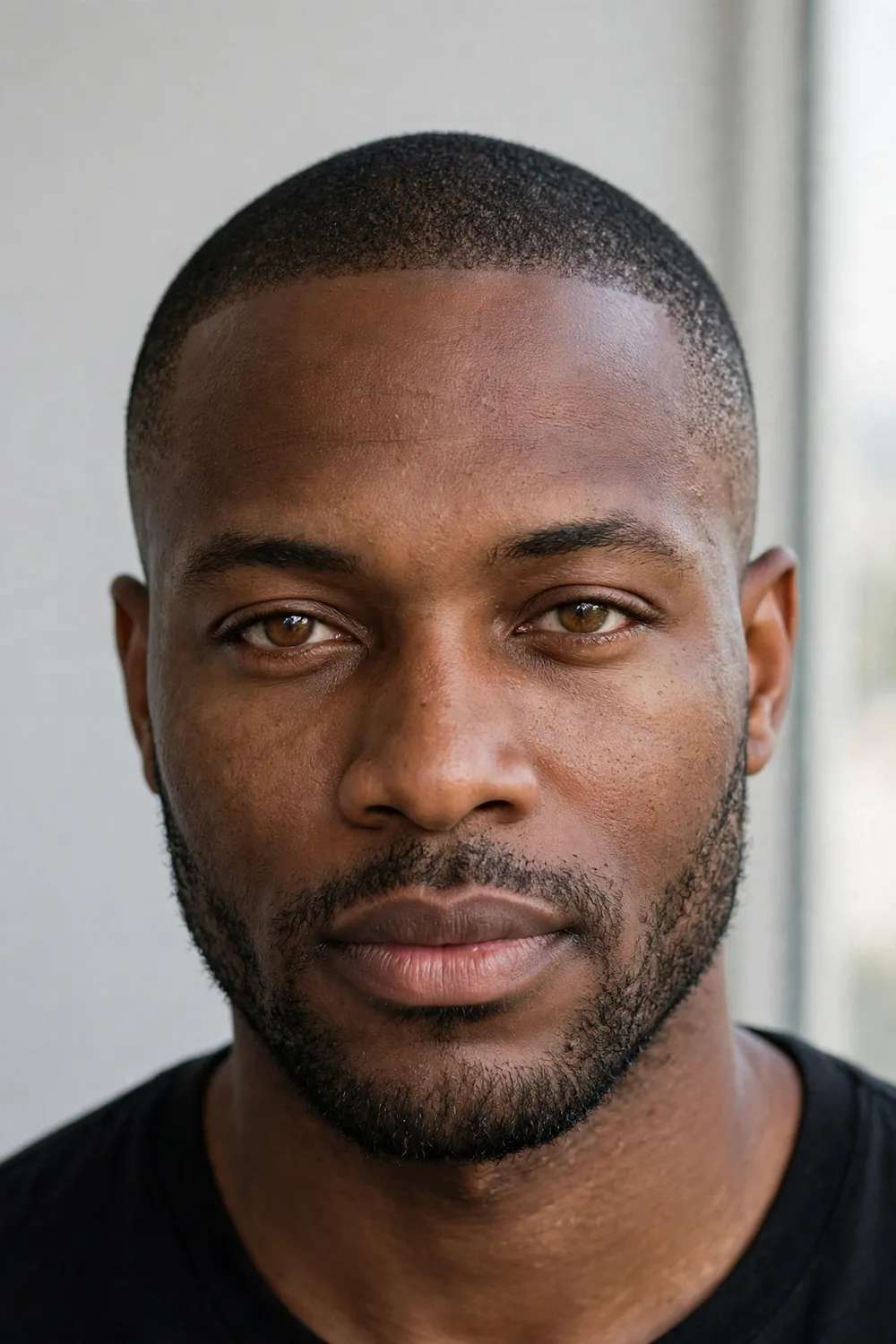
The low cut is one even short length all over — usually a #1 or #2 guard — finished with a sharp lineup. It suits every face shape and every hair type: it always looks clean and takes five minutes to maintain. Ask your barber: “Low cut, #1.5 all over, lineup sharp, taper the nape.” That’s it — that’s the whole brief. A little oil sheen on the scalp keeps it looking healthy, and a soft brush once a day keeps the grain even. You’ll need a cut every two weeks to keep the lineup crisp, but even at three weeks it still looks intentional. If you’re growing out waves later, this is also the perfect starting cut.
Short & Sharp Cuts
16. Buzz Cut + Lineup
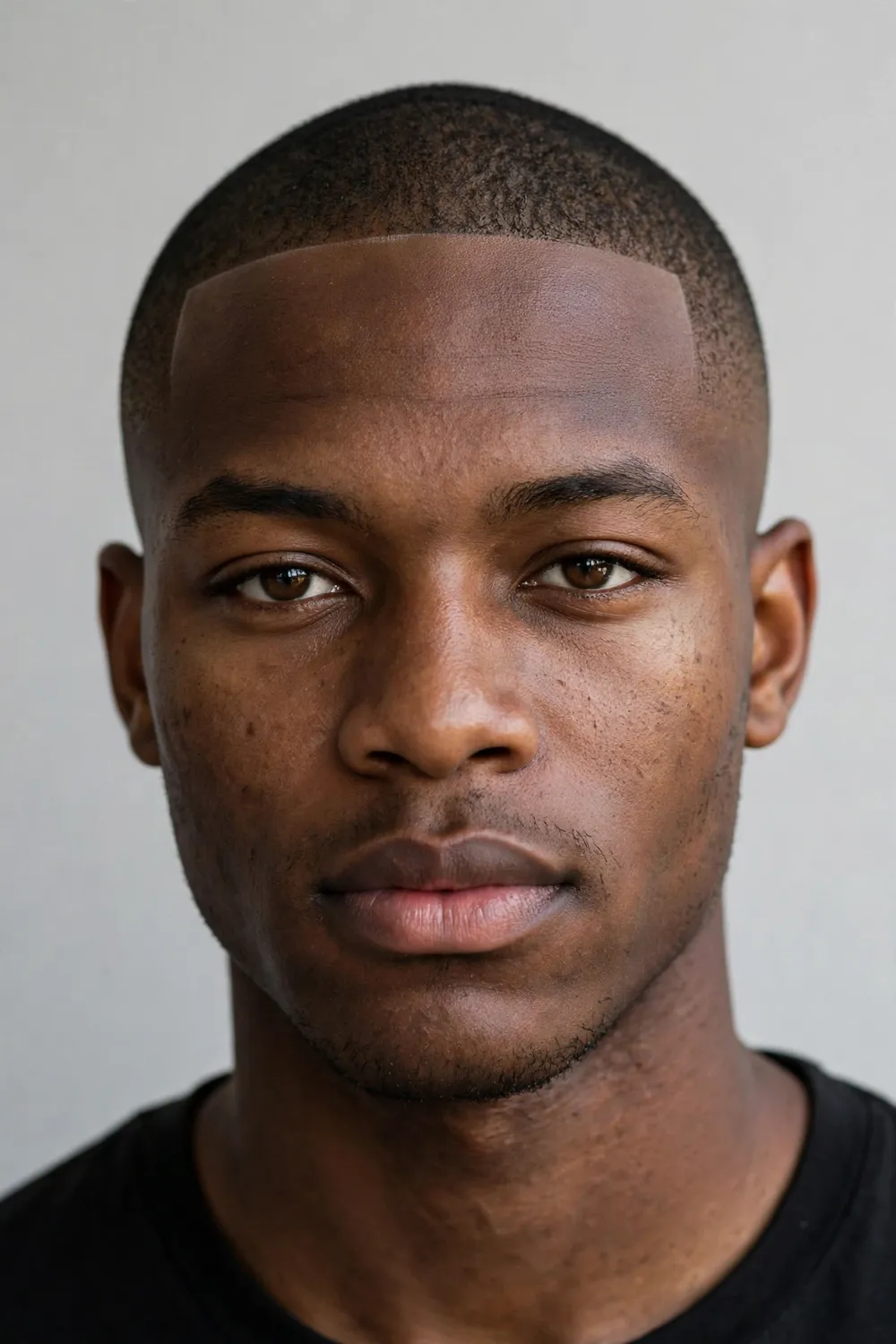
The buzz cut with a lineup is military-clean: one guard all over, then a razor-carved hairline that turns a simple cut into something sharp. It suits square and oval faces best, because there’s no hair to soften strong features. Type 3 and type 4 hair both work; the lineup is the star, not the texture. Ask your barber: “Buzz, #1 all over, lineup razor-sharp, don’t push the hairline back.” A dab of moisturiser on the scalp stops it looking dry, and a soft brush keeps the stubble even. The lineup is the maintenance: it starts blurring after about a week, so book every 10 to 14 days, and never re-carve it yourself with a cheap trimmer — one slip and you’re explaining a crooked hairline for two weeks.
17. Caesar + Lineup

The Caesar is a short cut with the fringe brushed forward, paired with a sharp lineup. It suits round and square faces because the forward fringe shortens a long forehead, and it works on type 3 and type 4 hair that’s at least an inch long on top. Ask your barber: “Caesar, one inch on top brushed forward, #1 on the sides, lineup crisp.” A small amount of matte paste holds the fringe in place without shine. Maintenance is straightforward: a trim every two to three weeks keeps the fringe from falling into your eyes, and the lineup needs the same attention as any sharp-edged cut. It’s also a great pick for a hairline thinning at the temples — the forward fringe covers it naturally.
18. Crew Cut

The crew cut keeps a slightly longer upright top — about an inch — over tapered sides, a neat, athletic look that works everywhere from the gym to a job interview. It suits oval and square faces, and it flatters type 3 curls on top, which give the upright section a bit of natural texture. Type 4 hair works too, if the top is kept short enough to stand up rather than flop. Ask your barber: “Crew cut, one inch on top, tapered sides #2 to skin, lineup natural.” A light matte clay or a dab of pomade holds the top upright through the day. It grows out gracefully, so three weeks between cuts is realistic, and a quick brush in the morning is all the styling it needs.
19. Box Fade
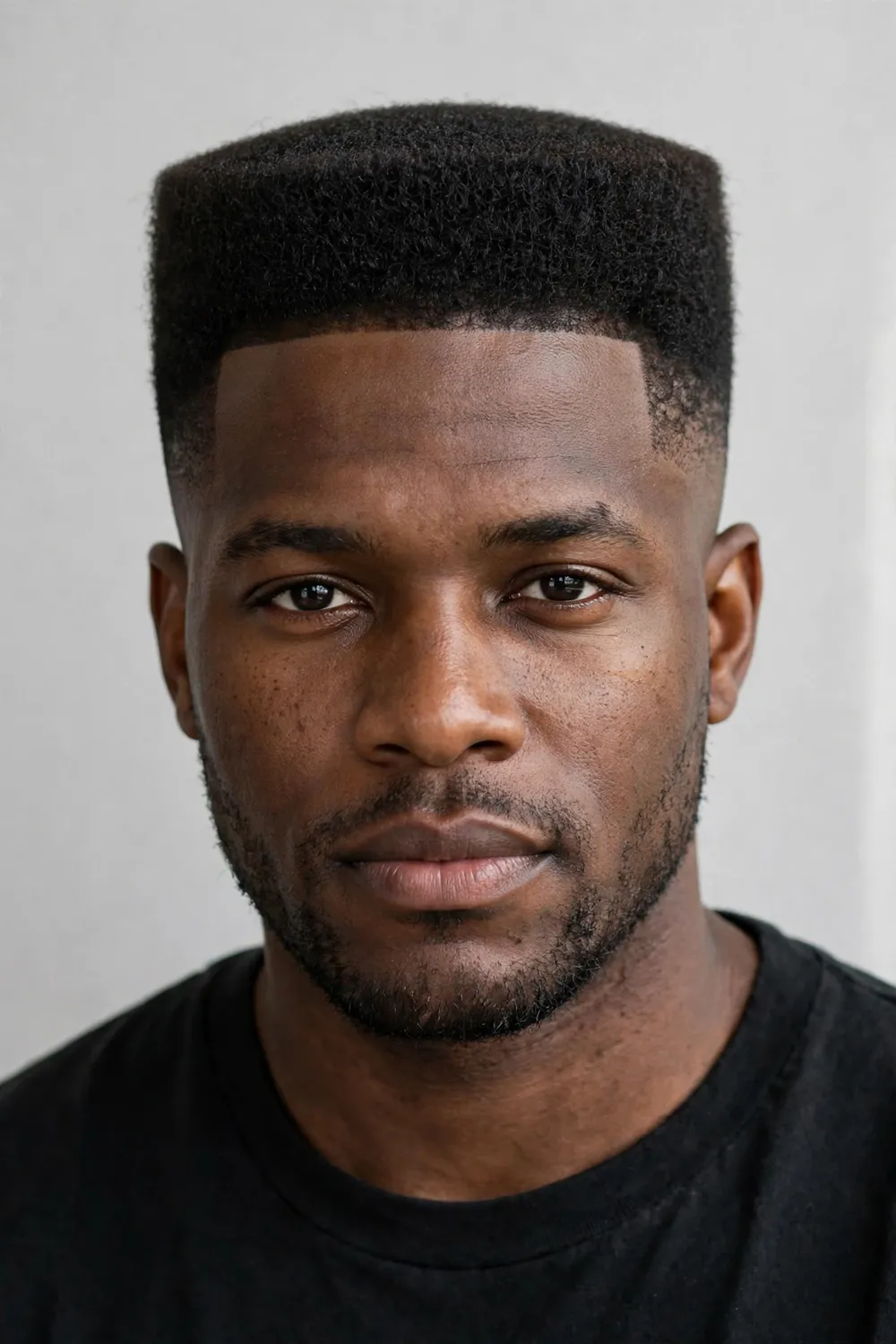
The box fade is the 90s icon: a level flat top with sharp squared corners and faded sides. It suits oval and square faces, and it needs dense type 4 hair — the flat top only holds its shape if the coils are thick enough to stand up. Ask your barber: “Box fade, level flat top, sharp corners, skin fade on the sides, lineup crisp.” Ask whether they’ve actually cut one before — a bad box fade is very visible. A pick and a little holding spray keep the top level. Maintenance is the price of the look: the corners soften in about a week, so expect a chair visit every 10 days, and a satin pillowcase matters more here than anywhere, because a flattened corner ruins the silhouette.
20. Lineup + Short Curls
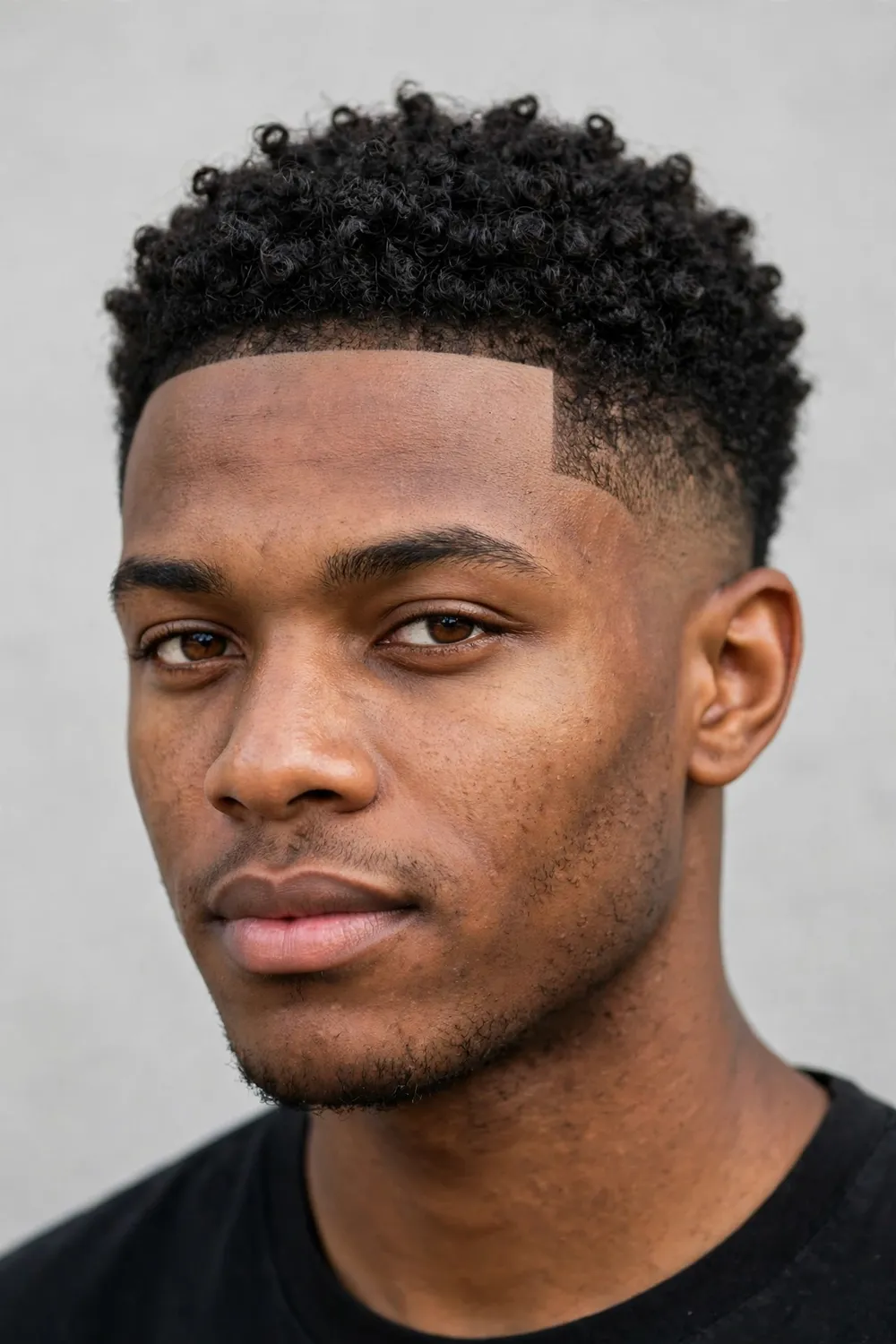
The lineup with short curls pairs a razor-defined hairline with a couple of inches of natural curl on top — the texture softens the edge and the combination looks polished. It suits oval and heart-shaped faces, and it’s made for type 3 curls or type 4 coils that clump into visible curls at short length. Ask your barber: “Short curls on top, about two inches, lineup razor-sharp, taper the sides to a #1.” Curl cream worked through damp hair defines the pattern in a minute. The curls need a trim every three weeks to stop them going shaggy, but the lineup is the clock — it blurs after 10 days, so book the shape-up on schedule and the cut stays looking fresh.
Fade Pairings & Modern Twists
21. Curly Top + Fade
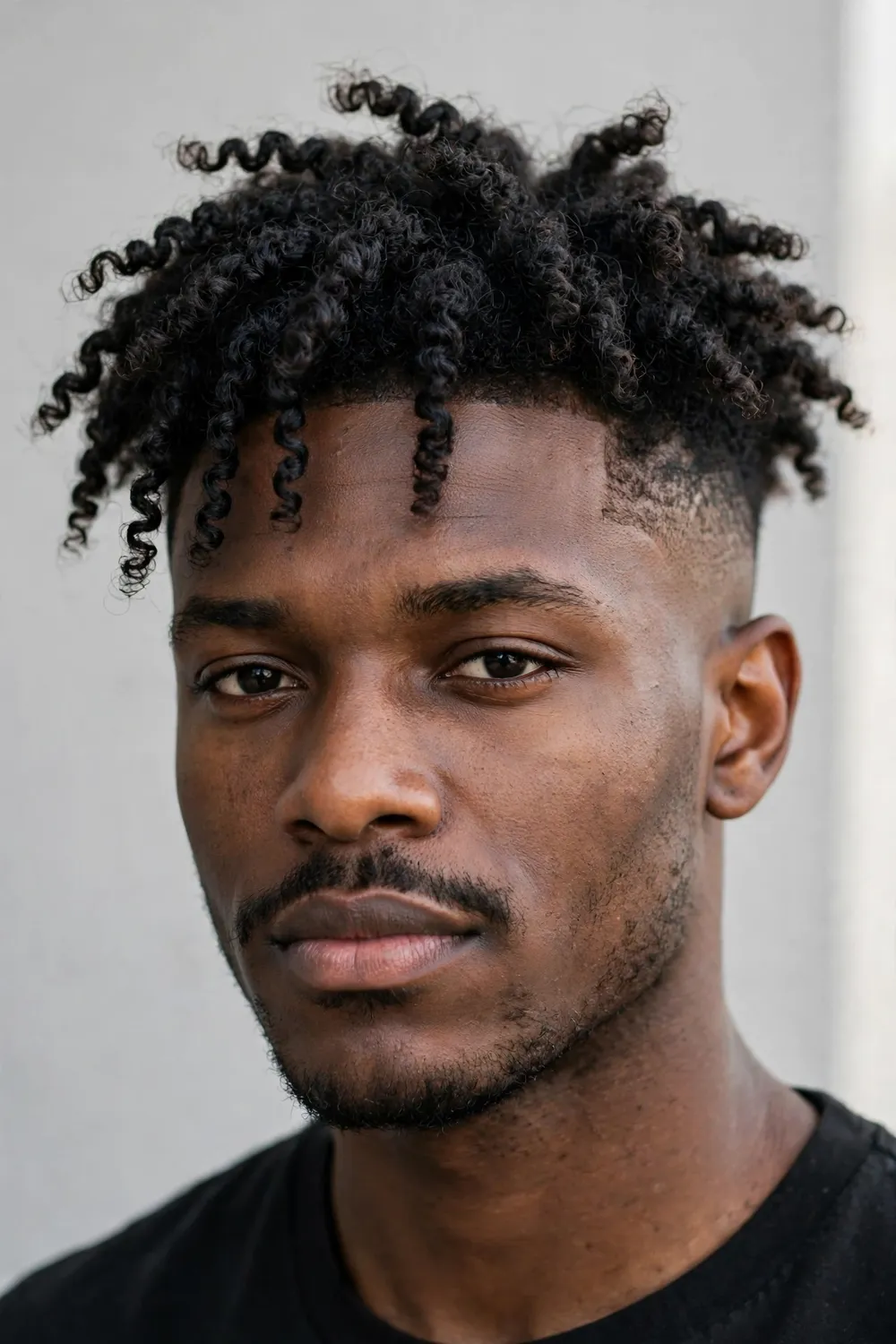
The curly top with a fade pairs length and texture up top with a clean blend on the sides, so the curls do the talking. A mid or low fade works best — a high fade can shrink the top visually. It suits oval and round faces, and it’s made for Type 3 curls and looser Type 4 coils that hold a shape without much help. Ask your barber: “Mid fade on the sides, keep the curls on top at least two inches, textured with thinning shears.” Finish with a curl cream scrunched into damp hair, then let it air dry. Maintenance is daily: curls need moisture every morning, a silk pillowcase at night, and a reshape every three weeks or the fade starts eating into the top.
22. Skin Fade
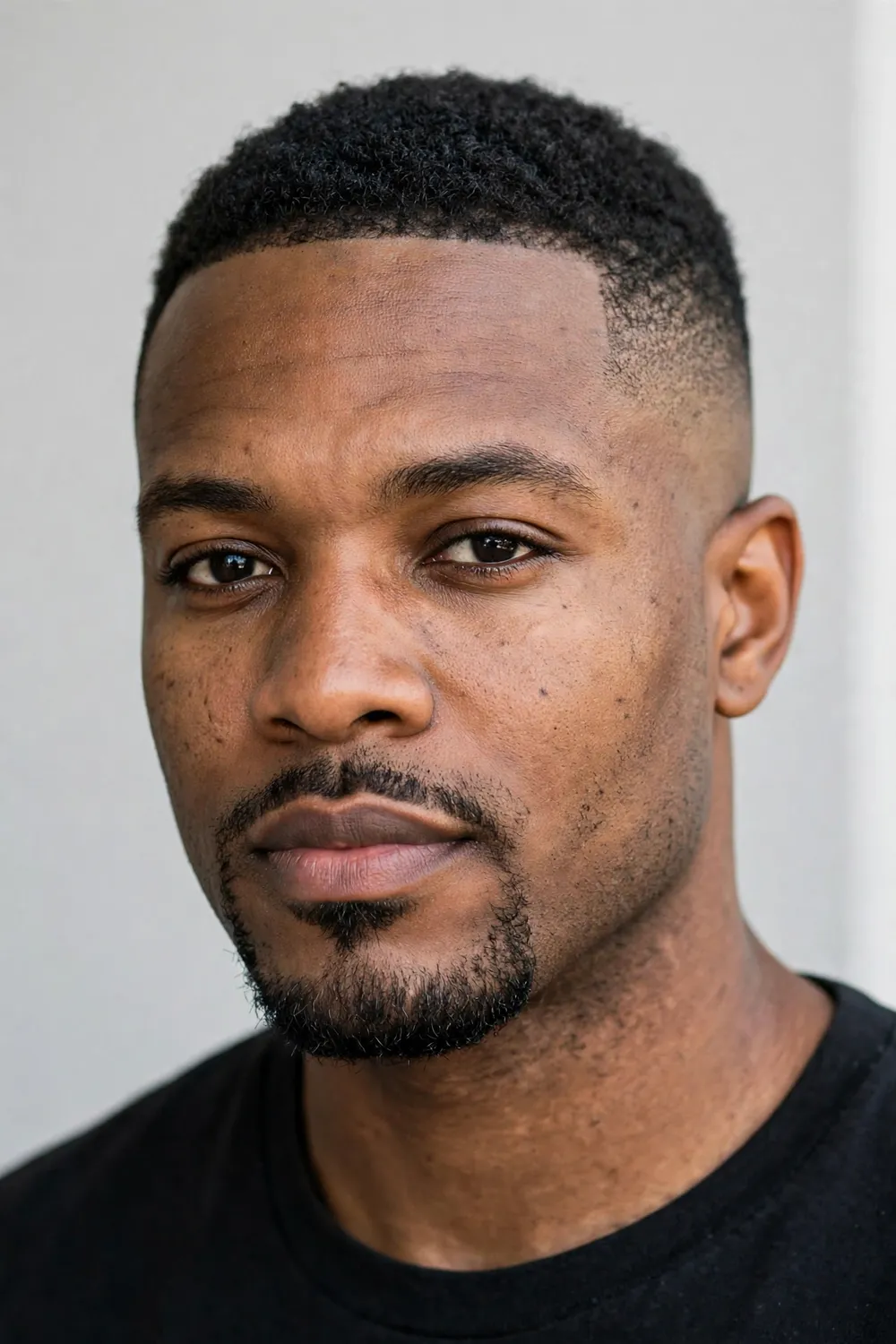
A skin fade is the fade taken all the way down — blended to bare skin at the bottom, with the gradient climbing up from nothing. It’s the sharpest fade there is, and it makes any top look intentional. It flatters square and oval faces, and it works with any hair type because the top is yours to choose. The ask matters: “Skin fade, zero guard at the bottom, blend up to a one, keep the line clean.” A foil shaver gives a truly bald finish. A light pomade or matte clay on top is all you need; the fade itself just wants sunscreen in summer. The catch is upkeep: a skin fade looks grown out in about ten days, so book every two weeks to keep it crisp.
23. Burst Fade
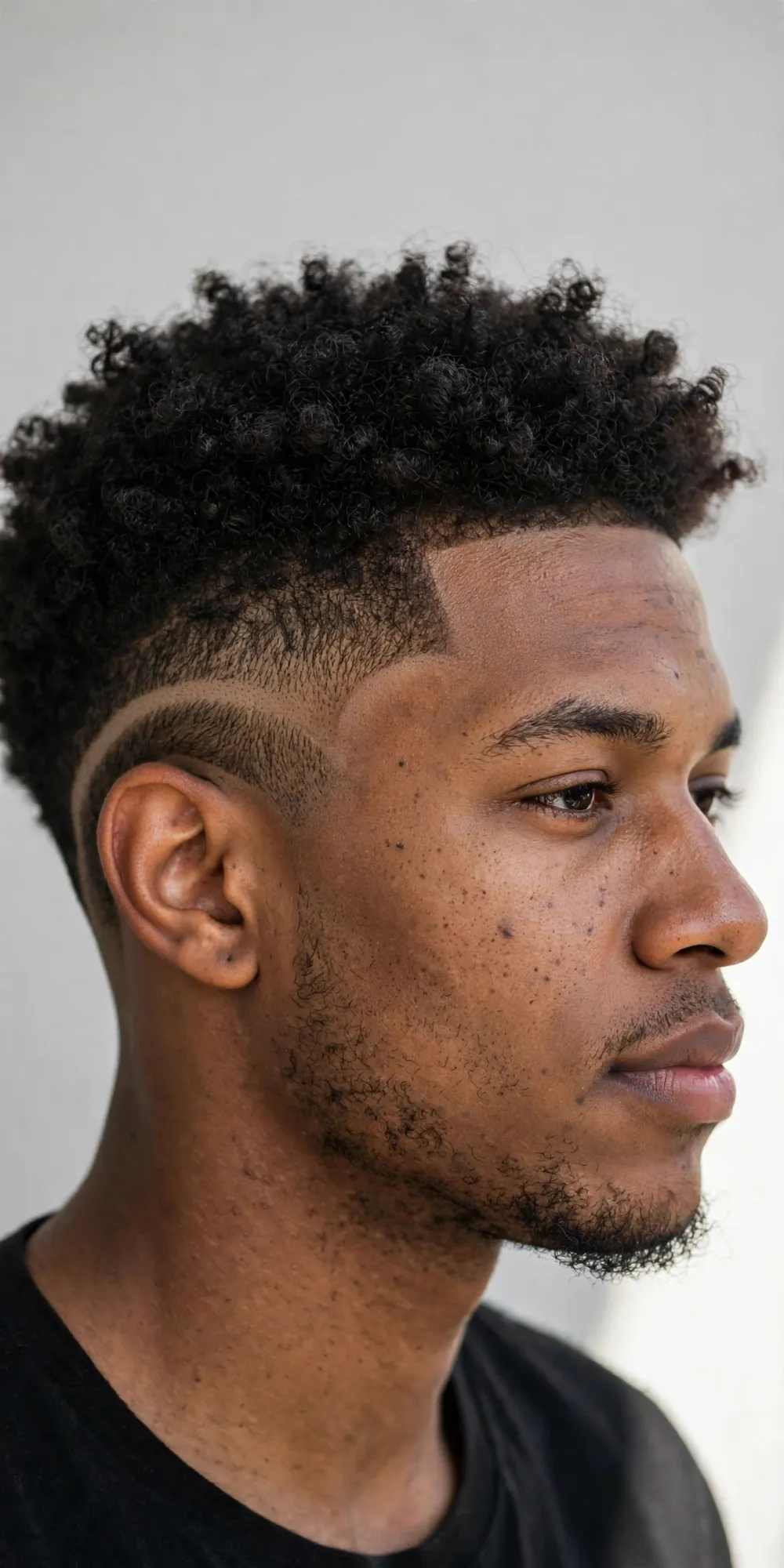
The burst fade curves in a half-circle around the ear, leaving length at the back of the neck while the sides melt away. It’s the fade with the most personality, and it pairs beautifully with curls or a short fro on top. Round and heart-shaped faces benefit most, since the curved blend softens a wide jaw. It works on Type 3 and Type 4 hair alike; the texture on top is what makes it. Tell your barber: “Burst fade around the ear, keep the back length, blend to a one and a half.” A curl sponge or a dab of styling cream gives the top definition without stiffness. Upkeep runs every two to three weeks, with a neckline cleanup between visits.
24. Drop Fade

The drop fade is named for what it does: its fade line dips down behind the ear instead of running straight around. That arc gives the cut a subtle, sculpted look, and it’s a favourite for guys who want a fade that doesn’t look like everyone else’s. It suits oval and square faces, over a textured crop, short curls, or a sponge twist. The barber ask: “Drop fade, low at the back, blend from skin to a two, keep the top as is.” Because the line curves, a sloppy cut shows immediately — get it from someone who cuts fades daily. A matte paste gives the top a natural finish. Upkeep runs two to three weeks; keep the neckline tidy or the drop disappears into stubble.
25. Hard Part + Fade

A hard part is a shaved line cut into the hair with a razor or trimmer, and paired with a fade it turns a clean cut into a statement. The part gives the top a direction — swept to one side — while the fade keeps the sides sharp. It’s a strong choice for square and oval faces, and for straighter Type 3 hair where the part reads clearly. The ask: “Mid fade with a hard part on the left, shaved with a razor, top swept to the side.” Bring a reference photo; placement changes the whole look. A medium-hold pomade keeps the sweep in place without a wet shine. The hard part softens within a week, so expect a weekly lineup touch-up to keep it razor-sharp.
Dreads, Locs & Beard Pairings
26. Short Locs

Short locs are the starter phase done right: neat, palm-rolled or two-strand-started locs close to the head, with faded sides to keep the look sharp while they mature. They suit every face shape, but shine on round and square faces where the lift adds balance. They work on Type 4 hair — the tighter the coil, the faster they lock. Ask your loctician: “Starter locs, palm-rolled, faded sides with a low taper.” Resist retwisting every week; every three to four weeks is enough, and over-twisting thins the roots. Light oil on the scalp and a durag at night keep them neat. Our guide to natural hairstyles for Black women covers the same starter methods. Maintenance is patience: locs take months to settle, and early fuzz is normal.
27. Freeform Dreads

Freeform dreads are the opposite of a salon loc: no parting, no retwisting, just your hair left to lock naturally into whatever shapes it chooses. The result is one of a kind — thick, organic, impossible to copy. It suits confident wearers with Type 4 hair; Type 3 curls can freeform too, but take longer and lock looser. There’s no barber ask, exactly — just: “Clean the hairline and neck, leave the dreads alone.” A loctician can shape the edges without touching the locks. Wash with a residue-free shampoo every one to two weeks and separate locs joining at the root, or you’ll end up with a few giant ones. Be honest with yourself: freeforms are a commitment, taking a year or more to settle, and undoing them means cutting.
28. Fade + Beard Blend

The fade-to-beard blend is where a great barber earns their money: the sideburns disappear into the beard, leaving no visible line between cut and facial hair. It looks seamless from every angle, and it makes a short cut feel complete. It suits square and oval faces best, and works with any hair type — the top can be a buzz, a crop, curls. The ask: “Fade the sides down into the beard, blend the sideburns, shape the neckline two fingers above the Adam’s apple.” Beard balm keeps the blend soft; a boar-bristle brush helps it sit right. The blend grows out in about two weeks, and the beard needs its own oiling and trimming. If the sides start looking patchy, rebook — a half-grown blend is worse than none.
29. Afro + Beard
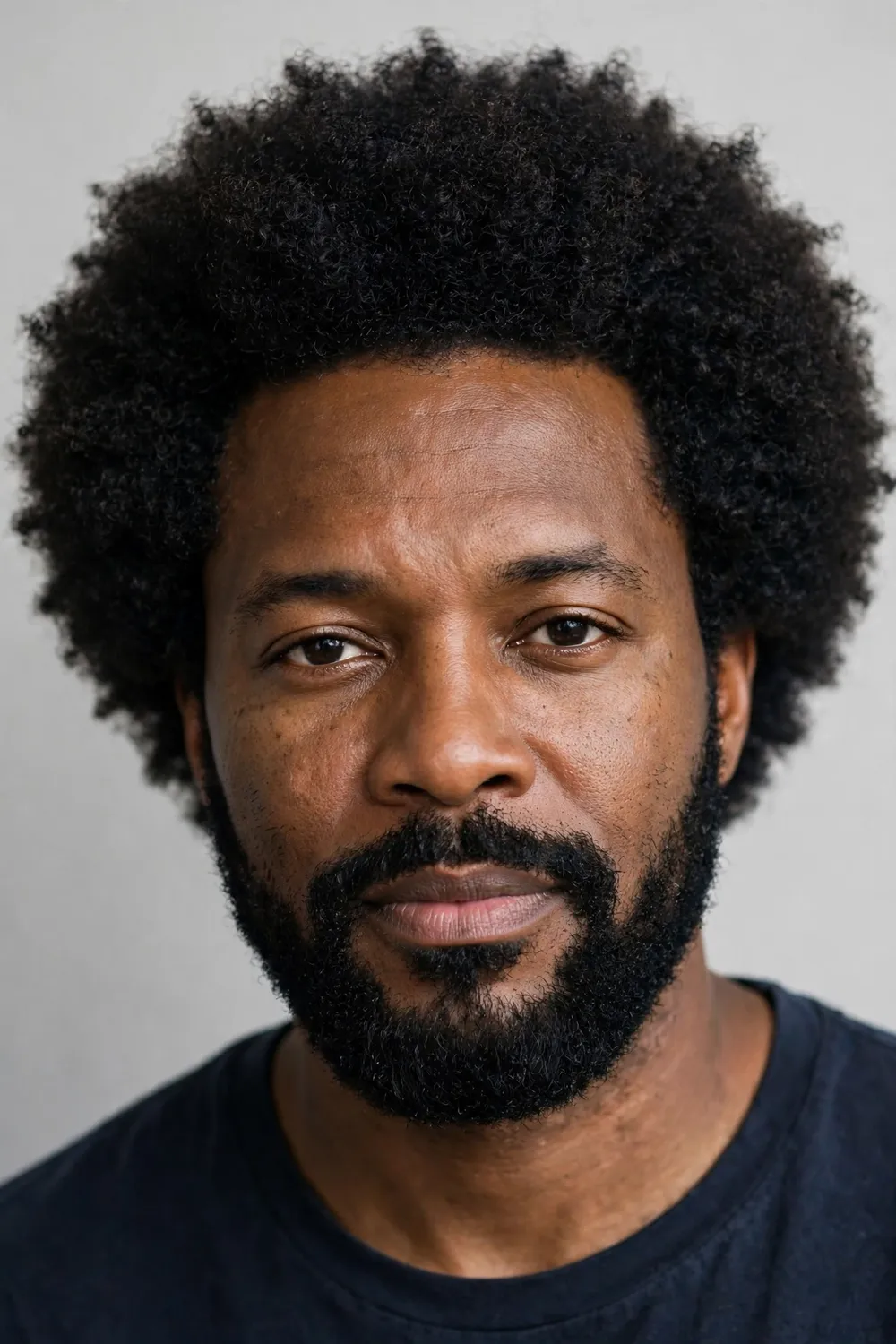
A full afro balanced with a shaped beard is a powerful, classic combination — volume on top matched by structure below. It suits round and oval faces, since the beard adds length to the jawline. Type 4 hair gives the fullest afro; Type 3 curls work with a slightly smaller shape. Ask your barber: “Rounded afro, even all over, beard shaped to the jawline, neckline cleaned.” The beard needs discipline: keep the cheek line natural, and oil it daily so it doesn’t dry out next to the afro. A pick and moisturising cream keep the afro full without frizz. Rebook every three weeks for the shape; trim the beard weekly at home. For fades to pair with it, see our fade haircuts for Black men guide.
30. Mini Twists

Mini twists are small, neat two-strand twists worn all over the head — a protective style and a sharp everyday look. They last three to four weeks, need almost no daily styling, and grow out gracefully. They suit every face shape and work best on Type 4 hair, where twists hold definition longest. Ask your stylist: “Mini two-strand twists, small sections, no extensions, moisturise before twisting.” On damp, conditioned hair, they last longest. Daily care: light oil on the scalp, a satin bonnet at night, and don’t pick at them. One honest warning — tight twists can pull at the hairline, so if you feel tension, speak up; styles that pull too hard can cause traction hair loss, according to the AAD. Take them down with conditioner, never dry.
Fresh Extras
31. High Top Fade

The high top fade is a 90s icon that never really left: a tall, flat top standing up from faded sides, level and sharp at the corners. It’s bold and unmistakable, and it turns heads in a way few cuts can. It suits oval and oblong faces best, and needs Type 4 hair dense enough to stand up on its own. Ask your barber: “High top, level top, sharp corners, low fade.” This is a specialist cut; not every barber can level a flat top — check their portfolio first. Strong-hold gel or pomade keeps it standing; a pick lifts it back up during the day. It needs a reshape every two weeks; sleeping on it flat means a morning pick-out. It’s the most dramatic cut on this list.
32. Finger Coils

Finger coils are tight, defined coils made by twisting small sections around your finger — neat on short to medium length, showing off the curl pattern. They suit round and oval faces, and Type 3 curls and looser Type 4 coils. The ask: “Finger coils all over, small sections, on freshly washed hair.” A stylist does it in about an hour; DIY takes longer, but is very doable with curl cream and patience. Use a light gel or curl custard so the coils hold without crunch — too much and they go stiff. They last about a week to ten days with a satin bonnet at night, then loosen into soft curls. Refresh with water and cream in the mornings. Don’t book them the morning of an event.
33. Comb Coils
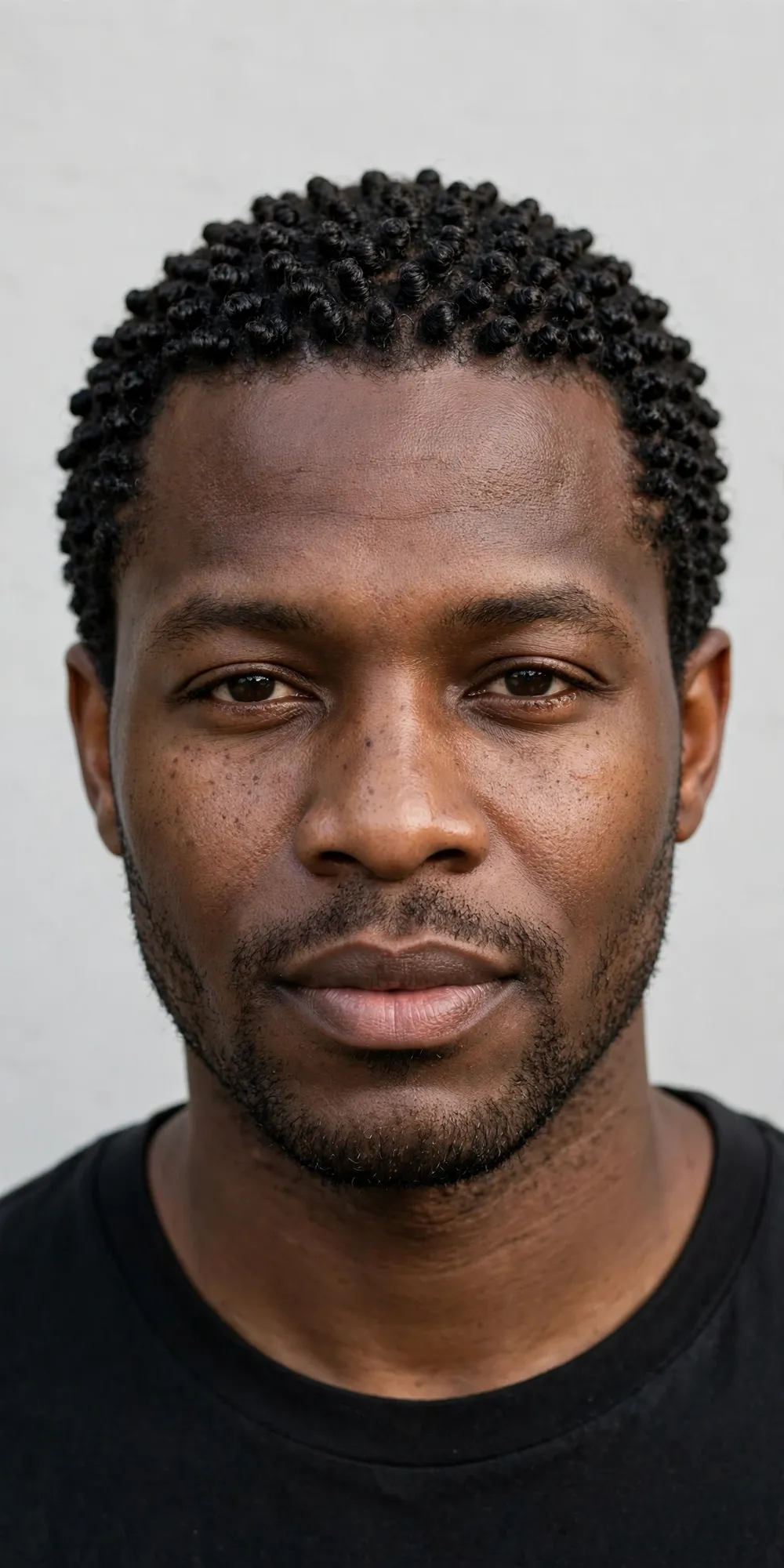
Comb coils are finger coils’ neater, tighter cousin — made with a fine-tooth comb, so each coil is uniform and sharply defined. The result is a clean, architectural texture, sharp from every angle. They suit square and oval faces, and work best on short Type 4 hair, where the coil holds its shape. Ask your stylist: “Comb coils, small sections, damp hair, a little gel.” Usually a salon job the first time — the technique takes practice — but home maintenance is realistic once you’ve seen it done. Light gel gives hold; heavy products build up. They last one to two weeks with a durag at night, then unravel into a nice twist-out. The only downside is the sitting time: a full head can take over an hour.
34. Afro with Lineup
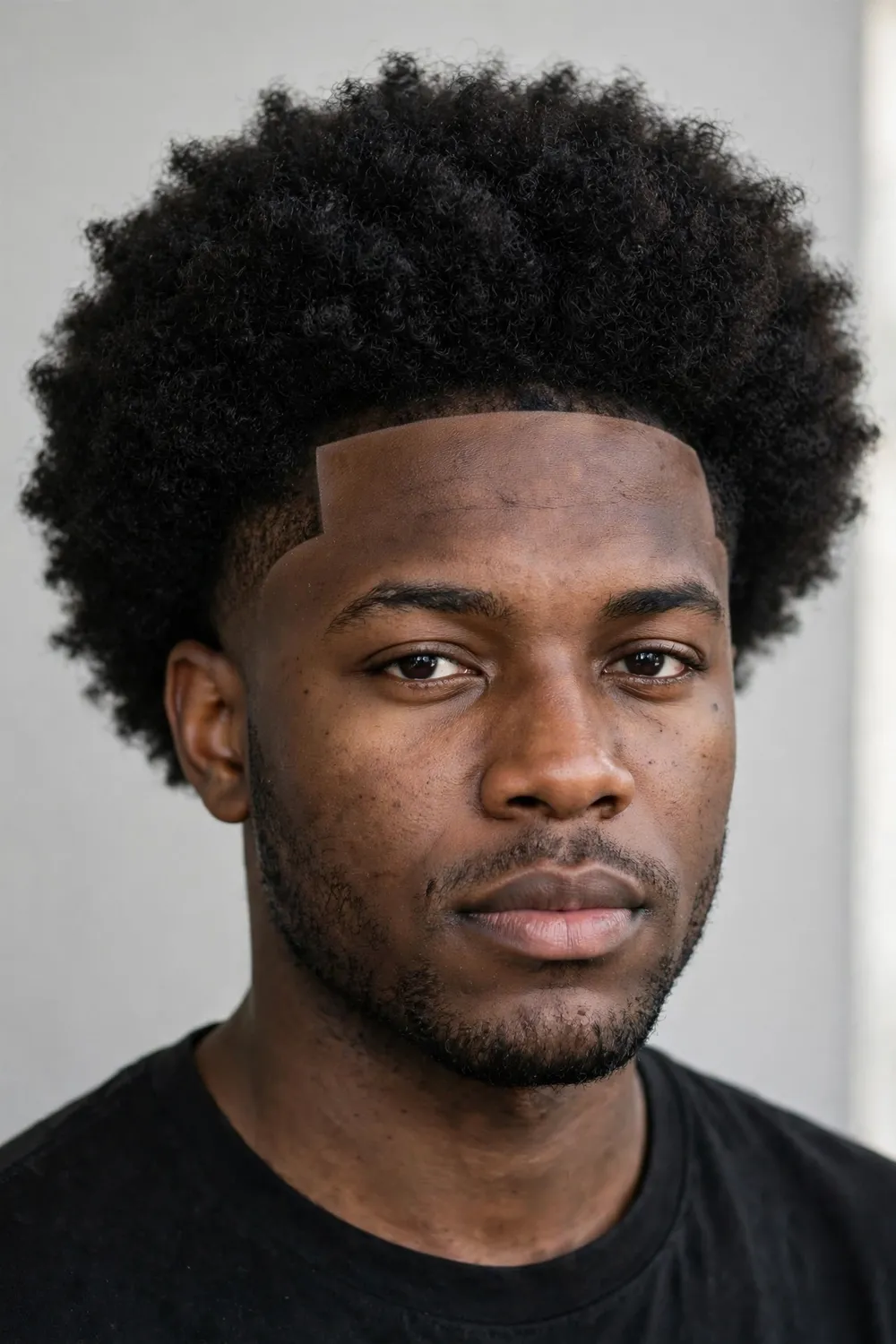
The afro with a lineup takes the classic rounded afro and carves razor-sharp edges into the hairline, temples and sideburns — soft volume, surgical lines. It’s the detail that makes a big afro look intentional rather than just grown out. It suits every face shape, especially square faces where the sharp lines echo the jaw. Type 4 hair gives the fullest shape; Type 3 curls work slightly smaller. Ask for: “Rounded afro, lineup with a razor on the hairline and temples, sides even.” A pick and moisturising cream keep the volume; the lineup needs a touch-up every week to ten days. Don’t re-carve it yourself with a cheap trimmer; one slip and you’re growing the hairline back for a month. Book a barber who carves lineups daily.
35. Cornrows with Fade
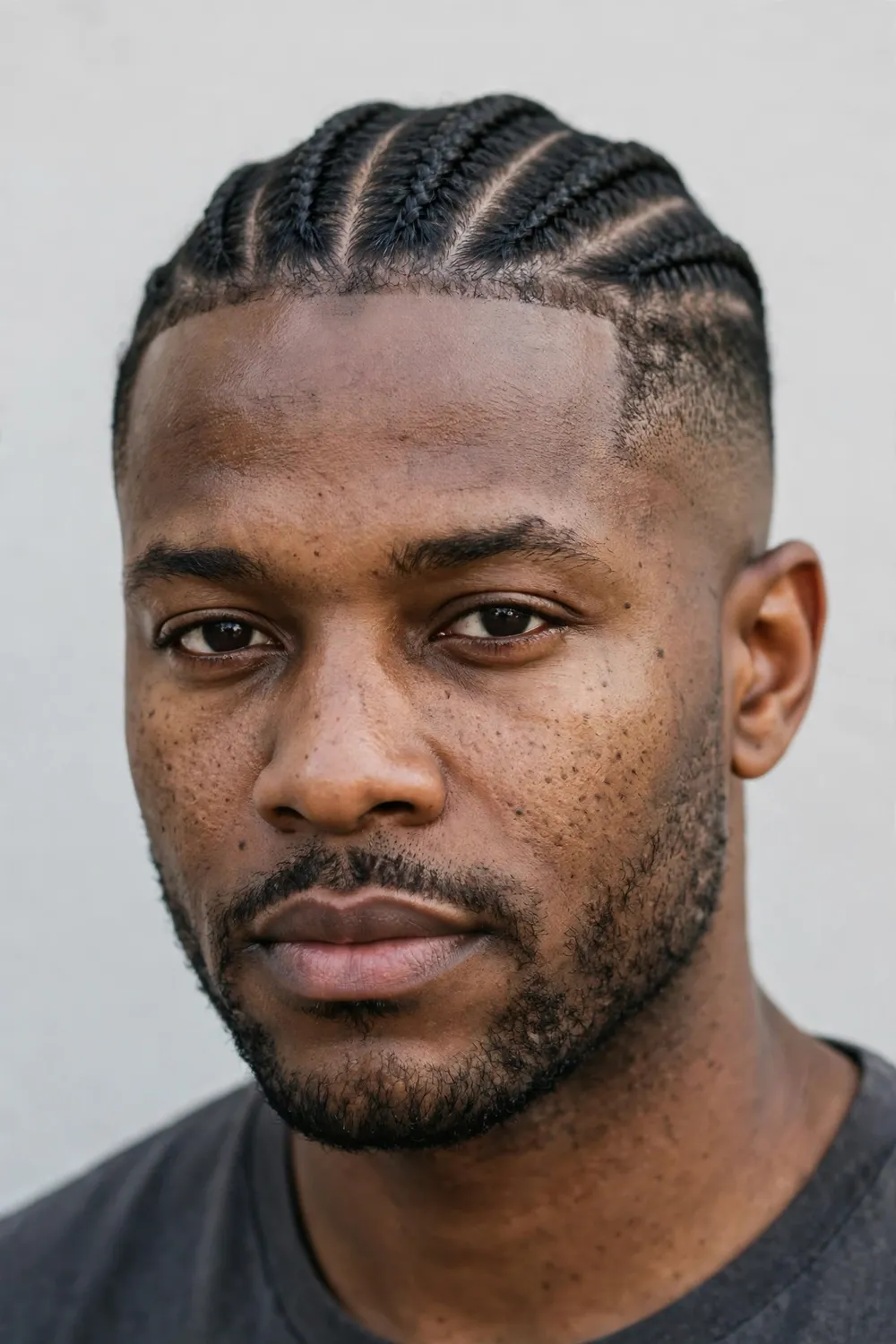
Cornrows with a fade combine two classics: tight rows on top, fading to skin or a low blend below. The contrast is the point — braids against the clean fade — sharp from front and back. It suits oval and square faces, and Type 4 hair that braids tightly. Ask your braider: “Straight-back cornrows, six to eight rows, low fade, lineup on the front.” A fade underneath means the braids start higher, so the pattern shows more. Daily care is easy: oil the scalp, durag at night; it lasts two to three weeks. Honest warning: cornrows pulled too tight can damage the hairline, so if it hurts, say so on the spot. See our cornrow hairstyles guide for more — and never let anyone convince you pain is normal.
36. Dyed Top with Fade

A dyed top with a fade is the boldest look here: a bleached top — platinum blonde is the classic — over dark faded sides. The contrast does all the work; the fade keeps it sharp rather than messy. It suits confident wearers with any face shape, though coarser hair takes bleach more slowly. Ask your colourist: “Bleach the top only, keep the fade dark, tone it to platinum.” This is a salon job, not a home box dye — bleach on coily hair needs professional timing. Patch-test 48 hours before any colour touches your scalp; dye allergies are real and unpleasant. Aftercare is the commitment: purple shampoo against brassiness, deep conditioning weekly — bleach dries coily hair fast. Expect root touch-ups every three to four weeks.
37. S-Curl Waves
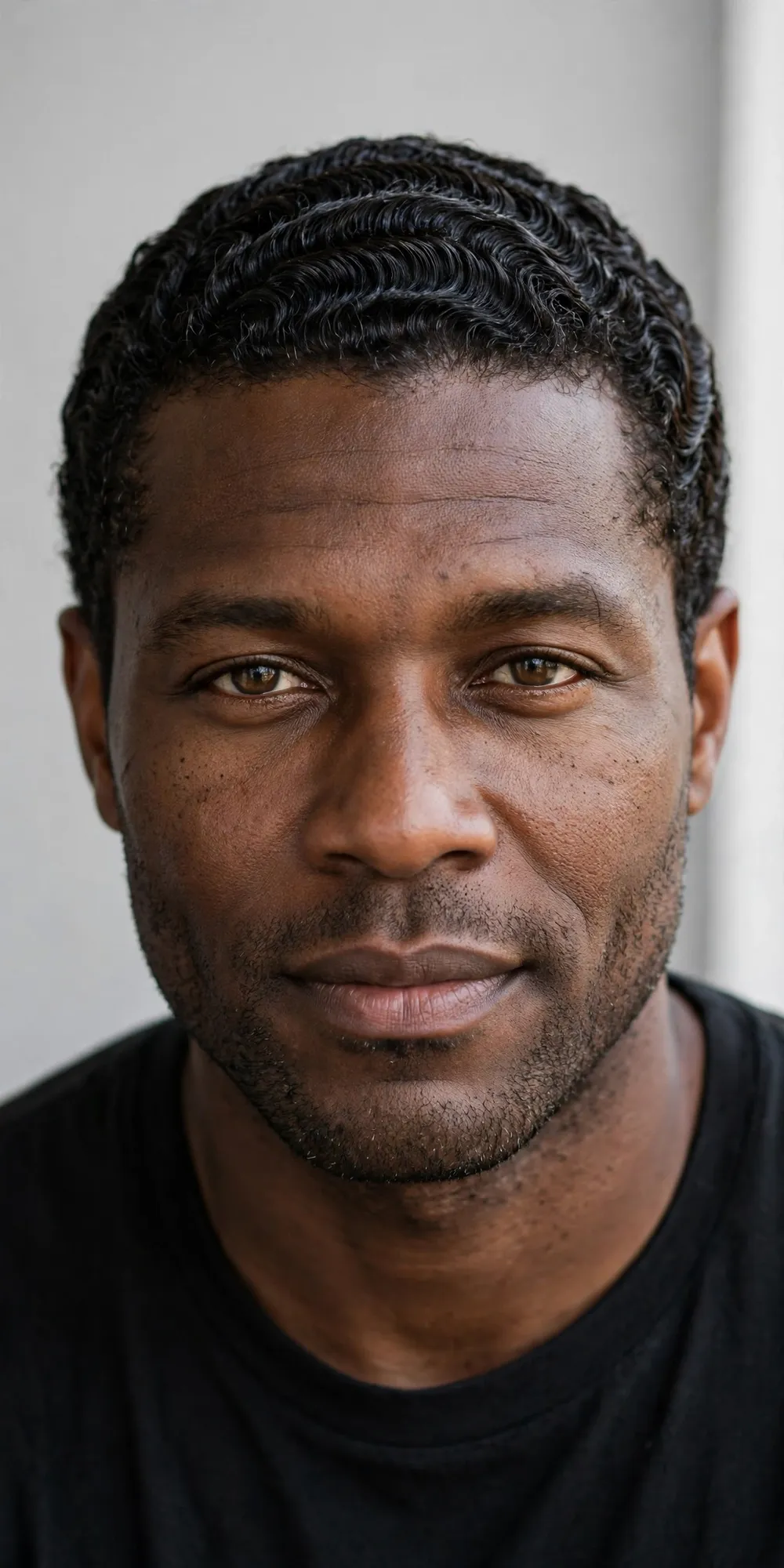
S-curl waves are the deep, rippling pattern from a texturiser — a classic that’s been around for decades and still looks smooth. The “S” is the shape of each wave curving across the head, deeper than a standard 360 pattern. It suits oval and round faces, and Type 4 hair that takes a texturiser well. Ask for: “S-curl texturiser, medium wave, lineup.” This is a chemical service, so go to a barber who does it regularly — timing matters, and over-processing damages hair. Maintenance means a wave cap or durag at night, light pomade for shine, and a touch-up every four to six weeks. Honest note: texturisers aren’t for everyone — if your hair is damaged or thinning, skip it and stick with a natural wave routine.
38. Textured Crop with Lineup

The textured crop with a lineup is short, choppy and modern: a short top, point-cut for texture, with a razor-sharp lineup. It’s low-effort, high-impact, and works anywhere — office, gym, night out. It suits square and oval faces best, and Type 3 hair where texture shows; Type 4 coils crop the same way. Ask your barber: “Textured crop, point-cut for texture, sharp lineup, low taper.” Matte clay or paste gives a lived-in finish — rub it through dry hair and mess it up slightly. Maintenance is minimal: a trim every three weeks, a lineup touch-up between, almost no daily styling. For something shorter and cleaner, our buzz cut hairstyles for men guide covers the next step down. It’s the easiest cut here to live with.
39. Bald Fade with 360 Waves
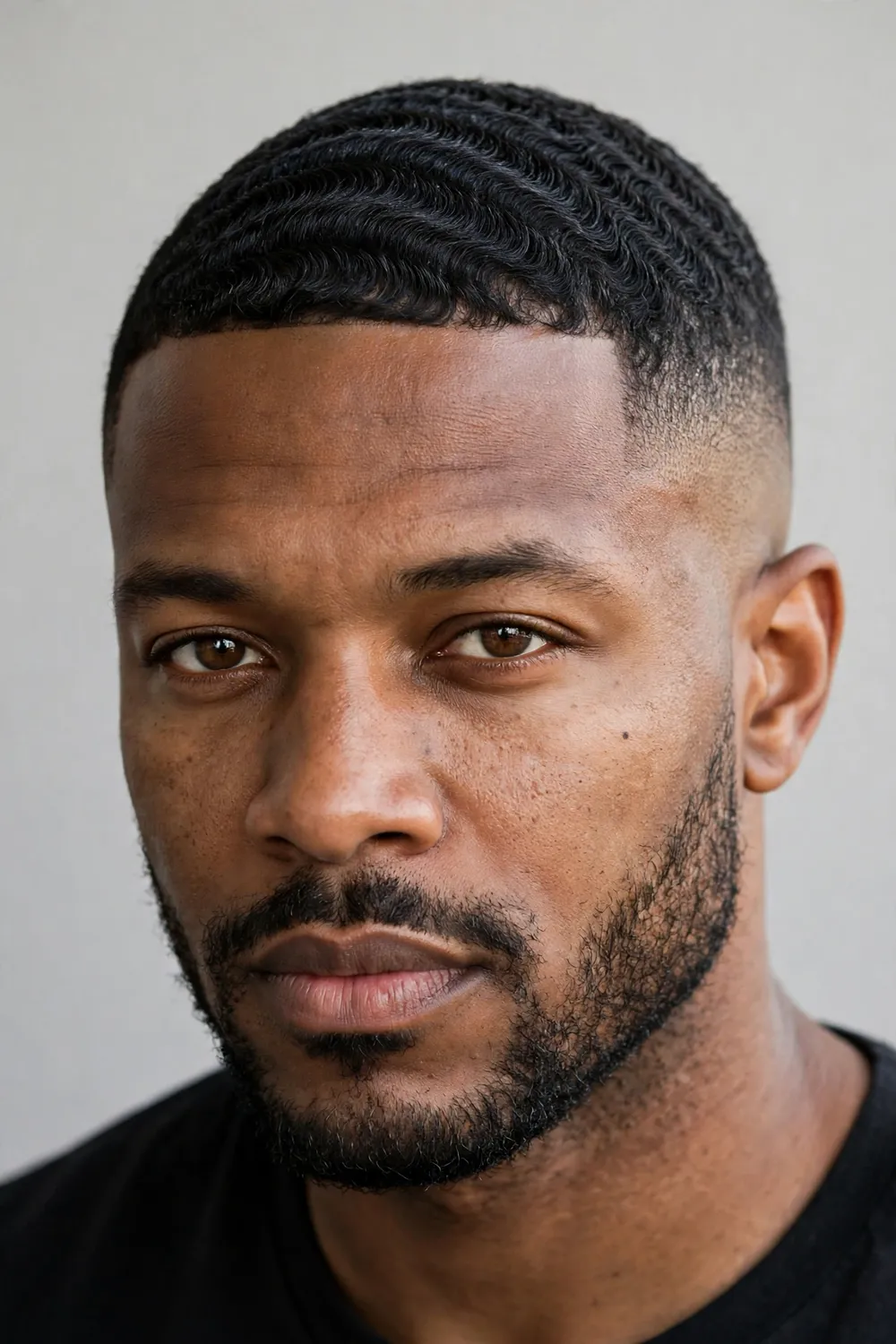
The bald fade with 360 waves is the final boss here: skin-bald sides, deep waves on top. It’s the sharpest fade with the most disciplined texture. It suits oval and square faces, and demands Type 4 hair with a strong wave pattern — if yours doesn’t wave easily, this is a long project. Ask for: “Bald fade, top at a one and a half, waves brushed in.” Getting the waves takes weeks — 30 minutes of brushing a day, pomade, a durag every night. No shortcuts. The fade needs a refresh every ten days to two weeks; the waves need brushing or they flatten. It’s the highest-maintenance cut here. But for guys who put in the work, there’s no better finish.
How to Pick the Right Cut for Your Face Shape and Hair Type
Start with your face shape — it decides what the cut should do. A round face needs height on top, so reach for a high top fade, a rounded afro or a burst fade. A square face already has strong angles, so a mid fade, a textured crop or a hard part softens nothing and sharpens everything. An oval face can wear almost anything on this list, which is why the mid fade and the 360 waves are such safe first picks. An oblong face should avoid too much height — a low fade or a Caesar keeps things balanced.
| Face shape | Best cuts |
|---|---|
| Round | High top fade, rounded afro, burst fade |
| Square | Mid fade, textured crop, hard part + fade |
| Oval | Mid fade, 360 waves, curly top + fade |
| Oblong | Low fade, Caesar + lineup, low cut |
| Heart | Burst fade, taper fade, sponge twists |
Then check your hair type. Type 3 curls — looser, springy, defined — hold styles like the curly top, finger coils and the textured crop with the least effort. Type 4 coils — tighter, denser, more shrinkage — are what make afros, twists, locs and freeforms possible, but they drink moisture and need more of it. Whatever your type, the rule is the same: pick a cut that works with your texture, not against it, and if you’re unsure, ask a barber who cuts Black hair every day. For the gentlest starting point, our low fade haircuts for men guide is a good place to begin.
How to Keep Your Haircut Looking Fresh
A great cut lasts about two weeks — the routine around it decides whether it looks that good on day twelve. Here’s the routine that actually works:
- Wash weekly with a sulfate-free shampoo. Coily hair dries out fast, and sulfates strip what little oil it has. Once a week is enough for most cuts.
- Deep condition every wash day. Ten minutes with a deep conditioner under a shower cap keeps the hair soft and the curls defined.
- Moisturise daily. A leave-in conditioner or a light oil every morning — dry hair is what makes a fresh cut look tired.
- Brush with purpose. Waves need a brush session, curls need a pick or fingers. The wrong tool on the wrong texture undoes the style.
- Wear a durag or satin bonnet at night. This is the single highest-impact habit on this list. Cotton pillowcases pull moisture out overnight.
- Rebook every two to three weeks. Fades grow out, lineups soften, afros lose shape. Put the next appointment in before you leave the chair.
- Know your guard numbers. Tell your barber the guard you like — “a one on the sides, skin at the bottom” — so every cut comes back the same.
5 Mistakes to Avoid
- Skipping the durag. One night on a cotton pillowcase can flatten waves, frizz curls and undo a week’s brushing. It takes ten seconds to put on.
- Wearing styles too tight. Cornrows, braids and locs pulled hard at the edges can thin the hairline over time. If a style hurts, it’s too tight — comfort isn’t optional.
- Washing too often. Shampooing every day strips natural oils and leaves coily hair dry and brittle. Weekly is right for most guys; a rinse in between is fine.
- DIY lineup with a cheap trimmer. A lineup is millimetre work. One slip with a dull trimmer and you’re growing your hairline back for weeks. Leave it to the barber.
- Picking a barber with no Black-hair portfolio. Cutting coily hair, blending fades and carving lineups are specific skills. Check their Instagram or ask in the shop before you sit in the chair — a good barber will be glad to show you their work.
FAQs
How often should Black men get a haircut?
Every two to three weeks is the sweet spot for most cuts on this list. Fades and skin fades grow out fastest — they start looking soft after about ten days — while afros, twists and locs can stretch to three or four weeks. Lineups need a touch-up weekly if you want them razor-sharp. The real rule is simple: book your next appointment before you leave the barber’s chair, and you’ll never have a grown-out week.
How long does it take to get 360 waves?
Expect four to six weeks of consistent work for a visible wave pattern, and two to three months for deep, spinning waves. The routine is brushing for 20–30 minutes a day with a medium brush, pomade for hold, and a durag every night without exception. Your natural wave pattern decides the ceiling — some hair waves in weeks, some takes months. Don’t believe anyone selling overnight results; the guys with the best waves are the ones who brushed every day.
What is the best black men haircut for a thinning hairline?
A buzz cut or a low cut is the honest answer. Short all over takes attention away from the hairline instead of drawing a line across it, and a clean lineup frames what you have rather than exposing what’s gone. Avoid comb-overs and heavy fringe styles that try to hide thinning — they usually do the opposite. If the thinning is new or fast, talk to a dermatologist before trying growth products; a lot of what’s sold for hairlines doesn’t do much.
Which haircuts for Black men look best in a professional office?
The mid fade, the taper fade and the low fade are the safest office choices — clean, sharp and conservative without looking boring. A short afro with a lineup also reads well in most workplaces, and a neat Caesar works if you want something even quieter. What to skip at the office: a high top fade or a dyed top, unless your workplace is relaxed about it. When in doubt, the mid fade is the cut that has never cost anyone a meeting.
Do I need a barber who specializes in Black hair?
Yes, and this is the one piece of advice on this page worth taking seriously. Coily hair cuts, blends and lines up differently — the clippers, the guard work, the way a fade sits on textured hair are all specific skills. A barber who cuts Black hair every day will know your texture, your hairline and your growth pattern. Check their portfolio on Instagram, ask friends who they go to, and once you find the right one, stay loyal — a barber who knows your head is worth more than a cheaper chair.
How do I get rid of razor bumps after a fade or lineup?
Razor bumps come from hairs curling back into the skin after a too-close shave, and coily hair is more prone to them than any other texture. The fix starts with technique: shave with the grain, not against it, on wet, softened hair, and use a single-blade razor rather than a multi-blade cartridge — fewer blades means less tugging below the skin line. After shaving, use a gentle exfoliant a couple of times a week and a soothing, alcohol-free moisturiser. If bumps keep coming back despite good technique, stop shaving the area for a few weeks and talk to a dermatologist — the American Academy of Dermatology has guidance on this, and persistent bumps are worth a professional opinion rather than another product.
Are locs or braids better than a regular haircut?
Neither is better — they solve different problems. Locs and braids are protective styles: they lock in moisture, cut daily styling to almost nothing, and last weeks at a time, which is why so many guys choose them. A regular haircut is lower-commitment and easier to change — a fade grows out in two weeks, while locs take months to establish and can’t be undone without cutting. The trade-off to know about is tension: tight braids and locs can pull on the hairline over time. The AAD explains how tight styles can cause hair loss, so if a style hurts at the edges, loosen it. Pick the option that fits your life, not the one that looks best in a photo.
Final Word
Thirty-nine cuts, one head of hair, and no wrong answer — the best black men haircut is the one that fits your face, your texture and your life. Start with a mid fade or 360 waves if you want a safe first move, go for a high top or a dyed top when you’re ready to make a statement, and find a barber who knows your hair before you sit in the chair. Whatever you pick, the routine matters as much as the cut: moisturise daily, protect it at night, and rebook before it grows out. And if this list got you thinking about your next look, explore more guides on our blog.