


Looking for spiky hairstyles for men that actually suit you — not just a photo on a barber’s wall? The right cut lifts the hair up and forward, adds height where it counts, and still looks good on a rushed Tuesday morning. Our top three picks: the Classic Spiky Crew Cut for a clean everyday look, the Spiky Burst Fade for sharp contrast, and Piecey Textured Spikes if you want something softer and more natural.
Which Product Holds Spikes Best?
| Product | Hold | Finish | Best for |
|---|---|---|---|
| Clay | Strong | Matte | Thick or coarse hair; textured, natural-looking spikes |
| Paste | Medium–strong | Natural matte | Most hair types; flexible, reworkable spikes |
| Pomade | Medium | Shine | Smooth, sleek spikes; straight or fine hair |
| Gel | Strong | High shine | Hard, all-day spikes; short hair that won’t budge |
| Wax | Medium | Low shine | Short to medium spikes; easy to restyle |
| Texture powder | Light–medium | Matte | Fine or thin hair; root lift and volume |
The 39 Spiky Hairstyles
1. Classic Spiky Crew Cut
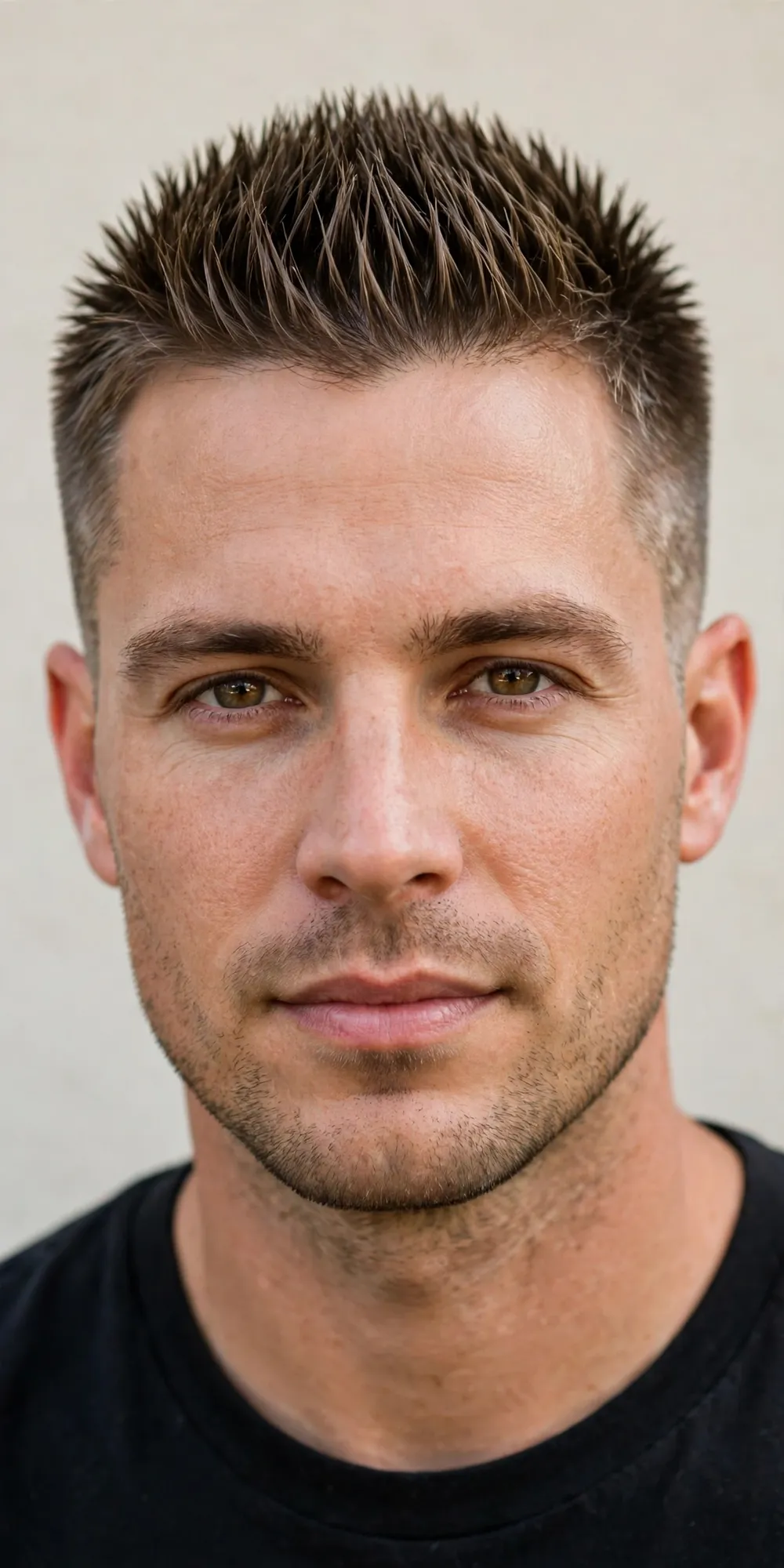
The original spike — short, neat and uniform, with every point standing at the same height. It’s the cut your dad probably wore in the nineties. This one suits oval and square faces best, and it flatters straight or slightly wavy hair that naturally wants to stand up. Ask your barber for a crew cut with about an inch of length on top, point-cut for texture, and tapered sides — a #2 or #3 guard works. A pea-sized amount of matte clay gives it hold without shine. Maintenance is honest and easy: a trim every three to four weeks keeps the silhouette tight, and styling takes under two minutes on damp hair.
2. Spiky Burst Fade

Tall, structured spikes sit over a burst fade that curves around the ear in a clean arc. The contrast is the whole point — the top looks dramatic because the sides disappear so fast. Square and oval faces carry the height well, and thick or wavy hair holds the shape best, though a good blow-dry can get straighter hair there too. Ask for two to three inches on top, textured with point cutting, and a burst fade that follows the ear’s curve. Work clay or paste through from the roots, push the front up, and let the crown follow. Expect a trim every two to three weeks — the fade’s crisp curve blurs quickly, and once it does the whole look loses its edge.
3. Low Fade Spiky Top

Loose, natural-looking spikes with a low fade that starts just above the ear. This is the understated option: the top has movement and texture, but nothing about it screams for attention. It suits round and oval faces, since the height on top adds length to the face, and it works on straight, wavy or slightly curly hair. Ask your barber for one and a half to two inches on top with choppy texture, and a low taper fade on the sides and back. A little paste rubbed between your palms and pushed through the front does the job — no blow-drying required. Maintenance is light: trims every three to four weeks, and the fade grows out gracefully rather than turning messy.
4. Textured Faux Hawk

The faux hawk keeps a strip of spiked hair running down the centre, with the sides tapered rather than shaved to nothing. It’s the mohawk’s wearable cousin — bold enough to turn heads, normal enough for the office. Oval and square faces suit it best, and it works with straight, wavy or thick hair that has some body. Ask for a tapered fade on the sides, about two inches left in the centre strip, and point-cut texture so the spikes break up instead of sitting as one solid ridge. Use clay for a matte finish and push the strip up from the sides. Trim every two to three weeks; as the sides grow in, the strip loses definition fast.
5. Spiky Mohawk Fade
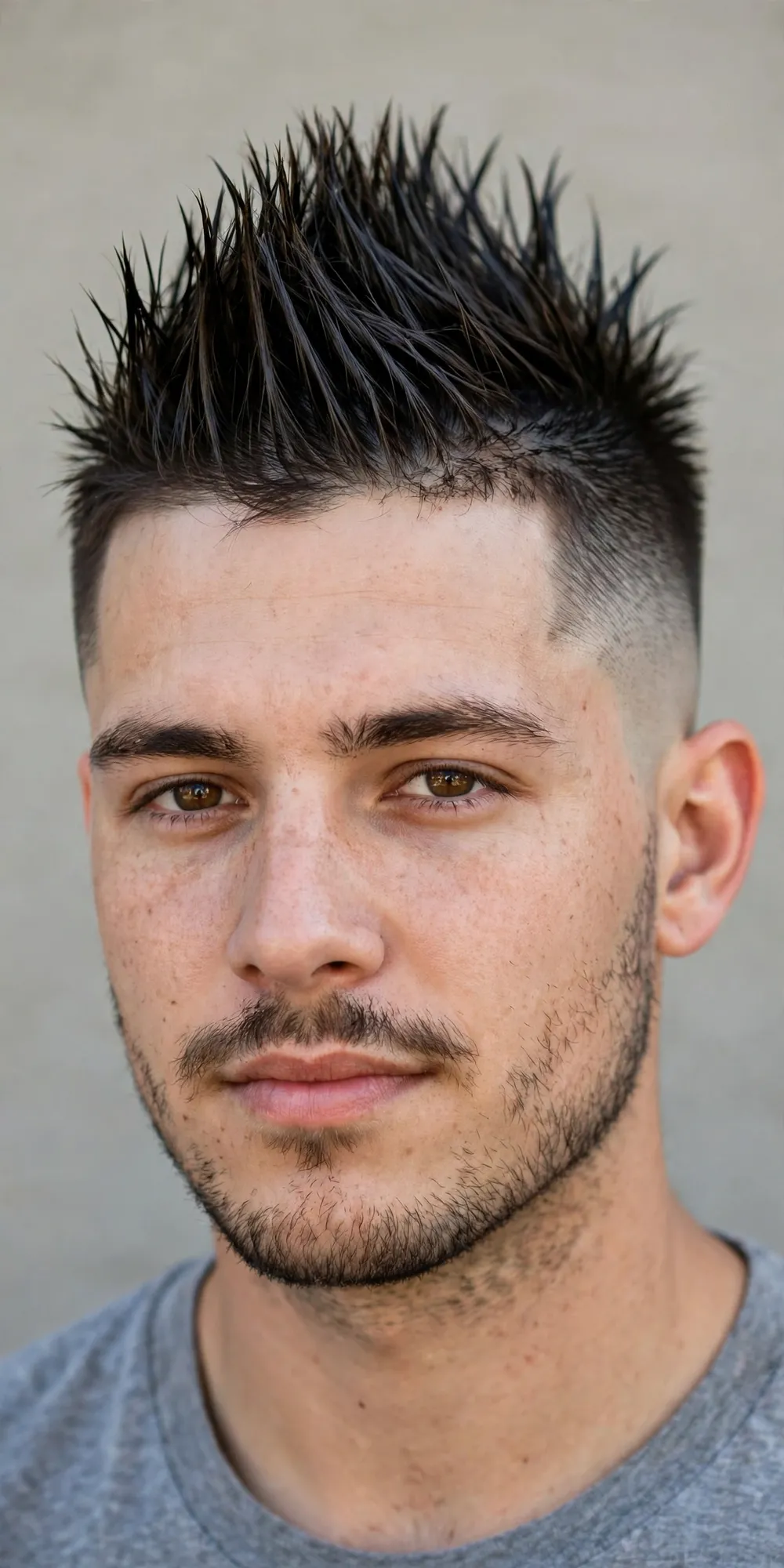
A full mohawk strip spiked straight up, with faded sides that make the centre look even taller. This isn’t a subtle cut — it’s a statement, and you should walk into it knowing that. It suits oval and square faces, and thick, coarse hair holds the height without much help; fine hair can manage it with gel and a blow-dry. Ask your barber for a two-to-three-inch strip down the centre and a high or mid fade on the sides. Strong-hold gel or clay, worked in from the roots, keeps the spikes vertical all day. Maintenance is real: the sides need cleaning up every two weeks, and styling takes five minutes plus a hairdryer on days you want real height.
6. Piecey Textured Spikes

Soft, broken-up spikes with visible separation — each piece has its own direction, so the whole thing looks lived-in rather than sculpted. This is the best choice if stiff spikes make you feel like you’re wearing a costume. It flatters oval and long faces, and it works brilliantly on wavy or fine hair, where the natural movement does half the work. Ask for one to two inches on top with lots of point cutting, and a taper or low fade on the sides. Rub a little paste between your hands, pinch small sections into points, and stop before it looks done — slightly undone is the look. Trims every four weeks keep it fresh, and it grows out better than almost any other style here.
7. Spiky Quiff

The front sweeps up and back while the crown carries short, spiky texture — a quiff with attitude. It’s a great middle ground if you like the volume of a quiff but want something easier and less polished. Oval, square and long faces all suit it, and it works best on straight or wavy hair with medium density. Ask your barber for two to three inches at the front, shorter through the crown, with textured ends and a taper or fade on the sides. Blow-dry the front up and back, then add clay for matte hold. Maintenance is moderate: trims every three weeks, and two to three minutes of styling each morning. It grows out well too.
8. Undercut Spikes
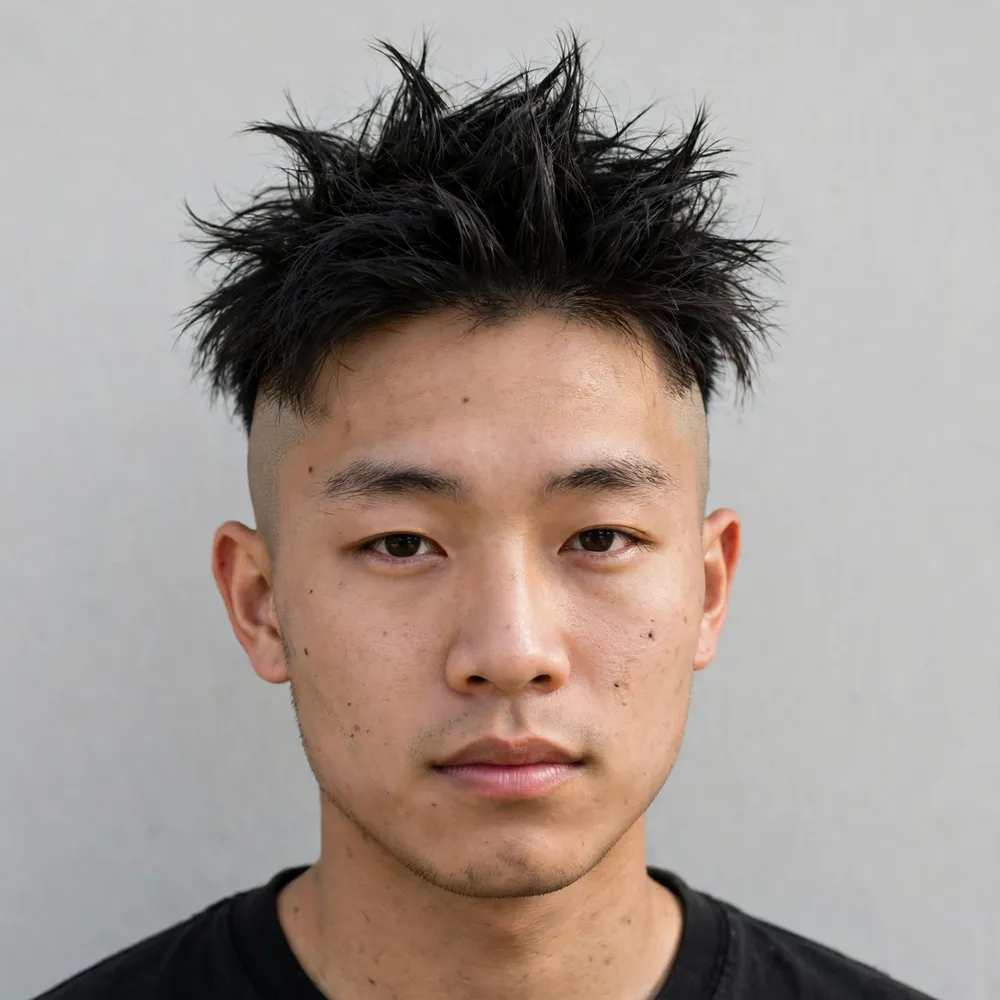
Shaved, disconnected sides with a freely spiked top — the undercut is all about contrast. The hard line between the long top and the buzzed sides gives the spikes a stage to perform on. It suits square and oval faces, and thick or wavy hair that can hold shape on top. Ask for a disconnected undercut with the sides clipped to a #1 or #2, and two to three inches of textured length on top. Paste or clay gives you a matte, workable finish; slick the top up or push it slightly to one side. Be honest about upkeep: the disconnect needs a clean-up every two to three weeks, or the regrowth turns the sharp line into a soft blur.
9. Wavy Spiky Crop

This one lets your natural waves do the work, encouraging them into loose spikes instead of fighting them flat. The result is relaxed, textured and genuinely low-effort — the hair looks styled even when you barely touched it. It suits oval and round faces, and obviously it’s made for wavy hair, though straight hair with a bit of salt spray can fake the movement. Ask for a short crop with about an inch and a half on top, point-cut to let the waves separate, and a taper on the sides. A dab of paste or a spritz of sea salt spray is all the product you need. Trims every three to four weeks keep the shape, and it forgives a late appointment.
10. Spiky Mullet
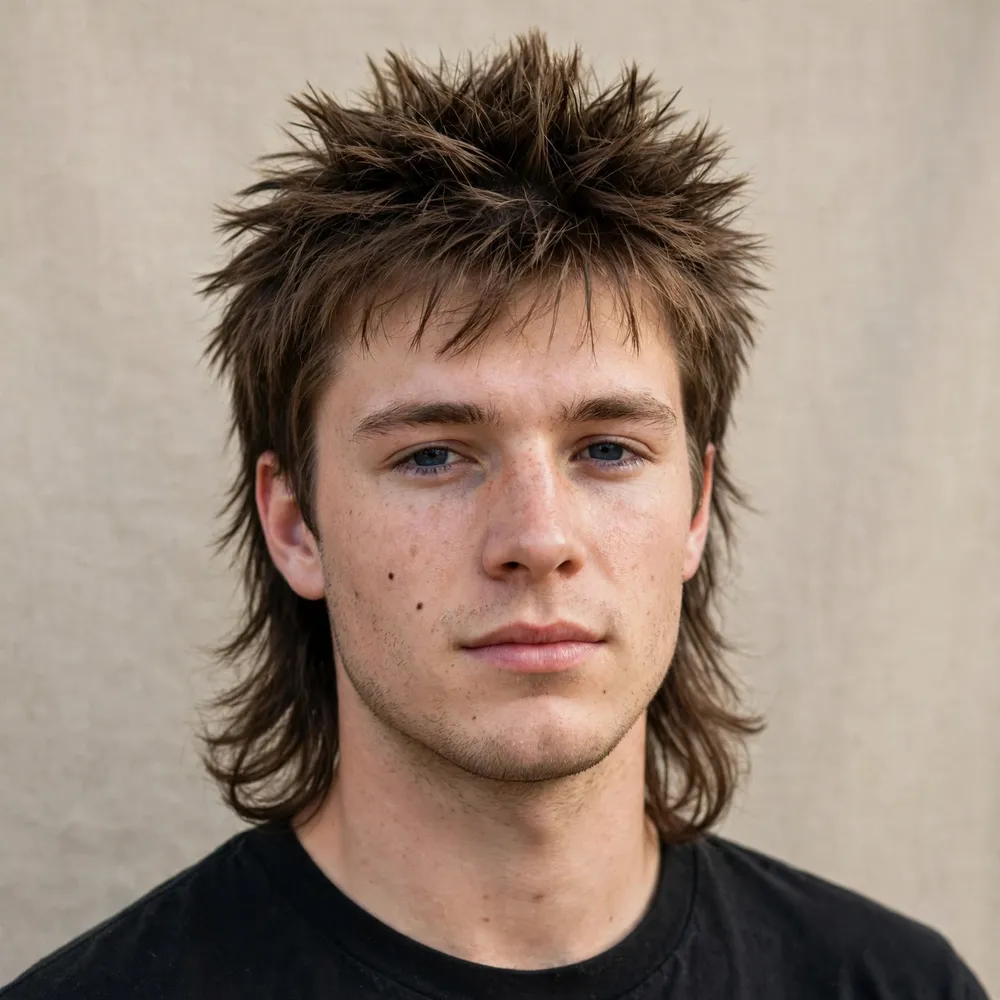
A spiked, textured top with real length left through the back — the mullet is back, and this version is less joke, more deliberate. The spikes up front give it structure; the length at the back gives it personality. It suits oval and square faces best, and straight or wavy hair with medium thickness. Ask your barber for two inches of textured spikes on top, faded or tapered sides, and three to four inches left at the back — with the length blended, not hacked. Clay or paste through the top, and a little leave-in conditioner on the back length. Maintenance is twofold: the top needs trimming every three weeks, and the back needs occasional shaping so it stays a mullet, not a mistake.
11. Spiky Buzz Fade
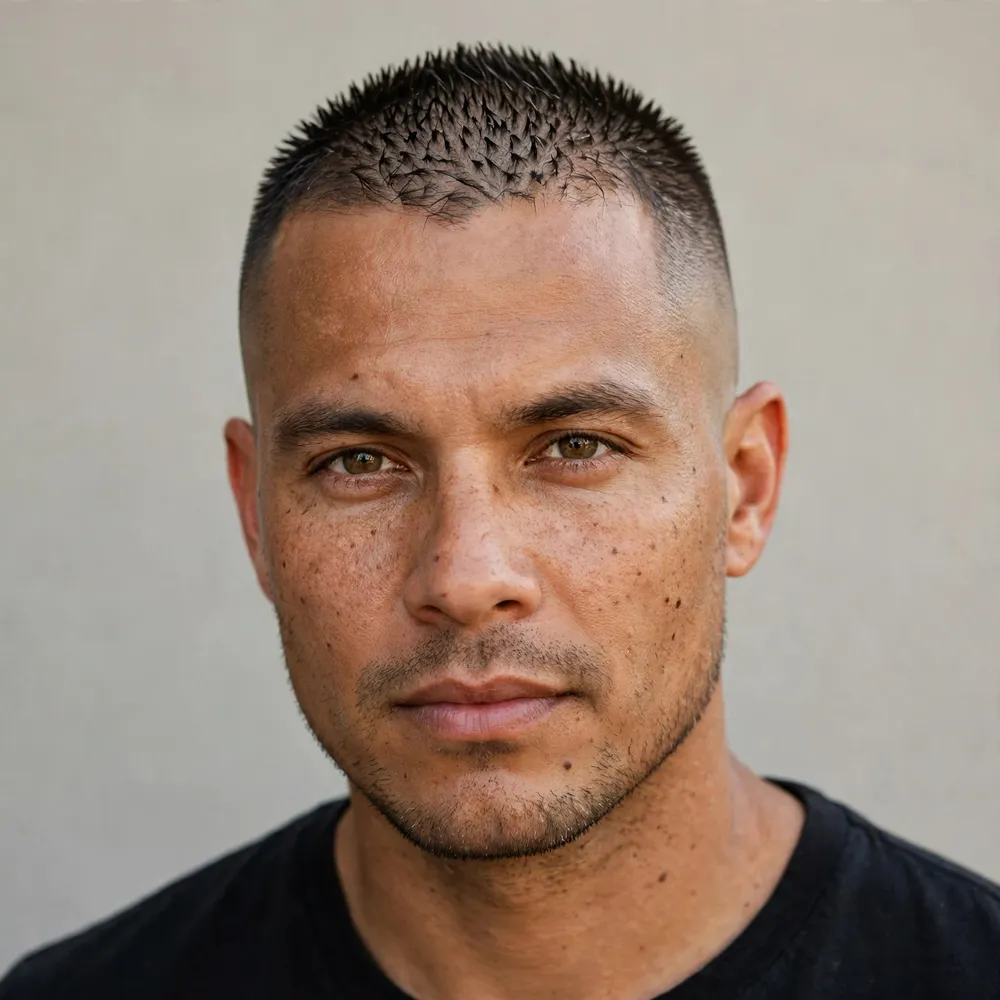
Very short, tiny defined spikes over faded sides — the lowest-commitment spike on this list. The hair is barely long enough to stand up, which is why it works. It suits almost every face shape, especially round faces that benefit from a little height, and it works on any hair type, including thick hair that fights longer styles. Ask for a buzz cut with about half an inch to three-quarters of an inch on top, textured lightly, and a mid or high fade on the sides. Most days you won’t need product at all; a touch of wax adds definition when you want it. Trims every two weeks keep the fade sharp, but the style itself asks nothing of you.
12. High Fade Spiky Top

A high, sharp fade climbs well up the sides, leaving a full spiked top standing in bold contrast. The fade starts high, so the top looks even taller and more deliberate. Square and oval faces carry the height well, and thick hair holds the shape with the least effort — fine hair can do it too with texture powder at the roots. Ask for a high fade on the sides and back, with two to two and a half inches of point-cut texture on top. Clay gives a strong matte hold; work it through damp hair and push everything up and slightly forward. Maintenance: a trim every two to three weeks, because a high fade shows growth sooner than a low one.
13. Loose Spikes with Long Top

A longer, layered top with loose, easy points — the spikes are there, but they’re relaxed about it. This is for guys who like length and don’t want to fight their hair into a helmet every morning. It suits oval and long faces especially well, and wavy or thick hair gives the loose spikes their natural fall. Ask your barber for three to four inches of layered length on top, point-cut for movement, and tapered sides rather than a hard fade. A little paste or cream keeps the points soft and separated — avoid heavy gel, which kills the looseness. Trims every four to five weeks, and styling takes two minutes on damp hair with your fingers doing most of the work.
14. Spiky Pompadour Fade
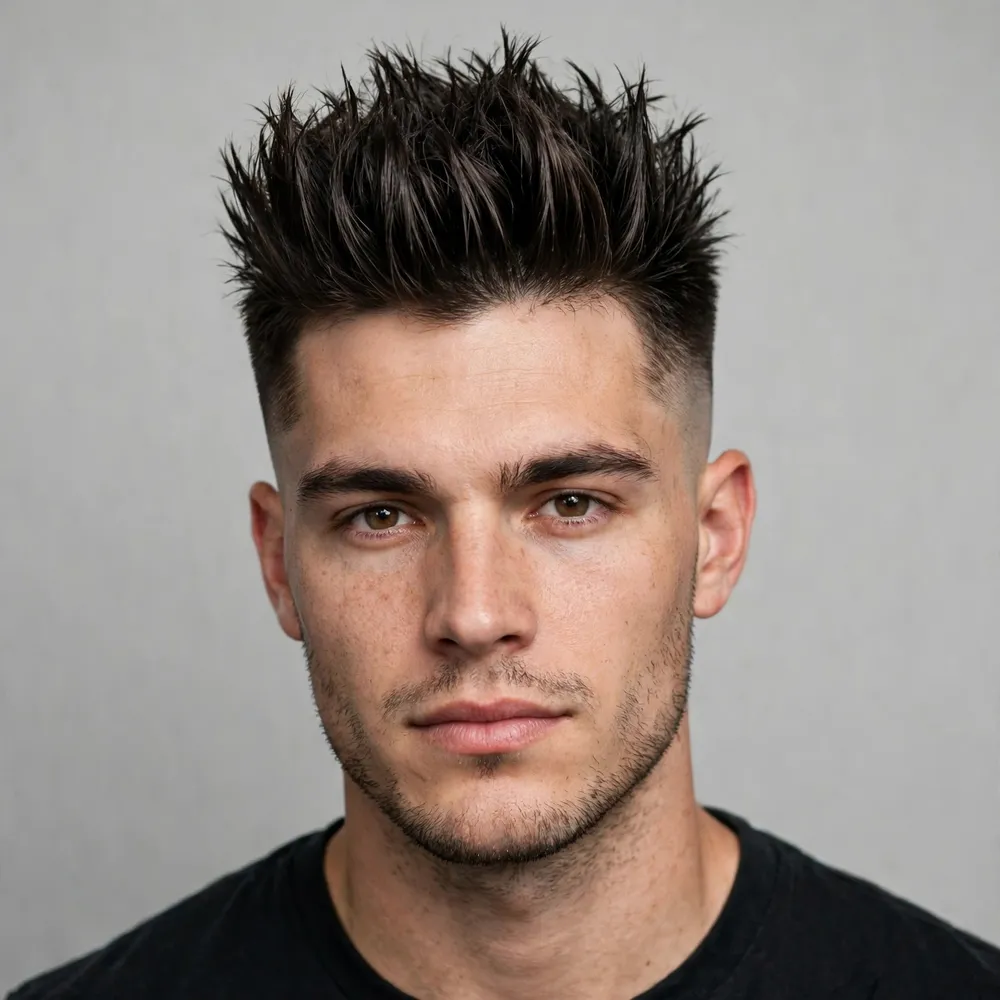
A swept-up pompadour front meets a spiked crown, with a fade keeping the sides tight — retro polish with a modern edge. It’s the most dressed-up cut on this list, and it earns its place at weddings, job interviews and anywhere you want to look deliberate. Oval, square and long faces suit it; straight or wavy hair with good density holds the sweep best. Ask for three inches at the front, shorter through the crown with spiky texture, and a mid fade on the sides. Blow-dry the front up and back with a round brush, then finish with pomade for shine or clay for matte. Expect five minutes of styling each morning and a trim every two to three weeks.
15. Short Spiky Textured Crop
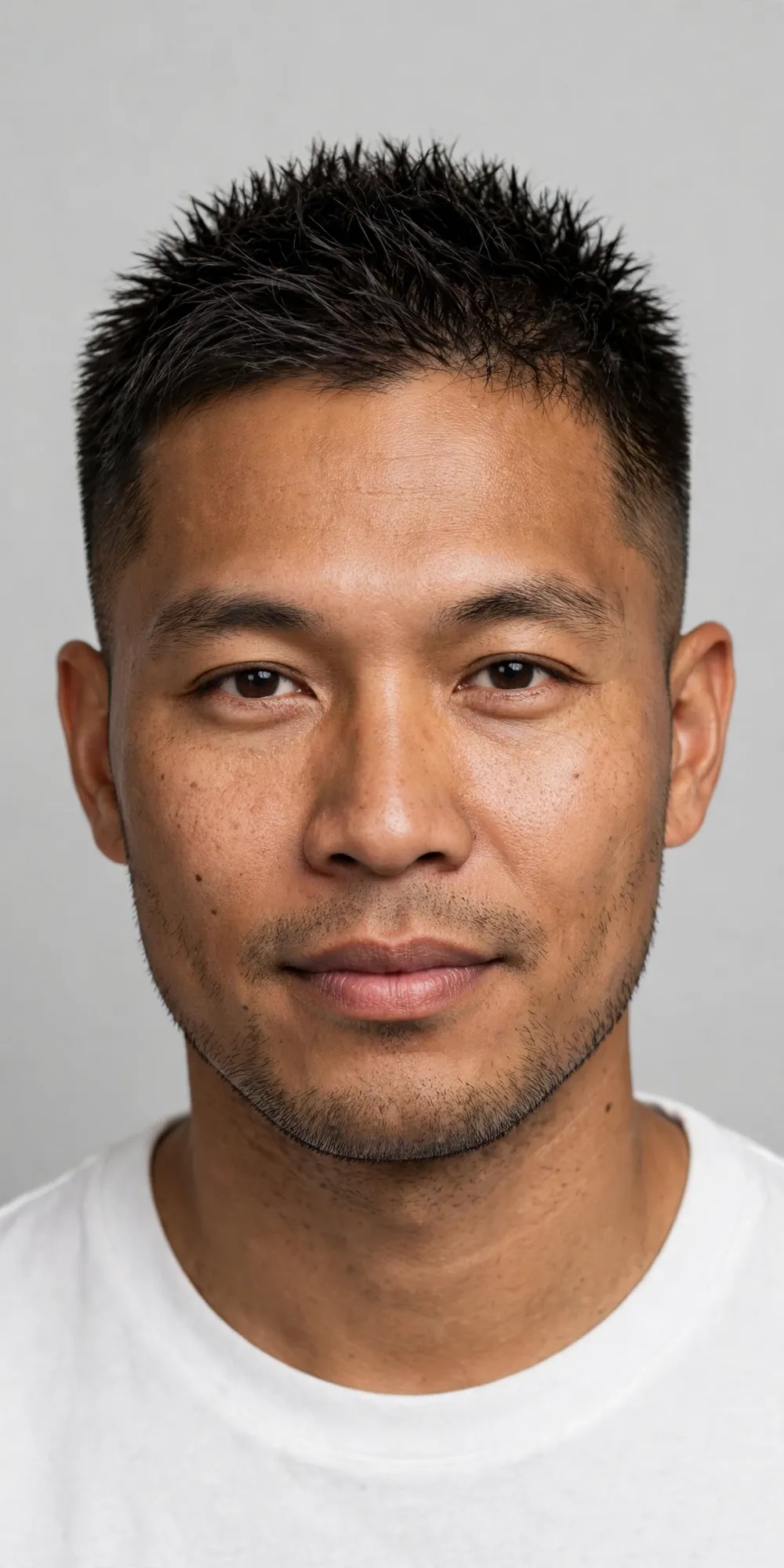
A close, tidy cut with short, natural spikes — the kind of style that looks sharp in the mirror and still looks fine after a hat. There’s no drama here, just clean lines and a bit of texture. It suits every face shape and works on straight, wavy or thinning hair, since the short length adds the illusion of density. Ask your barber for a textured crop with about an inch on top, point-cut, and a taper or low fade on the sides. A tiny amount of paste is plenty — too much product weighs this short length down. Trims every three weeks keep it tidy, and on most mornings you’ll be out the door in under a minute.
16. Spiky Hard Part Fade

A shaved part line cuts a clean graphic stripe through the side, with spiked texture on top. The hard part adds instant structure — it looks intentional even when the spikes themselves are a bit rough around the edges. It suits square and oval faces, and straight or wavy hair that holds a part without fighting it. Ask your barber for a razor-shaved part on your natural parting, a fade below it, and one and a half to two inches of textured length on top. Pomade gives the part a crisp shine, while clay keeps the spikes matte. Maintenance is the trade-off: the part line needs re-shaving every one to two weeks, or it softens and the graphic effect fades with it.
17. Curly Top Spikes
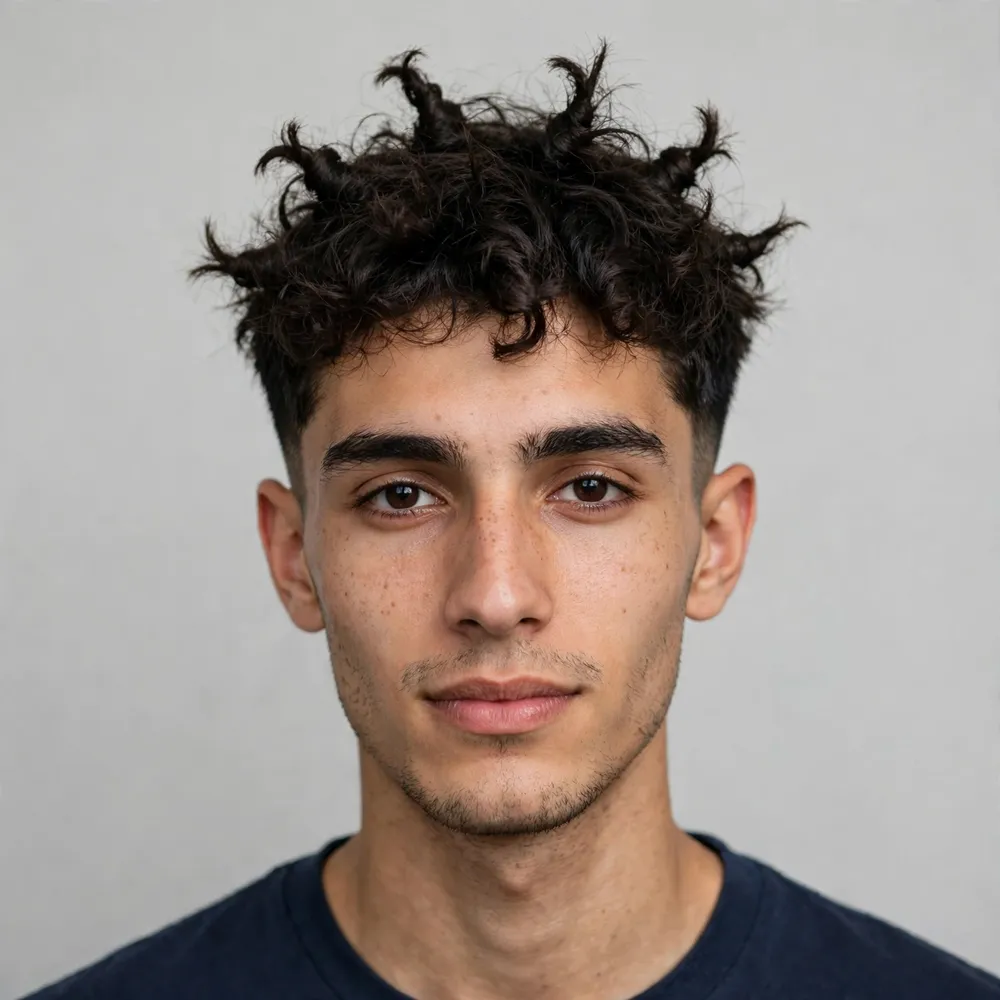
Natural curls defined into irregular spikes — instead of taming the curl, this cut lets it lead. Each spike has its own curl pattern, so no two days look exactly alike, and that’s the charm. It’s obviously made for curly hair, and it suits oval, square and round faces, with the height balancing wider face shapes nicely. Ask your barber for two to three inches of curl on top, cut curl-by-curl or point-cut dry, with a taper or fade on the sides. A curl cream or light paste defines the spikes without crunch — never use heavy gel on curls. Trims every four to five weeks, and a diffuser on low heat helps on days you want more definition.
18. Spiky Drop Fade
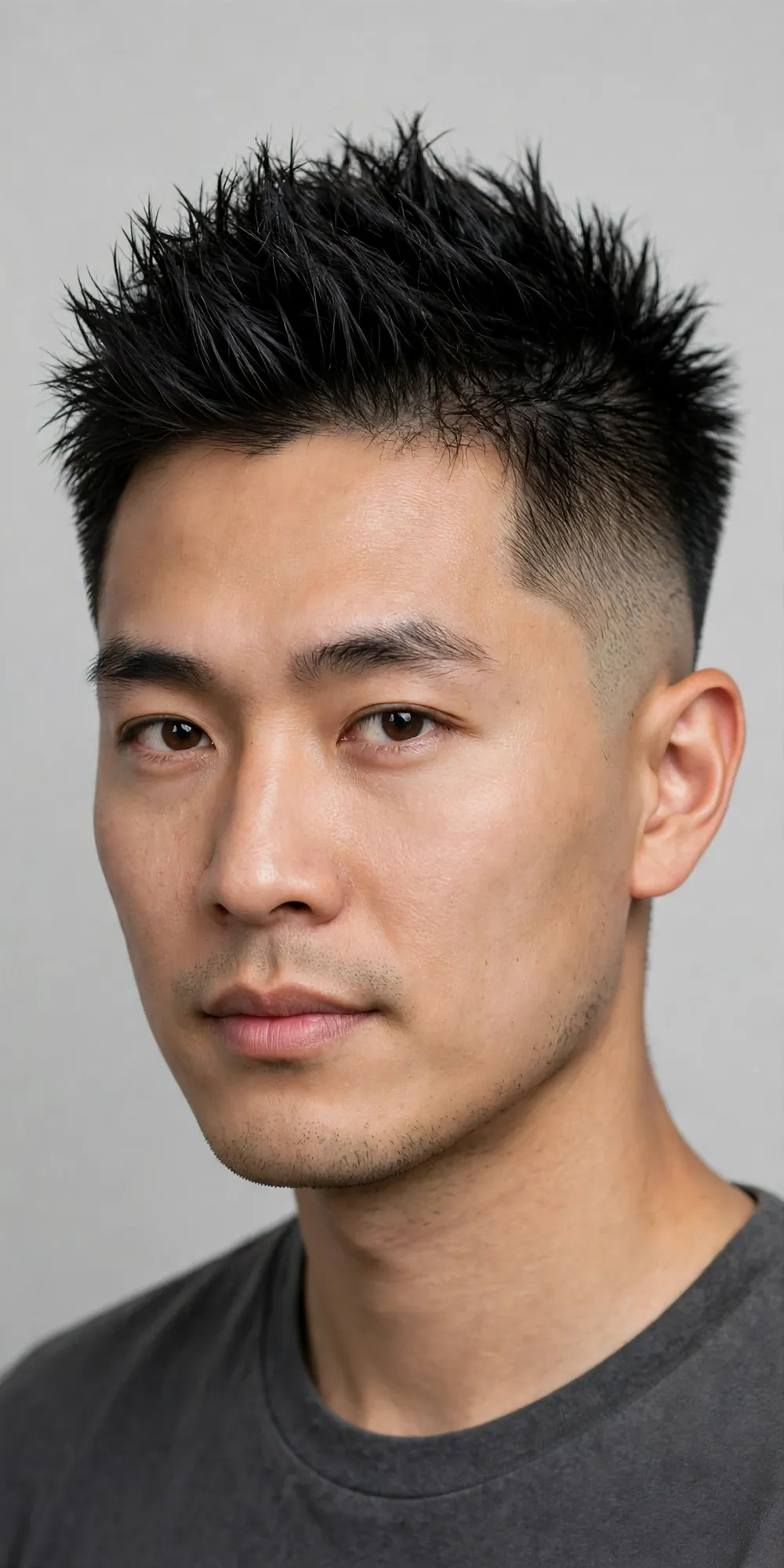
The fade drops behind the ear, following the head’s natural curve, while the top keeps fuller spikes. It’s a softer, more forgiving fade than a high one, and the drop gives the back of the head a clean, rounded finish. Oval and round faces suit it well, and it works on straight, wavy or thick hair. Ask for a drop fade that arcs down behind the ear, with two inches of textured spikes on top. Clay or paste gives a matte finish; push the front up and let the crown spikes fall where they want. Trims every two to three weeks keep the drop’s curve crisp — it’s a precise line, and it shows regrowth sooner than a plain taper.
19. Colored Tip Spikes

The spiked tips are lightened or dyed in a contrasting colour, so every point catches the eye. Frosted blonde tips are the classic version, but the idea works with anything from ash grey to bright blue. It suits oval and square faces, and straight or slightly wavy hair shows the colour best — the spikes act like little canvases. Ask your barber to cut the spikes first, then lighten just the tips with bleach or a semi-permanent colour. A matte clay keeps the spikes defined without making the colour look greasy. Be honest about the upkeep: roots show within four to six weeks, and bleached tips need a conditioning mask weekly, or they turn dry and straw-like fast.
20. Spiky Skin Fade

The sides are faded all the way to skin, leaving tall, sharp spikes standing in maximum contrast. It’s the boldest fade on this list — the skin fade makes the top look higher and the whole cut look sharper. Square and oval faces carry it best, and thick hair holds the height with the least help. Ask for a skin fade on the sides and back, blended up into two to three inches of textured spikes on top. Strong-hold clay or gel, worked in from the roots, keeps the spikes upright all day. The skin fade is the maintenance cost: it needs touching up every one to two weeks, because even a few days of growth turns a skin fade into a regular fade.
21. Brushed Forward Spikes

Most spiky styles point straight up; this one pushes the texture forward instead, so the spikes lean toward the forehead and frame the face rather than adding height. It suits oval and long faces well, and straight or slightly wavy hair that naturally wants to fall forward. The barber ask is simple: about two inches on top, point-cut into the ends, with the sides kept short on a #3 or #4 guard so the forward movement stays the star. Work a pea-sized amount of matte paste through damp hair, then pinch small sections forward and slightly upward. Maintenance is honest, though — it needs a trim every four weeks, because past two and a half inches the forward lean turns floppy.
22. Thick Brushed-Up Spikes

If your hair is thick, this is the easiest version of spikes you’ll ever wear — the density does most of the work for you. The cut keeps two to three inches on top with textured layers through the crown, and the sides are tapered rather than faded hard, so the shape stays balanced. It flatters square and oval faces, and it genuinely loves thick, straight or wavy hair; fine hair can’t fake this kind of height. Ask your barber for a textured top with the bulk thinned just enough at the roots to keep it from mushrooming. Blow-dry upward with a vent brush, then press a strong-hold clay through from the roots. On humid days it can sag by afternoon, so keep hairspray handy.
23. Spiky Temple Fade

The temple fade is the quieter cousin of the skin fade — it tapers gently around the temples while leaving the rest of the sides a touch longer, which makes the spikes on top look taller by contrast without any harsh lines. It works beautifully on round and oval faces, and it suits straight and wavy hair of medium thickness. Ask for a low temple fade blended into a #2 on the sides, with about two inches of textured length on top. Style with a matte paste, pushing the spikes up and very slightly forward. It grows out gracefully, so five weeks between trims is fine — just keep the temple line tidy, since it shows regrowth first.
24. Spiky Side Part Fade
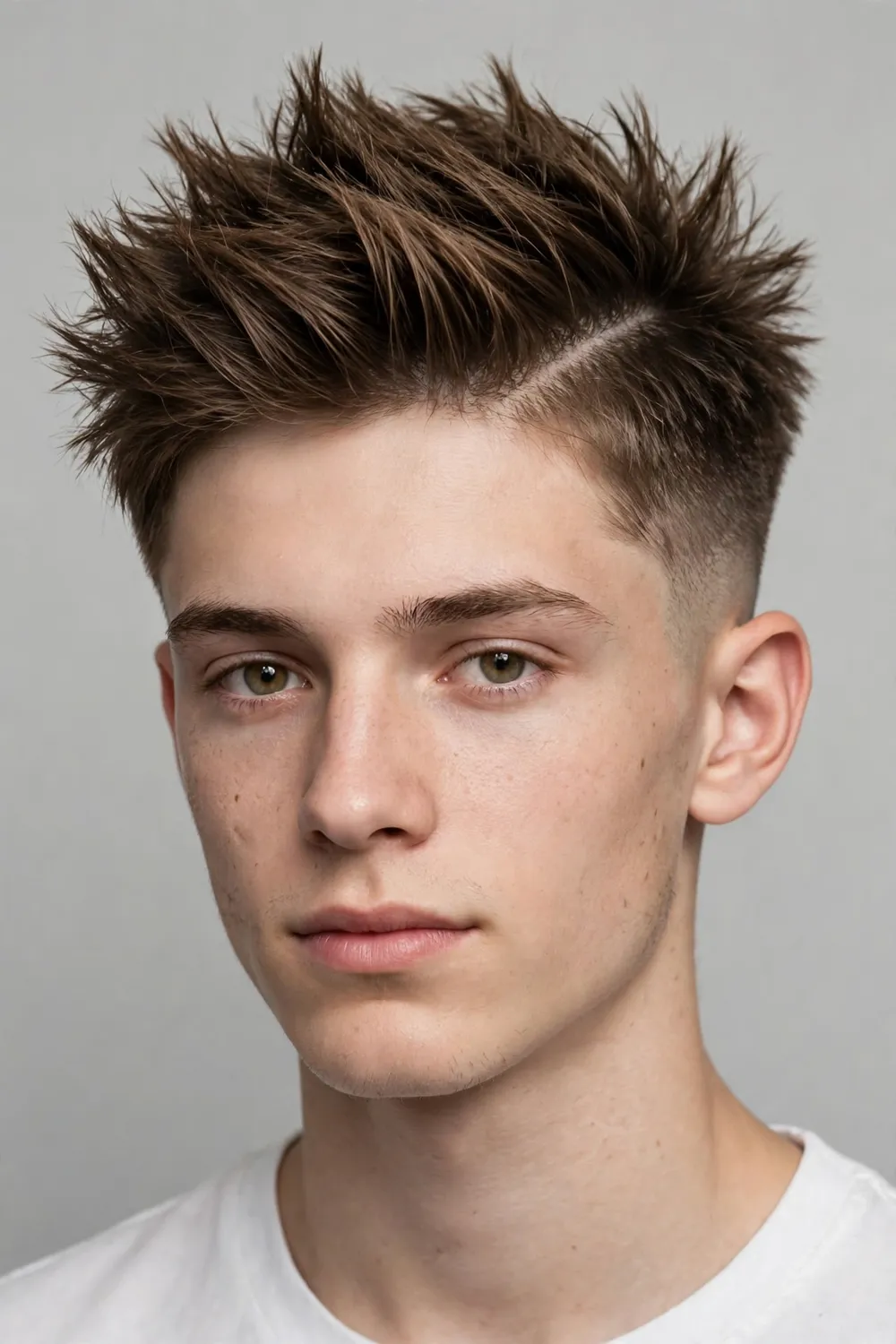
This one mixes two ideas that shouldn’t work together but do: a clean, visible side part and a spiked-up top. One side stays neatly combed down while the heavier side gets pushed into fuller spikes, for an asymmetric look that feels intentional rather than messy. It suits oval and square faces, and straight or fine hair that parts easily; curly hair will fight the part line. Ask your barber for a defined side part with a low fade, roughly two inches on the heavy side and slightly shorter on the part side. A medium-hold pomade gives the part its polish while the spikes keep their lift. The part needs restyling every morning, and the fade wants a touch-up every three to four weeks.
25. Spiky Buzz with Design

A buzz cut doesn’t usually scream “spiky,” but leave just a little more length on top — around half an inch — and those tiny points stand up on their own, especially with a dab of wax. The personality comes from a shaved design etched into the faded side — a line, a curve, or something bolder. It suits confident guys with oval or square faces and any hair type. Ask for a #1 or #2 on the sides with a skin fade, a touch longer on top, and bring a reference photo of the design — don’t freehand it from a description. The downside is upkeep: the design blurs within a week, so expect a touch-up every two to three weeks.
26. Spiky Crop with Fringe

Here the fringe does double duty: it falls forward across the forehead in short, spiky points while the crown spikes point upward, so the cut has two directions of texture in one small package. It’s a strong choice for round faces, because the upward crown lengthens the face, and for straight hair that holds a point without much effort. Ask your barber for a textured crop with the fringe left at about an inch and a half, point-cut so the ends stay choppy. Style it with a light paste — too much product and the fringe clumps into a ledge. Trim every four weeks; once the fringe passes the eyebrows, the look turns overgrown.
27. Soft Spiky Undercut

Not every undercut has to shout. This version keeps the disconnected sides, but the sides are clipped short and the top is left soft, with loose spikes that look finger-styled rather than gelled. It flatters oval and long faces best, and wavy hair suits it well, giving the spikes a natural bend. Ask for a soft undercut — sides on a #2 or #3 with no hard fade line — and about two inches on top with heavy texture. A small amount of styling cream is all you need; the goal is movement, not height. The trade-off is that it grows out awkwardly: by week five the disconnected line starts to look accidental, so book ahead.
28. High Volume Spiky Crown
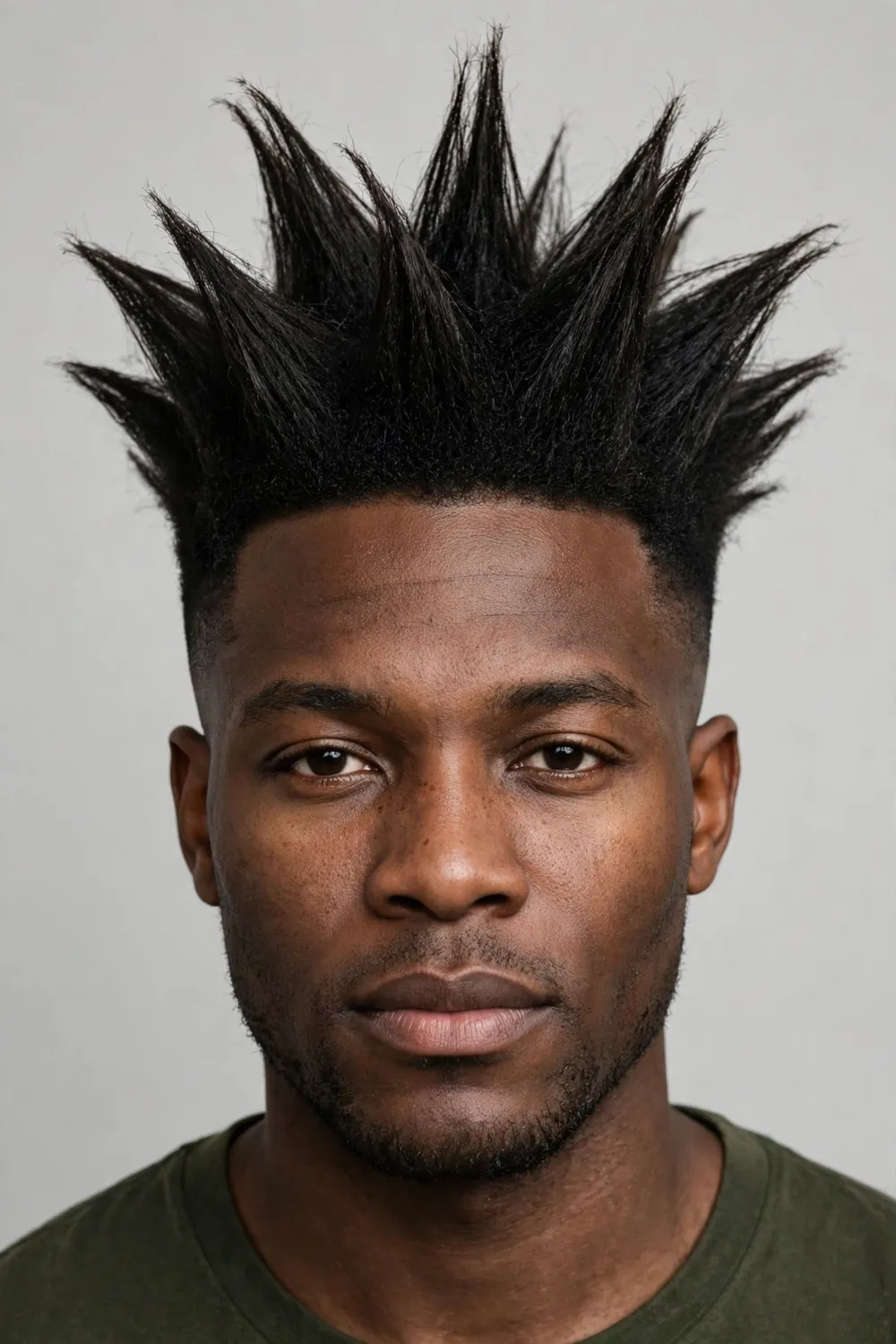
This is the loudest cut on the list, built around maximum height at the crown — think three inches of hair pushed straight up into a dramatic silhouette. It works best on oval and long faces, where the extra height flatters, and on thick hair that can actually support the weight of its own volume. Ask your barber for a heavily textured top with the crown left longest, and short tapered sides so nothing competes with the height. You’ll need a blow-dryer, a round brush, and a strong-hold clay — air-drying won’t get you there. Upkeep is real: ten minutes every morning, and wind is its enemy.
29. Spiky Textured Fringe Fade

The fringe here is chopped into short, spiky pieces that point in several directions at once — forward, up, sideways — for a deliberately chaotic front, while a clean fade keeps the sides sharp. It suits square and oval faces, and straight or wavy hair that can hold a point; very curly hair will turn the fringe into a puffball. Ask for a choppy, point-cut fringe at about an inch and a half, with a mid fade on the sides. Texture powder is your best friend with this one — it adds grip without weight and lets you restyle by hand. Expect a trim every three to four weeks, since the fringe is the first thing to lose its shape as it grows.
30. Classic Gelled Spikes
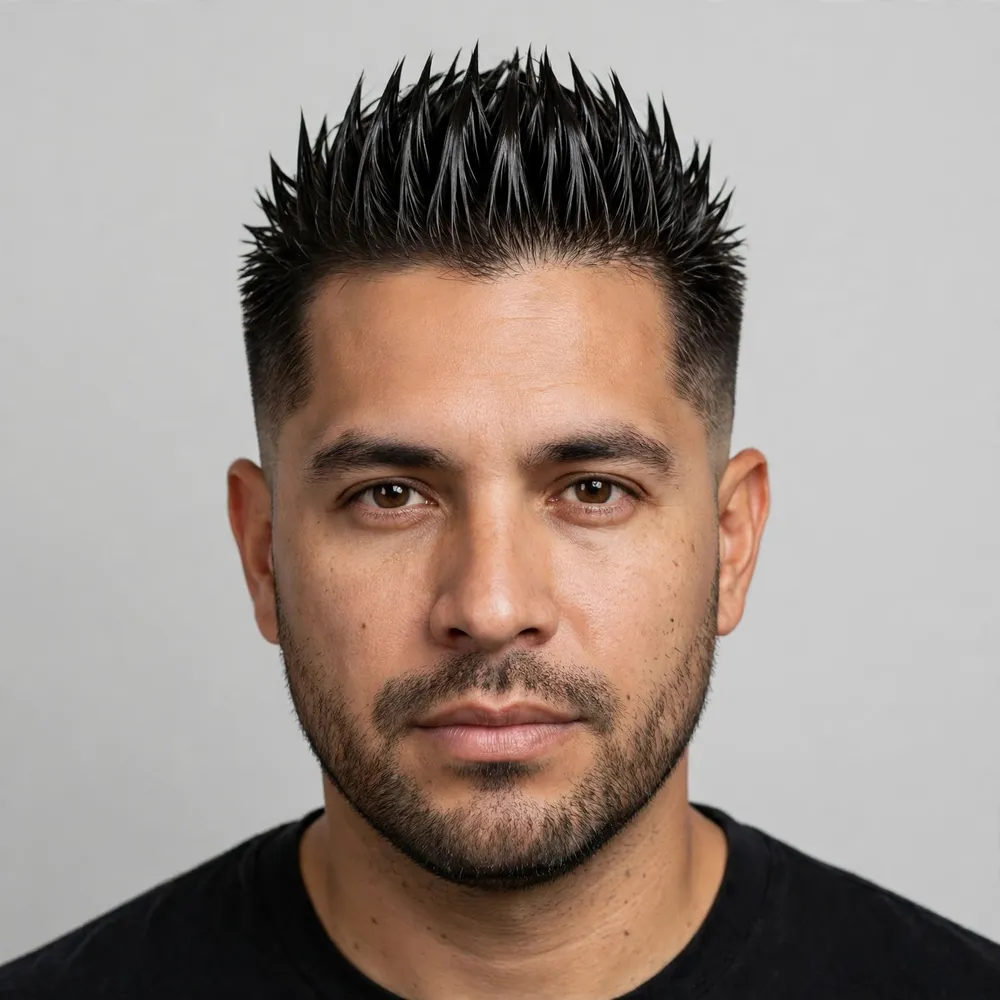
The original. Glossy, firm spikes standing straight up, like the ones that ruled the late nineties — back now, with a bit more polish. This cut suits oval and square faces, and straight, medium-to-thick hair that takes gel without flopping. Ask your barber for a short textured top of about an inch and a half with tapered sides. Work a strong-hold gel through damp hair and spike it up in sections, then leave it completely alone until it sets. The honest truth is the finish: it looks great for a few hours, but gel dries crunchy, flakes if you touch it, and washes out only with a proper shampoo.
31. Spiky Taper Fade

The taper fade is the most versatile fade in the book — it graduates smoothly from the sideburns upward, with no harsh skin line — the safest choice if you want spikes without dramatic contrast. It suits every face shape, and works on straight, wavy, and thick hair alike. Ask your barber for a classic taper on the sides and back, with about two inches of textured length on top. Style with a matte clay, pushing the spikes up and slightly back so the taper’s clean lines stay visible. It’s also one of the lowest-maintenance fades — five or six weeks between cuts is fine, and it looks respectable at every stage.
32. Spiky Edgar Cut
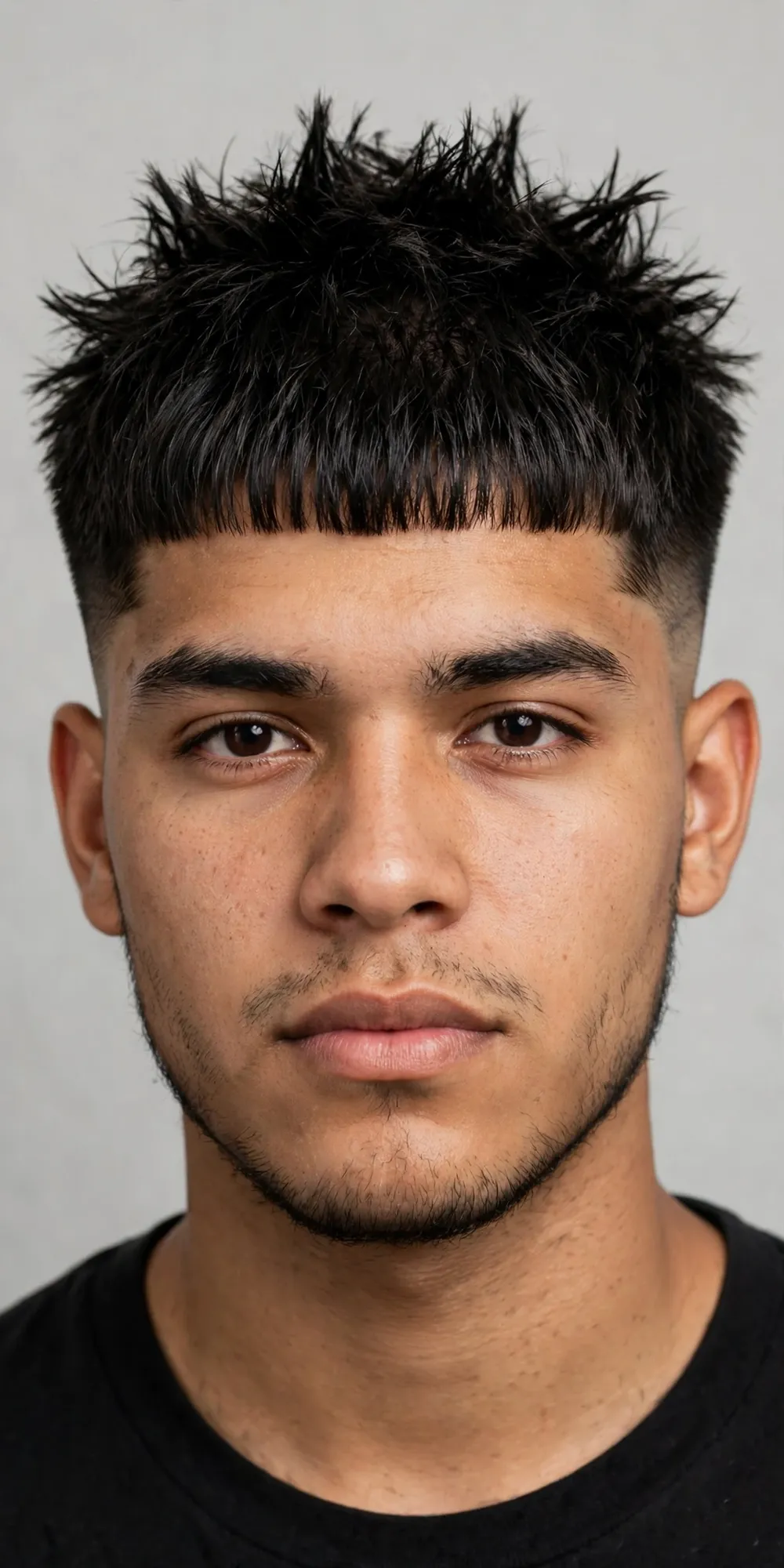
The Edgar brings a sharp, straight fringe line across the forehead, and this version pairs that blunt edge with a spiked, textured top — so the front reads graphic while the crown has the movement. It suits oval and square faces best, and straight hair most of all, since the blunt line needs hair that lies flat. Ask your barber for a straight-across fringe cut with clippers or a razor for a crisp line, a high fade on the sides, and the top left long enough to spike — about two inches. Style the top with a matte paste and keep the fringe dry and combed straight down. The line grows out visibly within two weeks, so this is a high-commitment cut that needs regular line-ups.
33. Spiky with Full Beard
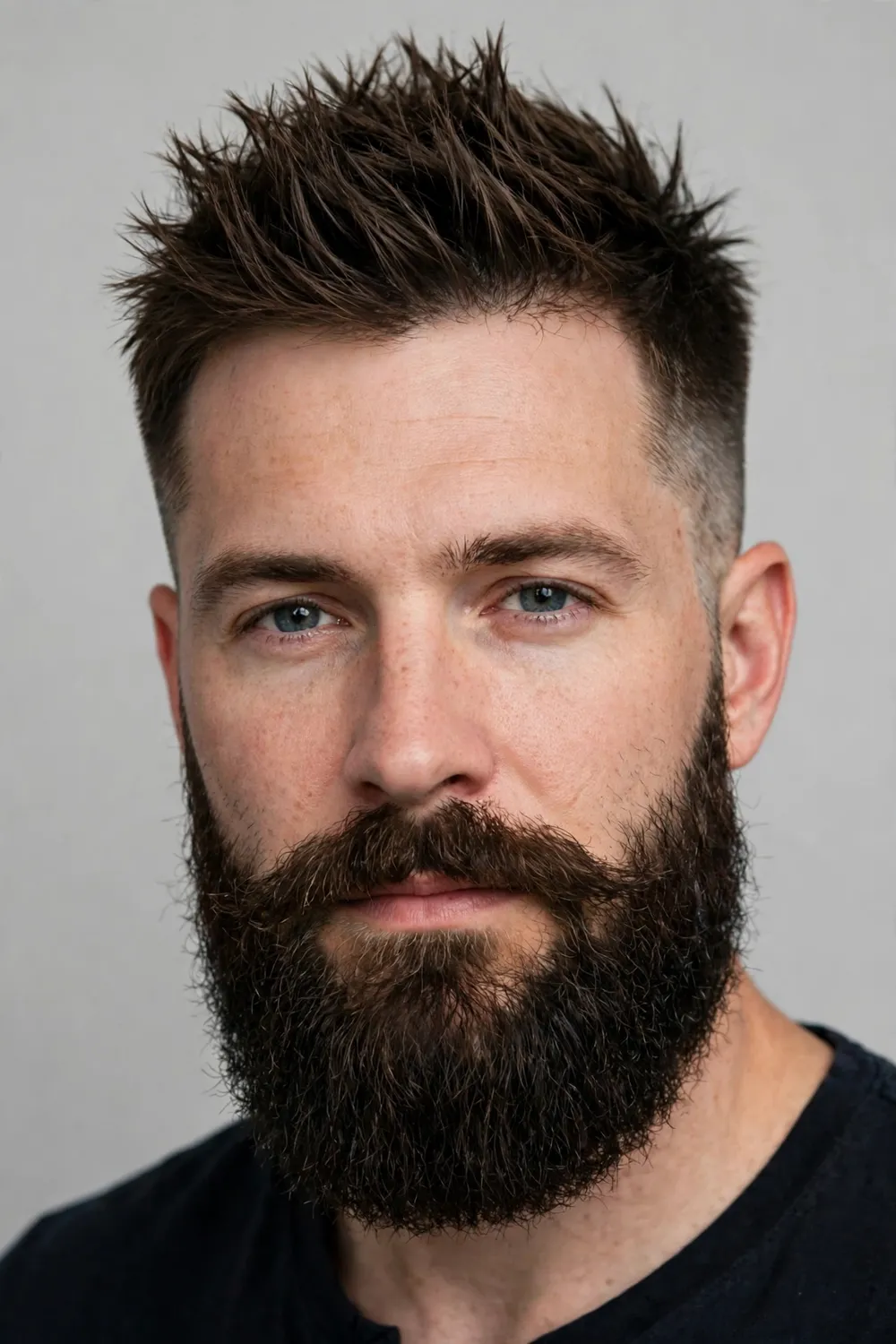
Spikes on top and a full beard below create a frame that balances the whole head — the height up top is answered by the weight below, and it reads rugged without trying too hard. It suits square and oval faces especially well, since the beard widens the jaw while the spikes add height, and it works with straight, wavy, or thick hair. Ask your barber for two inches of textured length on top with a short fade, and ask them to blend the sideburns into the beard, not cut a hard line. Style the spikes with clay and keep the beard oiled and shaped. Maintenance is doubled — you’re grooming two features now — so trim every three to four weeks.
34. Spiky for Receding Hairline

A receding hairline doesn’t mean giving up on spikes. This cut keeps the hair at the front short and textured forward, with the spikes beginning just behind the hairline, so nothing exposes the corners further. It suits men with a maturing hairline and straight or wavy hair, and it works on oval and square faces. Ask your barber for a textured crop with the front kept at about an inch, point-cut to create the illusion of density, and tapered sides. Use a light matte paste and push everything slightly forward — never back. No cut hides a hairline forever, but this one stops drawing attention to it.
35. Spiky Two Block

Borrowed from Korean barbering, the two block keeps the top long — two to three inches — while the sides are clipped short in a distinct block, for a clear two-section contrast. The long top gives you room for tall, dramatic spikes, and it suits oval and long faces best, since the height lengthens the face. Straight or slightly wavy hair works best; curly hair will fight the block’s clean lines. Ask your barber for a two block with the sides on a #2 or #3 and the top left long with heavy texture through the ends. Blow-dry upward and finish with a strong-hold clay. It grows out unevenly, so expect a tidy-up every four weeks — but fresh, few cuts look as sharp.
36. Messy Bedhead Spikes

This is the deliberately undone one — spikes that look like you just woke up. The cut itself is simple: about two inches of heavily textured length on top with tapered sides. It suits oval and round faces, since the irregular heights add character, and it’s genuinely kind to wavy and thick hair, which has natural bend to work with. Ask your barber for choppy layers and no blunt lines anywhere. The styling is the fun part: a pinch of texture powder, a rough-up with your fingers, and stop before it looks finished. “Messy on purpose” and “actually messy” are close cousins — past five weeks, the line disappears.
37. Spiky Mid Fade
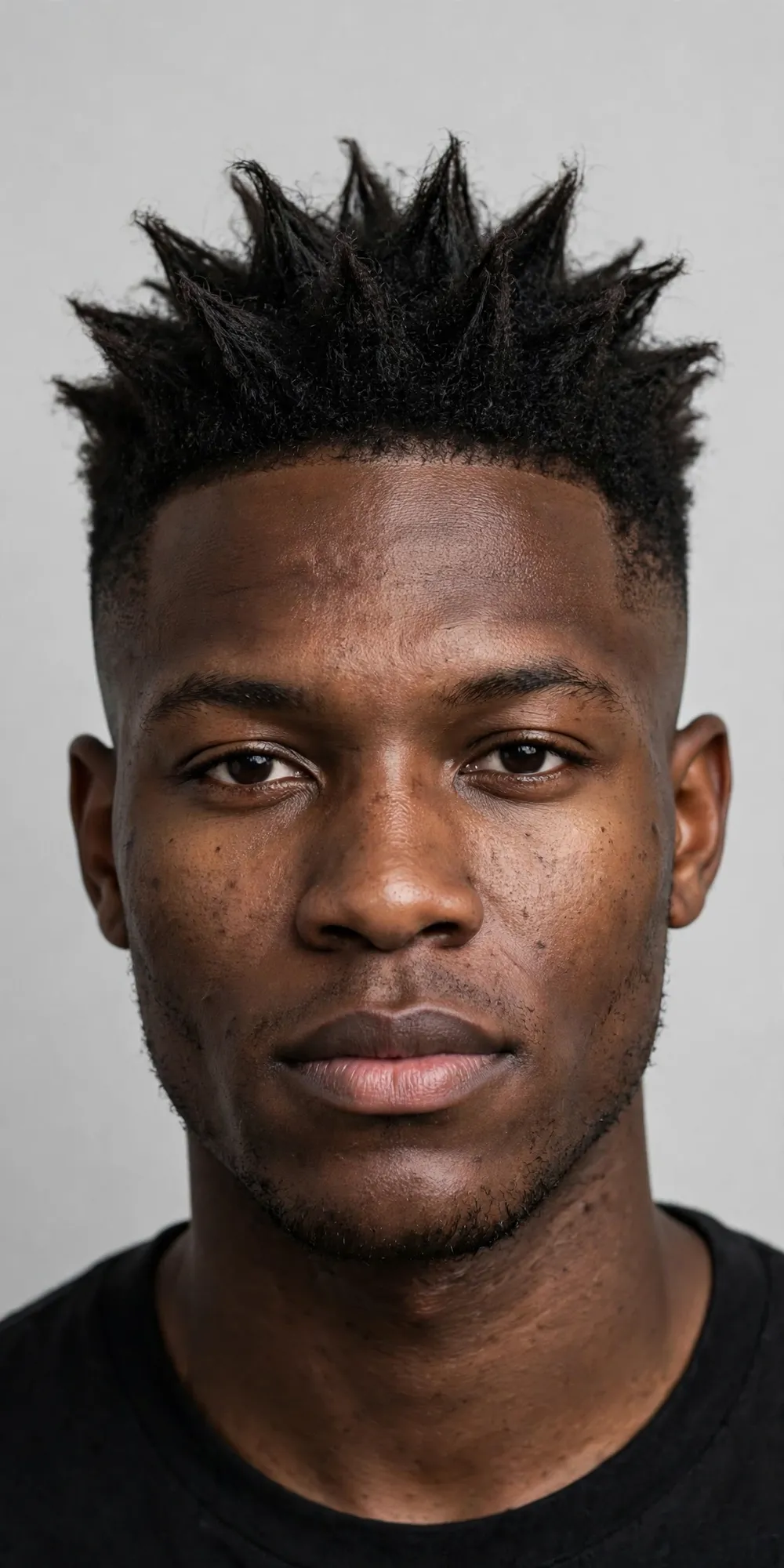
The mid fade sits exactly halfway between a low and a high fade, enough contrast to make the spikes pop without feeling aggressive. It suits every face shape and most hair types. Ask your barber for a mid fade that starts around the temple, with about two inches of textured length on top. Style with a matte paste, spiking the hair up and slightly forward so the fade’s clean line stays visible. Maintenance is straightforward — a trim every four weeks keeps the fade crisp, and it grows out more gracefully than a high fade. If you only ever try one fade with spikes, this is the one to try.
38. Spiky for Fine Hair
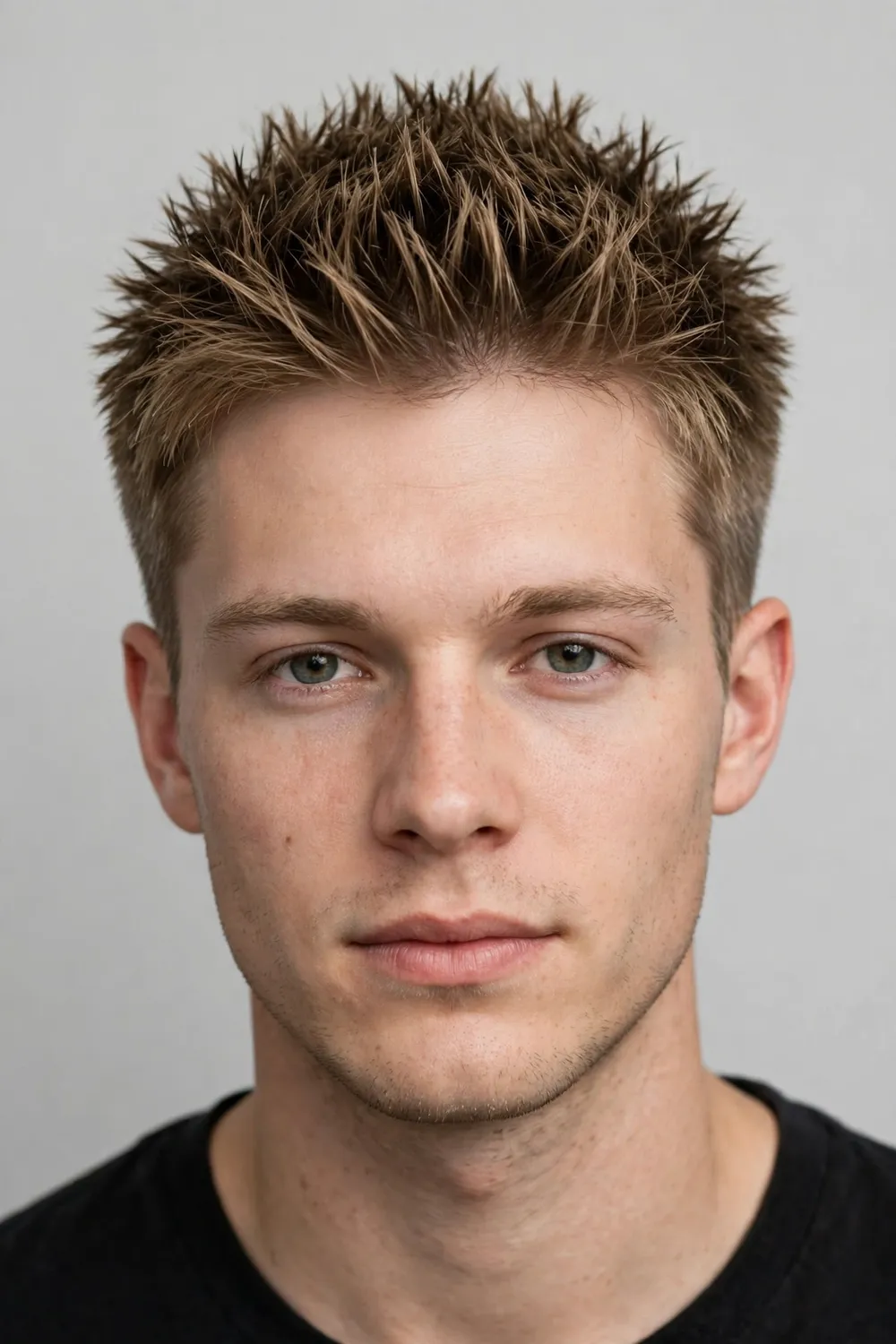
Fine hair and spikes are actually a good match. The trick is keeping the top short — around an inch to an inch and a half — and cutting it dense, so the spikes stand in a tight cluster that reads as fullness. It suits oval and round faces, and it works best on straight fine hair that can hold a point with light product. Ask for point cutting, not thinning shears — thinning shears remove bulk you can’t afford to lose. Style with a pea-sized amount of texture powder or a light paste, and never overload it — heavy product flattens fine spikes fast. Trim every three to four weeks, since even a little growth makes fine hair lie flat.
39. Spiky for Older Men
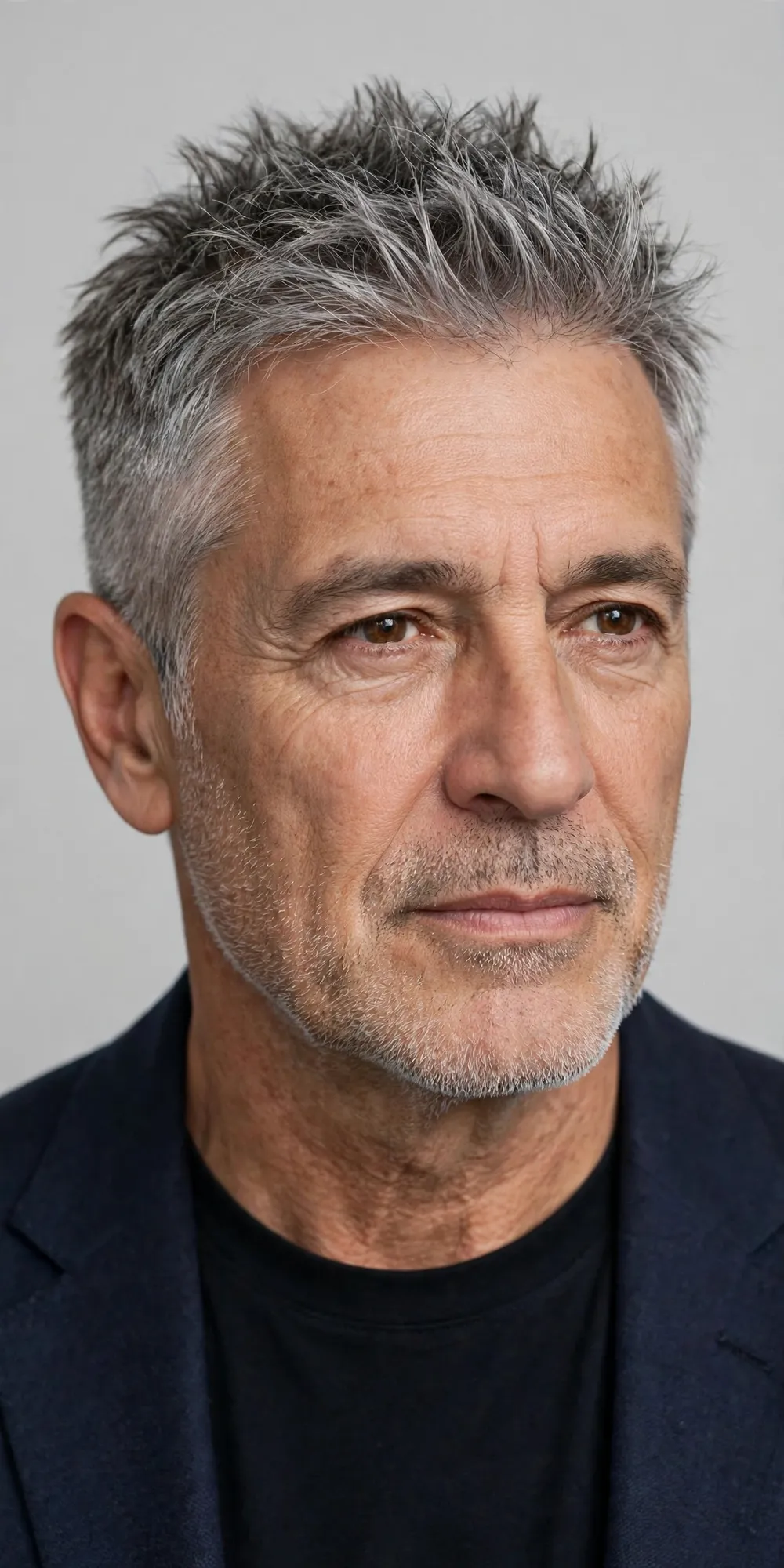
Spikes aren’t just for twenty-somethings. On older men, a short, soft version — grey hair included — looks sharp and modern without trying to turn back the clock. The cut keeps about an inch to an inch and a half on top with gentle texture, and the sides are tapered rather than faded hard. It flatters oval and square faces, and grey hair shows off the texture beautifully. Ask your barber for a short textured crop with the sides tapered and the top left soft. A light styling cream is all you need — skip the gel, which looks harsh on grey hair. Trim every four weeks, and let the grey do the talking.
How to Style Spiky Hair at Home
You don’t need a barber’s toolkit — just five minutes and the right order of operations. Get these steps right and the cut does half the work for you.
- Start with damp hair. Towel-dry after a shower until it’s about 70% dry. Soaking wet hair dilutes the product; bone-dry hair won’t take it.
- Blow-dry upward. Point the dryer at the roots and push the hair up with your fingers or a vent brush. This is where the height comes from — skip it and the spikes will flop by midday.
- Use a pea-sized amount of product. Warm it between your palms first, then work it through from the roots outward. You can always add more; you can’t take it back.
- Pinch the points. Take small sections between your thumb and fingers and twist or press them into spikes. Work from the crown forward so the front pieces sit last and look deliberate.
- Set it and leave it. A light mist of hairspray locks everything in. Then stop touching it — every time you run your hands through, you flatten what you just built.
Which Spiky Hairstyle Suits Your Hair Type?
Thick hair is the easiest to spike — it holds height on its own, so reach for the brushed-up spikes, the high-volume crown, or the spiky pompadour fade. A clay will keep all that weight in place. Thin or fine hair needs short, dense spikes like the spiky buzz fade or the fine-hair cut in idea 38, with texture powder instead of heavy paste so the hair doesn’t get weighed down. Curly hair works best when the curls are encouraged into irregular spikes rather than fought straight — the curly top spikes and the wavy spiky crop are your friends. Straight hair takes to spikes most naturally and holds a point with the least product, which is why so many of the classic styles on this list assume it. Wavy hair sits in the middle: it gives you texture for free, so loose, piecey styles like the textured haircuts for men in our guide will feel the most natural. If your hair type and your favourite style don’t match, trust the hair type — a style that fights your hair will fight you every morning.
Which Spiky Hairstyle Suits Your Face Shape?
Oval faces can wear almost anything on this list, so pick by hair type and personality rather than by rules — the classic crew cut is the safe starting point. Round faces need height on top to lengthen the face, so go for the high-volume crown, the spiky crop with fringe, or anything that pushes the hair straight up. Square faces already have a strong jaw, so spikes that add height without adding width work best — the spiky quiff and the temple fade both do this nicely. Long faces should avoid too much extra height and lean toward forward or sideways texture instead, like the brushed forward spikes or the soft spiky undercut. None of this is law, of course — if you love a style that “doesn’t suit” your face shape, a good barber can usually adjust the proportions to make it work. But starting from the right shape saves you a lot of awkward grow-out.
How to Ask Your Barber for Spiky Hair
The single most useful thing you can do is bring a photo. Show your barber exactly which style you want, from the front and the side if you can find both angles. Then cover the specifics: top length of one to three inches depending on how tall you want the spikes, and side length in guard numbers — a #2 for a clean look, a #4 if you want the sides to feel fuller. Ask for texture through point cutting, which snips into the ends to create separation; on fine hair, specifically ask them not to use thinning shears, because those remove the bulk you need. Mention whether you want a fade and how high, or a taper if you’d rather keep it softer. And agree on a trim schedule before you leave — every three to five weeks for most spiky cuts — so the shape never gets the chance to fall apart.
5 Mistakes to Avoid
- Too much gel. The crunchy helmet look died for a reason. A pea-sized amount of matte product beats a palmful of gel every single time.
- Spiking above a bare hairline. If your hairline is thinning, spikes that start right at the front only spotlight it. Start the texture behind the hairline instead, like idea 34.
- The wrong product for your hair type. Heavy wax on fine hair flattens it; light cream on thick hair won’t hold it. Match the product to the hair, not to the packaging.
- Touching it all day. Every time you run your fingers through your spikes, you break the hold and transfer oil from your hands. Style it once, then leave it alone.
- Skipping trims. Spikes have a short shelf life. Past five weeks, the shape collapses and the cut turns into bedhead — and not the good kind.
Frequently Asked Questions
How long does hair need to be for spiky hairstyles?
About one to three inches on top is the sweet spot. Shorter than an inch and the spikes barely register; longer than three inches and the weight pulls them down unless your hair is very thick. If you’re growing it out from a buzz cut, give it four to six weeks before you expect real spikes.
Is spiky hair still in style in 2026?
Yes — it’s one of the few styles that never really leaves, it just changes shape. The nineties version was all gel and gloss; the 2026 version is softer, more textured, and worn with fades and tapers. Spiky styles sit comfortably alongside the quiff haircut and textured crops as one of the most requested looks in barbershops right now, and the sheer variety of hairstyles that have survived decades says something about their staying power.
What product is best for spiky hair?
It depends on your hair type, but matte clay is the best all-rounder — strong hold, natural finish, and it washes out easily. Thick hair can handle a heavier clay or wax; fine hair does better with texture powder or a light paste. Gel still has its place for the classic glossy look, but use it sparingly.
How do I make my spikes last all day without looking crunchy?
Blow-dry the roots upward first, because height built with heat lasts longer than height built with product alone. Then use a small amount of matte clay or paste, pinch the spikes into place, and finish with a light mist of flexible-hold hairspray. Avoid gel unless you actually want the glossy finish, and don’t touch your hair during the day.
Can spiky hairstyles work for thin or fine hair?
Yes, and they can actually make fine hair look fuller. Keep the top short — around an inch to an inch and a half — and cut it dense so the spikes stand in a tight cluster. Texture powder is the best product here because it adds grip and volume without weight. Just make sure your barber uses point cutting rather than thinning shears.
How often should I get a spiky haircut trimmed?
Every three to five weeks for most spiky styles. Fades and sharp designs need the shorter end of that range — three weeks — while taper fades and softer cuts can stretch to five or six. The top is the giveaway: once the spikes stop standing up on their own, it’s time.
Do spiky hairstyles suit older men?
Absolutely. A short, soft version with gentle texture looks sharp and modern at any age, and grey or silver hair shows off the texture particularly well. Keep the spikes modest, skip the glossy gel, and use a light cream — the result reads confident rather than try-hard.
Final Word
Spiky hair has survived every trend cycle for a reason: it’s simple, it works on almost every hair type, and a good cut does most of the styling for you. Pick the style that matches your hair and your mornings, show your barber a photo, and give it a proper trim schedule. If you want more ideas in the same spirit, browse our more hairstyle guides — the burst fade haircuts and the mullet haircut are both worth a look if you’re feeling bolder.