



A mohawk haircut keeps a strip of longer hair running down the centre of the head while the sides are faded or shaved clean — bold, but far more wearable than most men expect. If you’re trying it for the first time, go for the Faux Hawk; the Low Fade Mohawk is the office-friendly all-rounder that still turns heads; and the Curly Mohawk is the best bet if your natural texture can do the height for you.
1. Classic Mohawk

This is the one everyone pictures: a narrow strip of hair, usually two to three inches wide, spiked straight up while the sides are shaved right down to the skin. Ask your barber for a two-inch centre strip and a zero or skin shave on the sides, with no taper at all — the clean break is the whole point. Style it with a strong-hold gel or fibre paste, working the product from roots to tips and spiking it up with your fingers, then lock it with a light mist of hairspray. Be honest about upkeep: it needs styling every morning and a clean-up every week or two, because even a millimetre of stubble softens the contrast.
2. Faux Hawk

The faux hawk keeps the spirit of a mohawk but softens it into something you can wear anywhere — a raised centre ridge with sides that are faded rather than shaved. Ask for a mid or low fade on the sides and leave the top around two to three inches, textured with thinning shears so it doesn’t sit like a slab. Push the centre up with a matte clay or medium-hold paste, keeping the sides neat and flat. Maintenance is light: a trim every three to four weeks keeps the fade fresh, and on lazy days you can wear it pushed forward like a normal textured crop. If your workplace has an unspoken dress code, this is your mohawk.
3. Short Mohawk

A short mohawk strips the style back to its essentials: a strip of about two inches standing upright, paired with a clean low fade that keeps everything tidy. Ask your barber for a two-inch top, a low fade starting just above the ears, and a strip wide enough to look deliberate — around two inches. A dab of strong-hold wax or fibre cream is all you need; rub it between your palms, push the strip up and forward, and you’re done in under a minute. The trade-off is frequency: short lengths show growth fast, so book a trim every two to three weeks. For men who want the silhouette without the morning routine, this is the sweet spot.
4. Long Mohawk
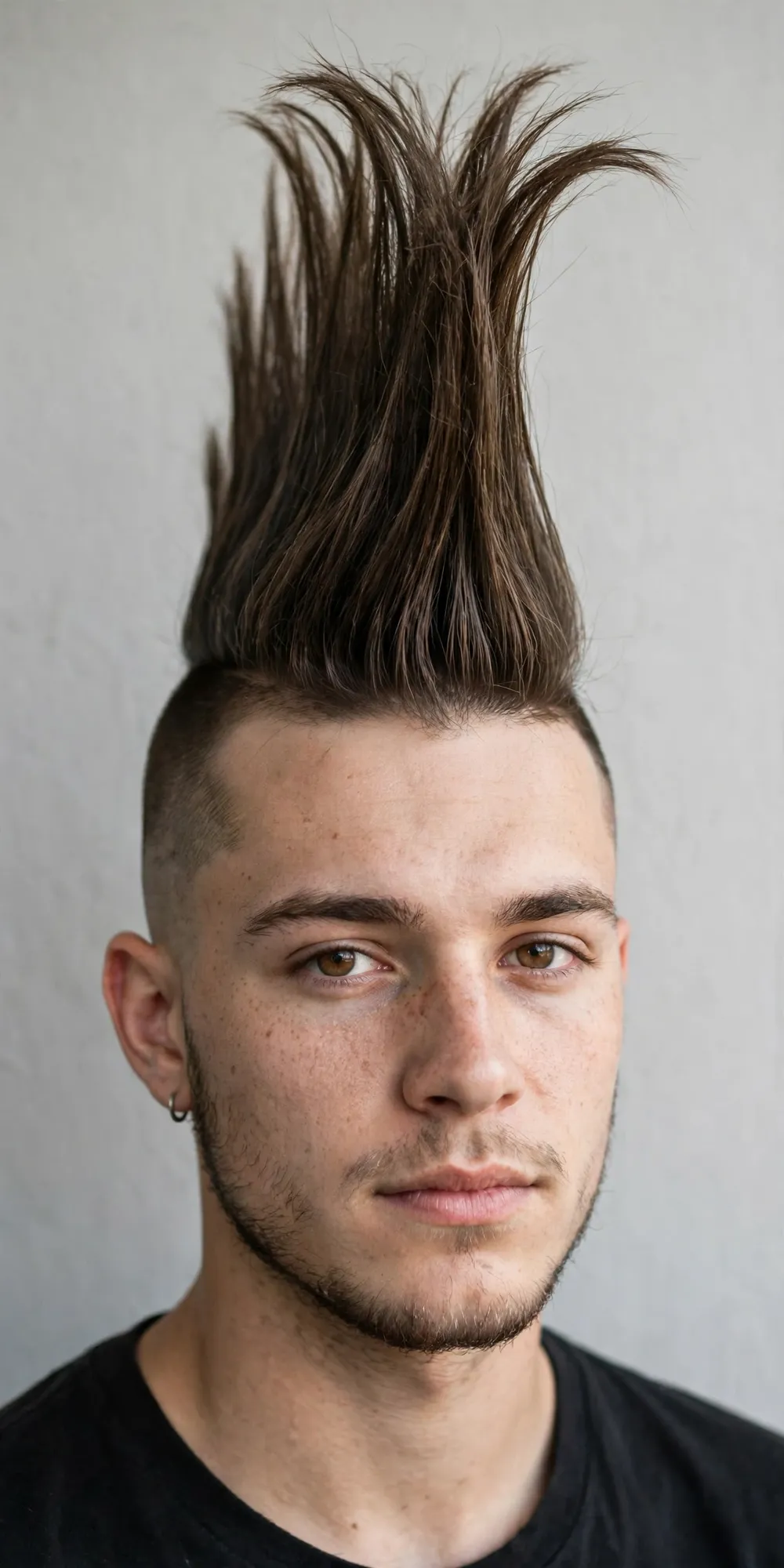
The long mohawk is pure theatre. The centre strip runs four to six inches long, worn spiked tall, swept back, or fanned into a dramatic silhouette that dominates the whole haircut. Ask for a four-to-six-inch strip, sides shaved or skin-faded, and have the barber point-cut the ends so the strip doesn’t look blunt. You’ll need a strong-hold gel or setting lotion, a hairdryer to build the base, and hairspray to hold the height through the day. Expect a real morning routine: five to ten minutes of styling, plus a trim every two to three weeks. It’s not subtle and it’s not trying to be — but when it’s done well, nothing else in the room competes with it.
5. Low Fade Mohawk

The low fade mohawk pairs a full, balanced centre strip with a fade that hugs the ears and stays close to the hairline — the most professional version of the cut, and the one I’d recommend to any man who needs his hair to work in an office on Monday. Ask your barber for a low fade that starts just above the ear, a strip of two to three inches wide, and a top left long enough to spike or sweep. Style it with a matte clay for a natural finish, or a light pomade if you want a bit of shine. The maintenance is forgiving: the fade grows out gracefully, so three to four weeks between cuts is fine.
6. Mid Fade Mohawk

The mid fade mohawk starts the fade at the temples, which gives it a sharper, more defined outline than the low fade without going as aggressive as a high fade. It’s the middle ground, and for most men it’s the best-looking one. Ask for a mid fade that begins at temple level, a strip two to three inches wide, and a top of two to four inches depending on how much height you want. A fibre paste or strong-hold clay will give you the texture and lift the cut needs, finished with a light spray for hold. Trimming every two to three weeks keeps the fade line crisp.
7. High Fade Mohawk

A high fade mohawk climbs the fade right up to the crown, leaving a stark contrast between the bare sides and the standing strip — a bold, athletic silhouette that suits men who like their haircuts to make a statement. Ask your barber for a high skin fade that starts near the crown, a narrow strip of around two inches, and a top long enough to spike — three inches or more. Strong-hold gel or fibre paste is essential here, and a hairdryer helps set the base before you shape the spikes. The downside is upkeep: high fades show regrowth within days, so you’ll need a clean-up every ten days to two weeks.
8. Skin Fade Mohawk

The skin fade mohawk takes the sides right down to bare skin, so the strip stands alone in razor-sharp isolation against a perfectly smooth head. Ask your barber for a zero or foil-shaver skin fade, a crisp lineup across the forehead, and a strip two to three inches wide with a top long enough to style. A matte clay or strong-hold paste gives the strip texture without shine, which suits the clean look of the sides. Maintenance is the honest catch: a skin fade loses its edge in about a week, so plan on a touch-up every seven to ten days. If you don’t mind the barber’s chair becoming a weekly habit, this is the sharpest mohawk you can wear.
9. Burst Fade Mohawk
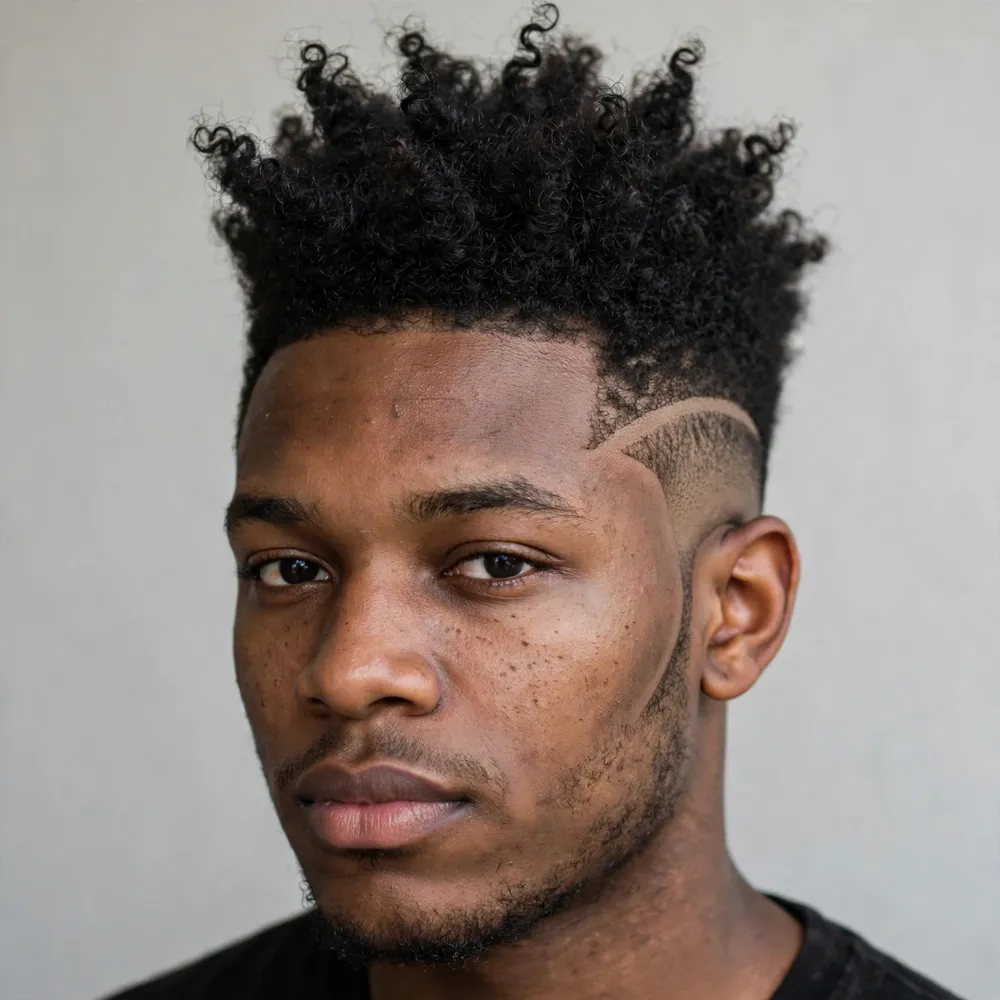
The burst fade mohawk is the one to ask for if your hair has curl or coil, because the fade curves around the ear in a semicircle that frames the texture instead of fighting it. The burst shape keeps the back and temples tidy while the curly strip does the talking. Ask for a burst fade around the ear, a strip wide enough to let your curls breathe — around three inches — and a top left long enough for the curls to spring up on their own. A curl cream or light hold gel defines the texture without weighing it down, Maintenance is easy: trims every three weeks, and the curls hide regrowth better than any straight version.
10. Taper Mohawk

The taper mohawk is the grown-up version of the cut — instead of a hard fade or a shave, the sides taper gradually from longer at the top to shorter at the neckline, which keeps the whole thing looking intentional and tidy. Ask for a classic taper on the sides and back, a strip two to three inches wide, and a top of two to three inches that you can spike up or sweep back. A medium-hold pomade or cream gives a clean, natural finish — this isn’t a gel-and-spikes situation. The taper grows out gracefully, so four weeks between cuts is realistic, and on days you don’t style it the cut still looks like a proper haircut.
11. Drop Fade Mohawk

The drop fade mohawk dips the fade line down behind the ears, following the natural curve of the head instead of running straight around it. Ask your barber for a drop fade that arcs down behind the ear, a strip of two to three inches, and a top left long enough for the waves to move, around three inches. A sea salt spray or light cream brings out the wave pattern without making it stiff; finish with a matte paste if you want the strip to stand taller. Maintenance is moderate: the drop fade grows out more gracefully than a high fade, so three weeks between trims works fine.
12. Temple Fade Mohawk
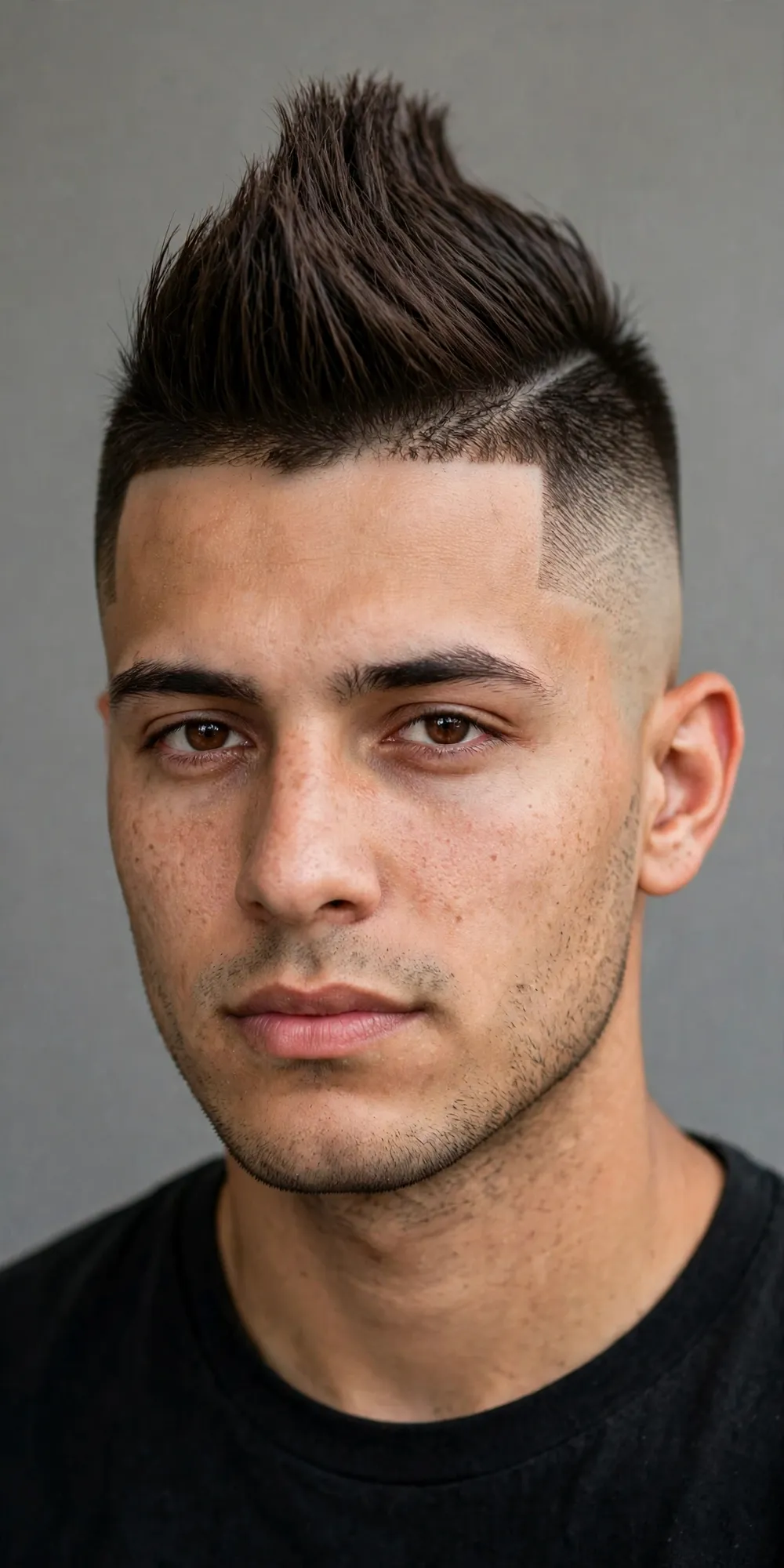
The temple fade mohawk keeps the fade local — only the temples are faded, while the rest of the sides stay short but present, which makes it a smart choice for men who want the mohawk shape without shaving half their head. Ask for a temple fade that starts at the hairline and blends quickly, a sharp lineup across the forehead, and a strip two to three inches wide. Style the top with a light pomade, or a curl sponge if your texture needs it, keeping the finish natural rather than stiff. The edge-up is the detail that makes or breaks this cut, so book a lineup touch-up every week to ten days.
13. Curly Mohawk

The curly mohawk lets your natural texture do the heavy lifting — the curls give the strip its height and volume on their own, so you get a dramatic silhouette with almost no styling effort. Ask your barber for faded sides, a strip three to four inches wide so the curls have room to spring, and a top left long enough to show the curl pattern — usually two to three inches. A curl-defining cream or light gel is all you need; scrunch it in while the hair is damp and let it air-dry. The honest catch is the trim schedule: curls grow outward as well as down, so a shape-up every three weeks keeps the strip from turning into a puffball.
14. Frohawk
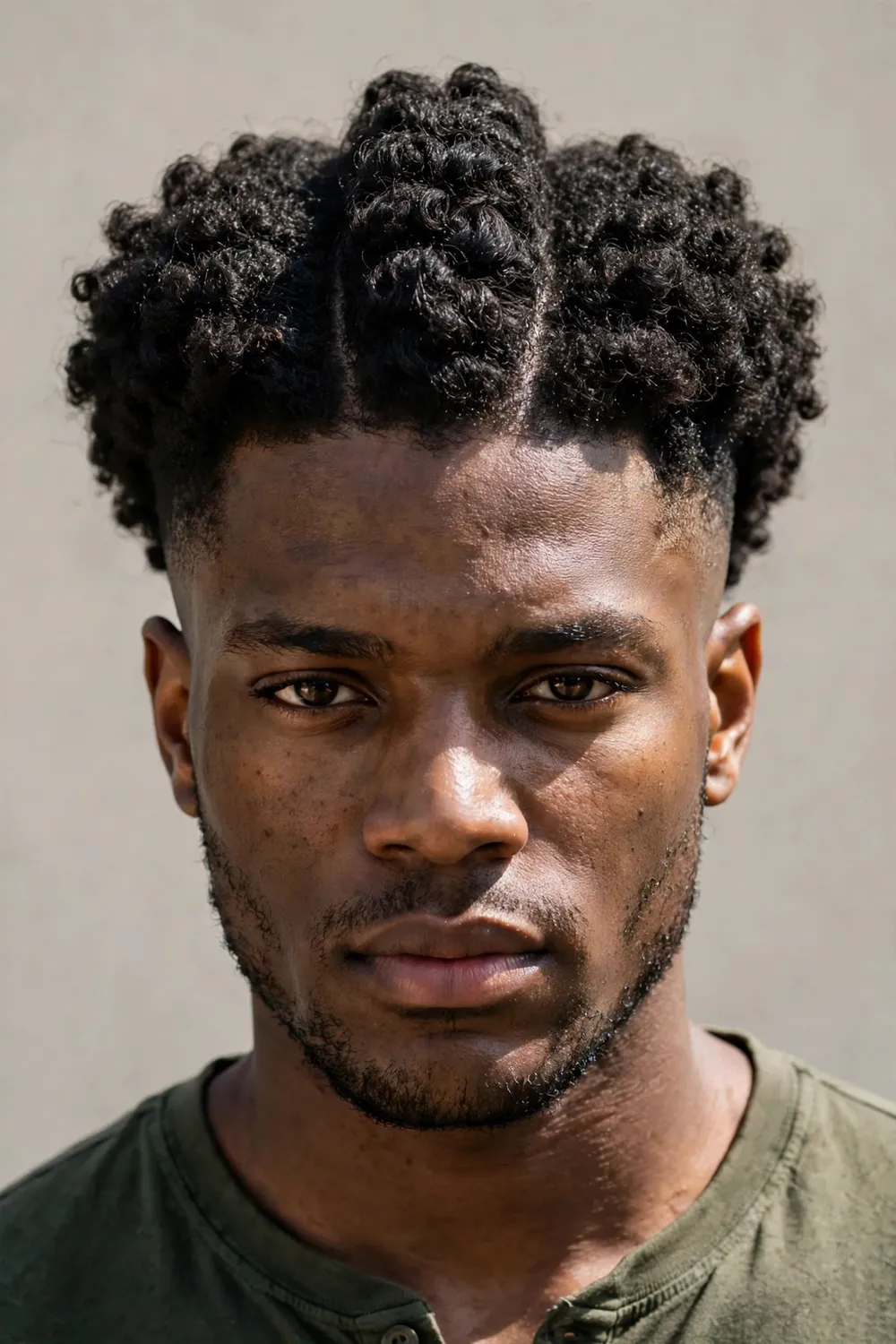
The frohawk is a wide, rounded strip of coily hair worn tall and proud, with tapered sides — a bold, regal cut that turns a natural afro into a mohawk silhouette. Ask your barber for tapered sides that blend into the strip, a wide centre section of three to four inches, and a top shaped into a rounded profile rather than spiked. A pick is your main styling tool here: lift the coils from the roots to build height, then use a light shea-based cream or curl butter to keep the coils defined and moisturised. Maintenance is about moisture more than cutting — keep the coils hydrated, trim the shape every three to four weeks, and the frohawk holds its form.
15. Wavy Mohawk
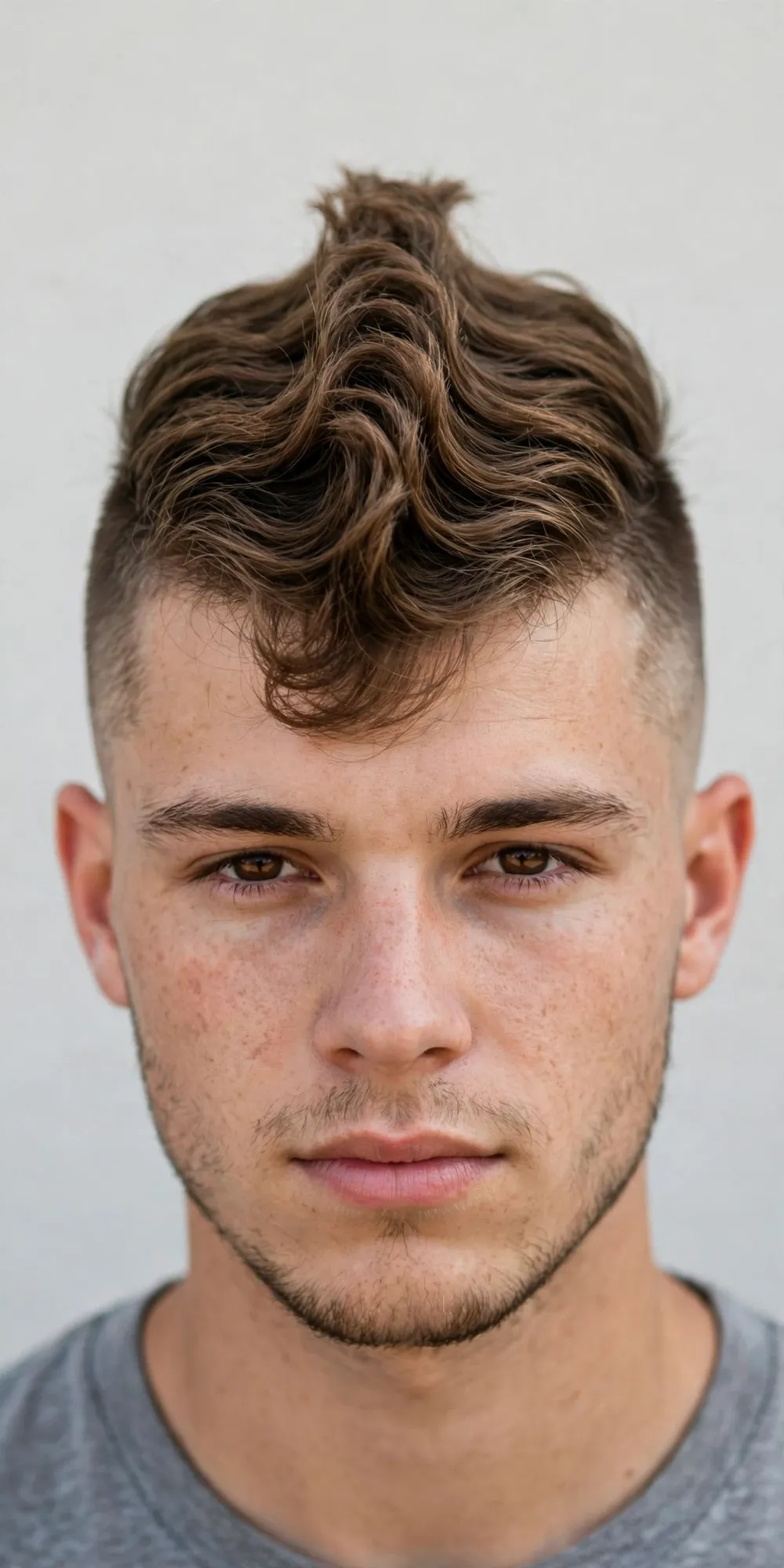
The wavy mohawk trades spikes for movement — loose waves run through the strip, giving it a softer, more relaxed silhouette than the classic punk version. Ask for a soft shadow fade on the sides, a strip two to three inches wide, and a top of three to four inches so the waves have room to form. A sea salt spray on damp hair brings out the texture; scrunch it in and let it air-dry for a natural finish, or add a light cream if the waves need taming. There’s no stiff product and no daily sculpting here — the cut works with your hair instead of against it. Trims every three to four weeks keep the shape.
16. Textured Mohawk

The textured mohawk is the modern, wearable version of the cut — a choppy, layered strip with piecey, deliberately messy texture instead of uniform spikes. Ask for a low or mid fade on the sides, a top of two to three inches cut with point-cutting or a razor for choppy layers, and a strip wide enough to look intentional. Work a matte clay or texture paste through the hair with your fingers, pulling pieces in different directions — the messier it looks, the better it works. No blow-dryer needed, no hairspray, and a bad hair day just looks like texture. Trims every three to four weeks keep the layers fresh.
17. Spiky Punk Mohawk

The spiky punk mohawk is the full-throttle version: tall, sharp spikes individually sculpted from a long strip, with the sides shaved clean. Ask your barber for a strip two to three inches wide, a top of four to five inches, and sides taken down to skin with no fade at all. Styling is a commitment: blow-dry the strip upward with a strong-hold gel, shape each spike individually with your fingers, and finish with a firm-hold hairspray so the spikes survive the day. Expect ten minutes every morning and a trim every two weeks. It’s not a practical haircut and it’s not pretending to be one.
18. Liberty Spikes

Liberty spikes are the most extreme mohawk of all — the strip is fanned out into tall spikes that spread across the head like the crown on the Statue of Liberty, which is where the name comes from. Ask your barber for a wide strip, sides shaved to skin, and the length left untouched so you can sculpt it. Styling takes real effort: strong-hold gel or even a setting glue, a hairdryer to build the fan, and plenty of hairspray to hold the shape. It won’t survive wind, rain or a hat, and it takes a good fifteen minutes to put up. Maintenance is simple in comparison — a shave of the sides every week or so.
19. Mohawk with Shaved Designs

A mohawk with shaved designs adds artwork to the cut — lightning bolts, geometric lines or tribal patterns carved into the faded sides with clippers or a razor. Ask your barber for a mid or high fade on the sides with enough faded area to work on, then pick a design that fits the space — simple lines last longest, detailed patterns need a steady hand. The strip itself can be any length you like, styled however you prefer. Maintenance is the catch: designs grow out in about a week, so you’ll need a re-carve every seven to ten days to keep the lines crisp. It also means finding a barber who can actually do the work — not every shop offers it.
20. Razor Line Mohawk

The razor line mohawk adds a single razor-sharp hard part — a clean line shaved into the hair that separates the strip from the fade with surgical precision. Ask your barber for a mid or low fade, a strip two to three inches wide, and a hard part carved with a razor or trimmer at the boundary between the strip and the fade. Style the top with a matte paste or light pomade, keeping the finish clean so the line stays the star. The honest trade-off is maintenance: the line softens within five to seven days as stubble grows in, so a weekly touch-up keeps it looking intentional rather than accidental.
21. Mohawk with Beard

A mohawk can look top-heavy on its own — a beard fixes that. The weight down low balances the height up top, so the whole head reads as one deliberate shape instead of a haircut with a punchline. It suits strong jawlines and rounder faces best, since the beard adds angles where the mohawk adds drama. Tell your barber to keep the strip narrow and fade the beard into the sideburns with a clean cheek line. Keep the beard’s length in proportion — a chin-length beard with a two-inch strip looks intentional, while a wispy beard under a tall mohawk looks accidental. Finish the strip with strong-hold matte clay and the beard with a light balm. Trim the beard weekly and touch the strip every two to three weeks.
22. Braided Mohawk

This is the mohawk for anyone who wants the silhouette without the daily styling fight. Cornrows run front to back down the centre strip, with faded sides keeping the shape crisp. It suits coily and curly hair beautifully, and it’s genuinely protective — the braids stay put for weeks while your hair underneath stays tucked away. Ask your braider for cornrows that meet in a defined centre strip, and your barber for a low or mid fade on the sides. The finish is mostly maintenance: a little scalp oil along the parts, a silk scarf at night, and no heavy product on the braids themselves. Redo the braids every two to four weeks depending on growth. The fade pairing works much the same as in our burst fade guide.
23. Dreadlock Mohawk

Thick locs pulled into a centre strip give you a mohawk with presence and almost no morning routine. The weight of the locs does the styling — they sit where you place them, and the faded sides carve out the shape. It works best with mature locs — fresh locs are too soft to hold the line. Ask your loctician to gather the locs into a strip and your barber to fade the sides and clean the hairline — the fades work the same way as the cuts in our fade haircuts for Black men guide. A little loc gel keeps flyaways in check, and retwists every four to six weeks keep the roots neat. Wash days need planning, since locs dry slowly, but between washes this is one of the lowest-effort mohawks.
24. Blonde Mohawk
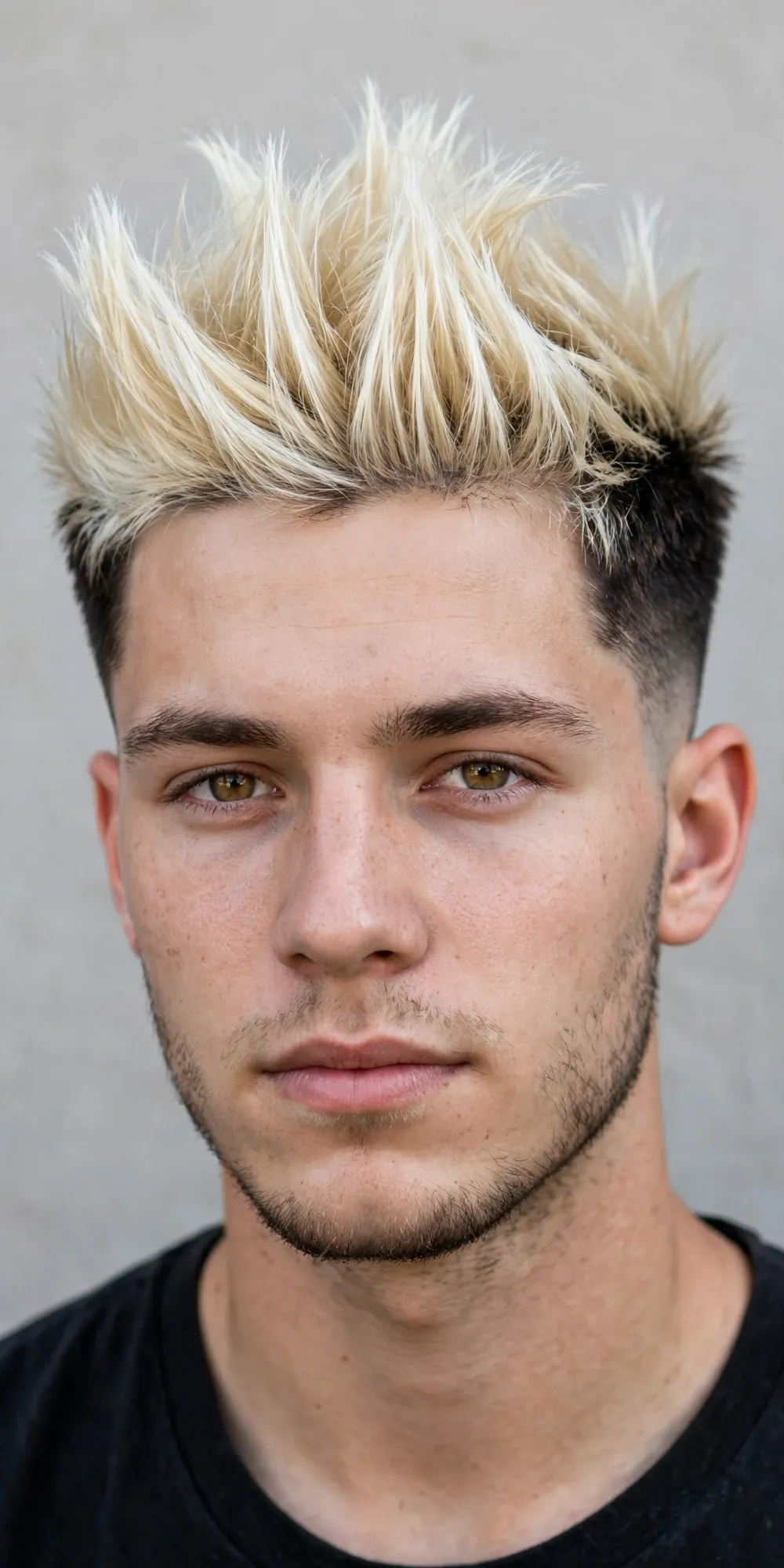
Bleach turns the mohawk into a billboard. A platinum strip against dark faded sides creates contrast you can spot across the street, and it works on every hair texture because the colour does the talking. It suits fair-to-medium skin tones best, though darker skin with platinum hair is a striking combination too — just be honest with yourself about how much attention you want. Ask your colourist to bleach the strip to a level 9 or 10, tone out the yellow, and keep the sides dark. Use purple shampoo once a week and a bond-repair treatment after bleaching. Expect root touch-ups every three to four weeks. This is the boldest way to wear the Mohawk hairstyle, and the upkeep is the price of the effect.
25. Bold Colored Mohawk
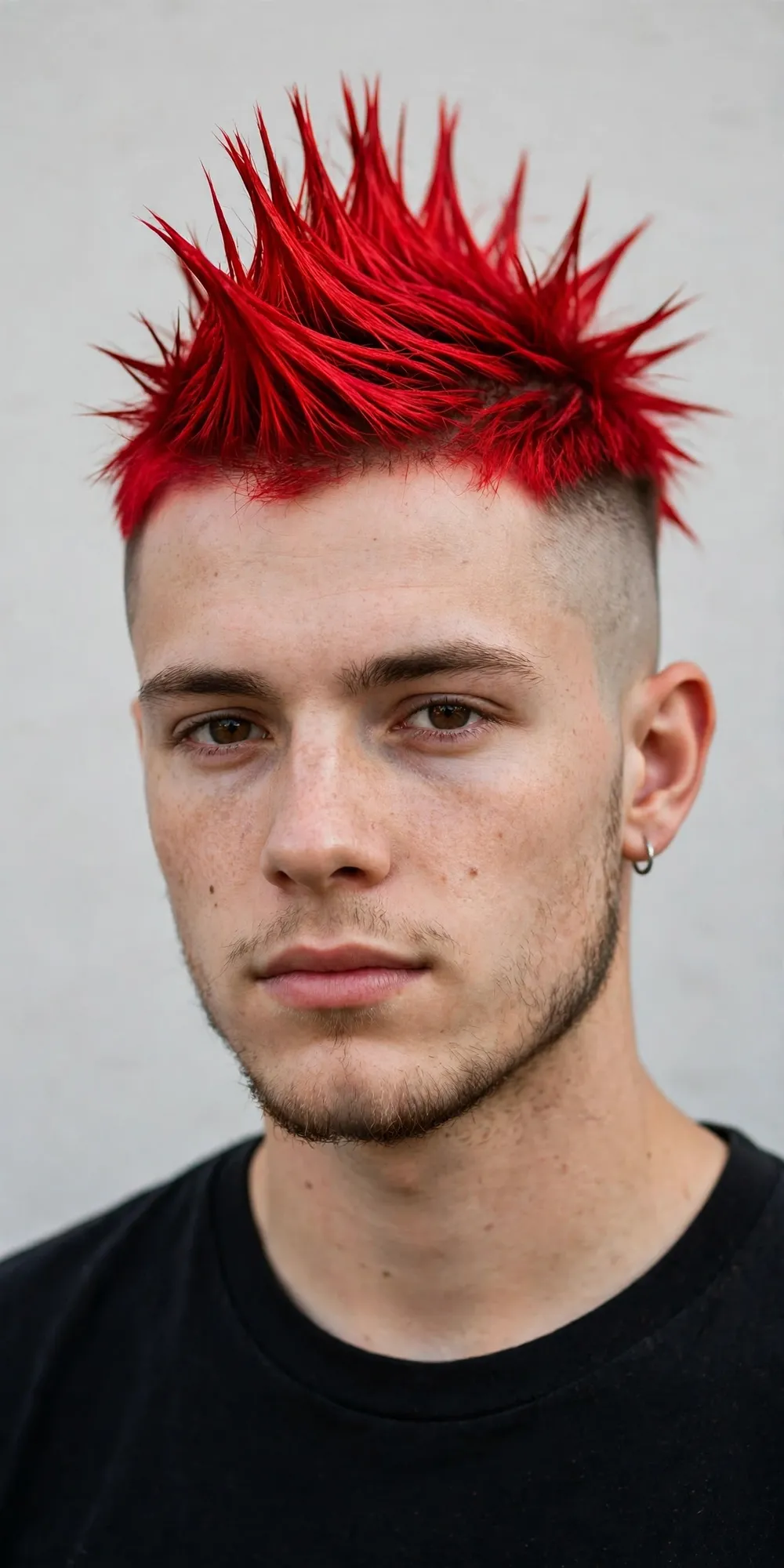
Vivid red, electric blue or emerald green on a pre-lightened strip is the mohawk at its most expressive. The colour is the whole point here, so the cut can stay simple — a mid or skin fade and a clean, even strip let the dye take centre stage. It suits anyone willing to be remembered, and it genuinely looks best on hair that’s been properly lightened first, since colour on dark hair washes out to a murmur. Ask your colourist to pre-lighten to at least a level 8, then apply a direct dye like Arctic Fox or Manic Panic. Wash with cold water and sulphate-free shampoo to slow the fade, and expect a refresh every three to five weeks. Sun and chlorine eat bright colour fast, so plan accordingly.
26. Frosted Tips Mohawk
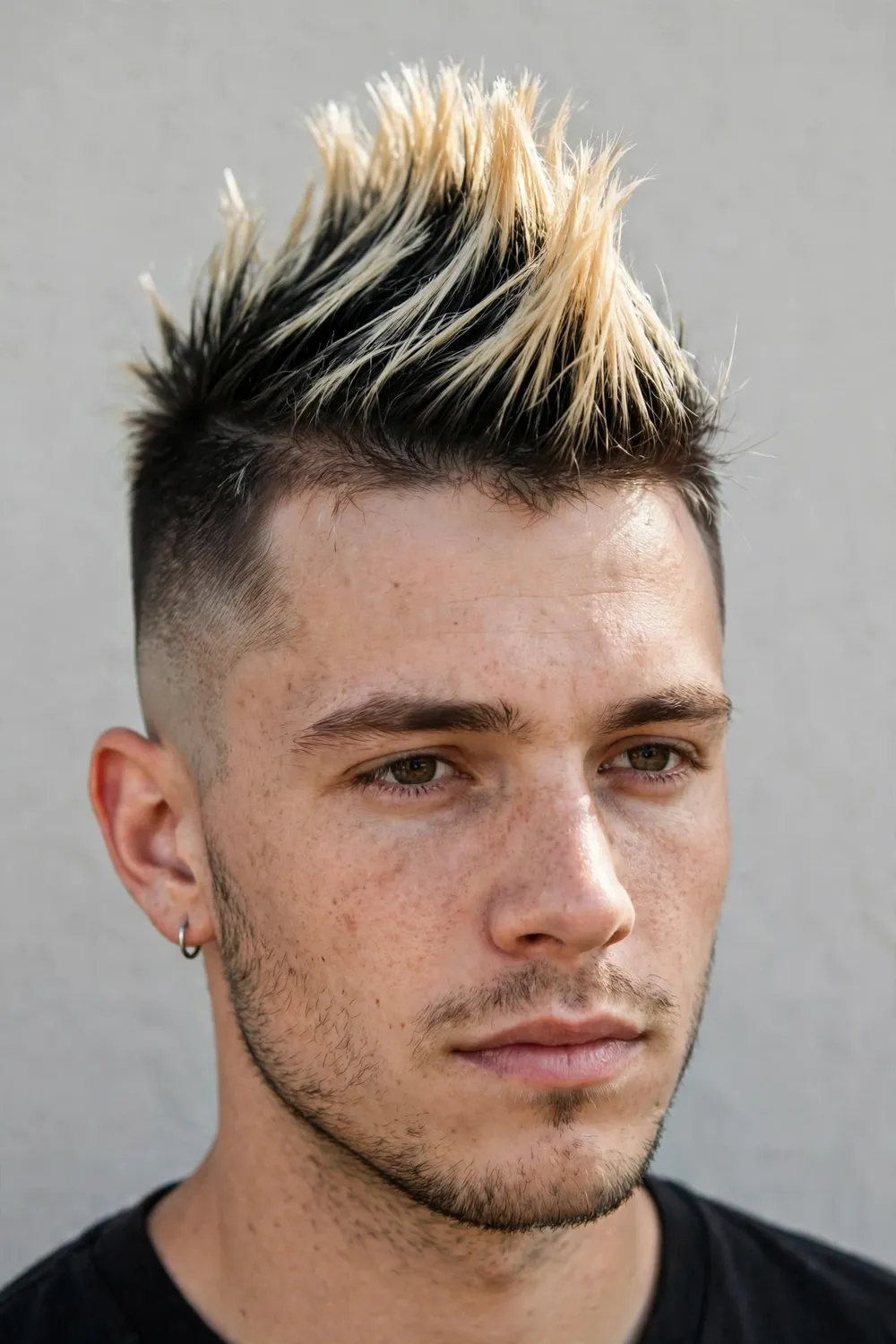
Only the tips of the strip are bleached, leaving dark roots underneath, and the result is a two-tone mohawk that nods to the nineties without dressing up as them. It suits guys who want a flash of colour but aren’t ready to bleach their whole strip, and it works on straight and wavy hair alike — the contrast shows best when the strip has some height. Ask your colourist to bleach just the top inch of the strip and tone it to a clean ash or golden blonde, depending on your skin tone. The maintenance is forgiving: roots growing out just blend into the look, and you can stretch touch-ups to six weeks or more. Use purple shampoo weekly to keep the blonde from going brassy, and a light matte clay to style.
27. Buzz Hawk
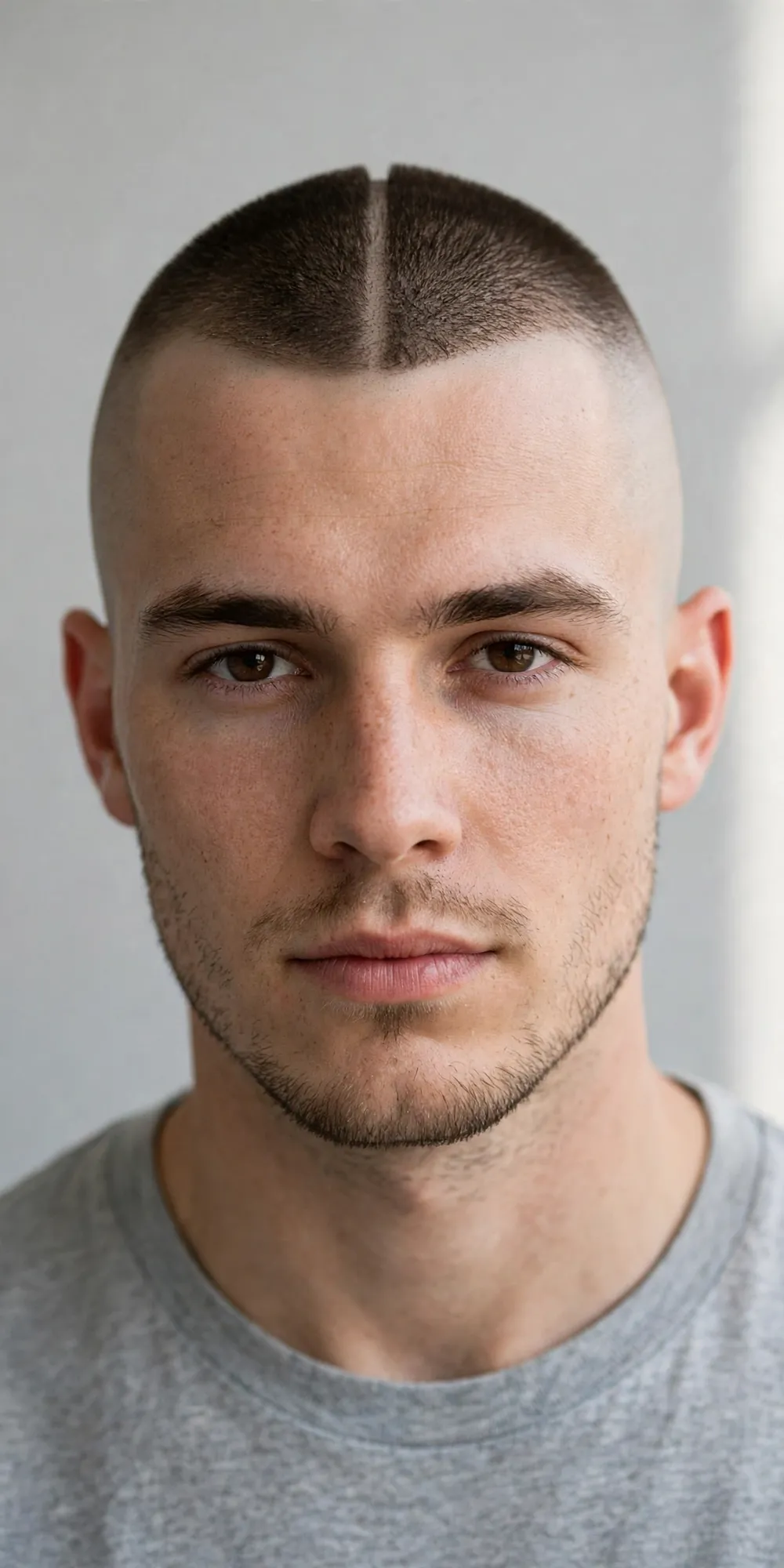
The buzz hawk is the mohawk for people who hate styling their hair. The strip is buzzed to a uniform #2 or #3 guard, the sides skin-faded, and that’s it — no product, no blow-dryer, no mirror time. It reads as a mohawk because the shape is unmistakable, just at the lowest possible volume. It suits strong skull shapes and guys who already know they look good very short; bumps or scars you’re self-conscious about will show. Ask your barber for a #2 on top and a skin fade on the sides, with the strip kept two to three inches wide. If you like the idea of going even shorter all over, our buzz cut guide covers the full range. Maintenance is a buzz every week to ten days.
28. Mohawk Mullet

The strip up top flows straight into long hair at the back, and the combination is exactly as rebellious as it sounds. The faded sides keep it from turning into a shapeless mass, while the length behind gives you something to tie back on days when the mohawk feels like too much. It suits wavy and straight hair with natural volume, and it looks best on guys who already wear their hair long and want a harder edge. Ask your barber to keep the strip defined with a fade on the sides, and to leave the back untouched except for a light dusting of the ends. Style the strip with a strong-hold pomade and let the back do what it wants. It also pairs naturally with the classic mullet — the two cuts share the same DNA.
29. Mohawk with Tail
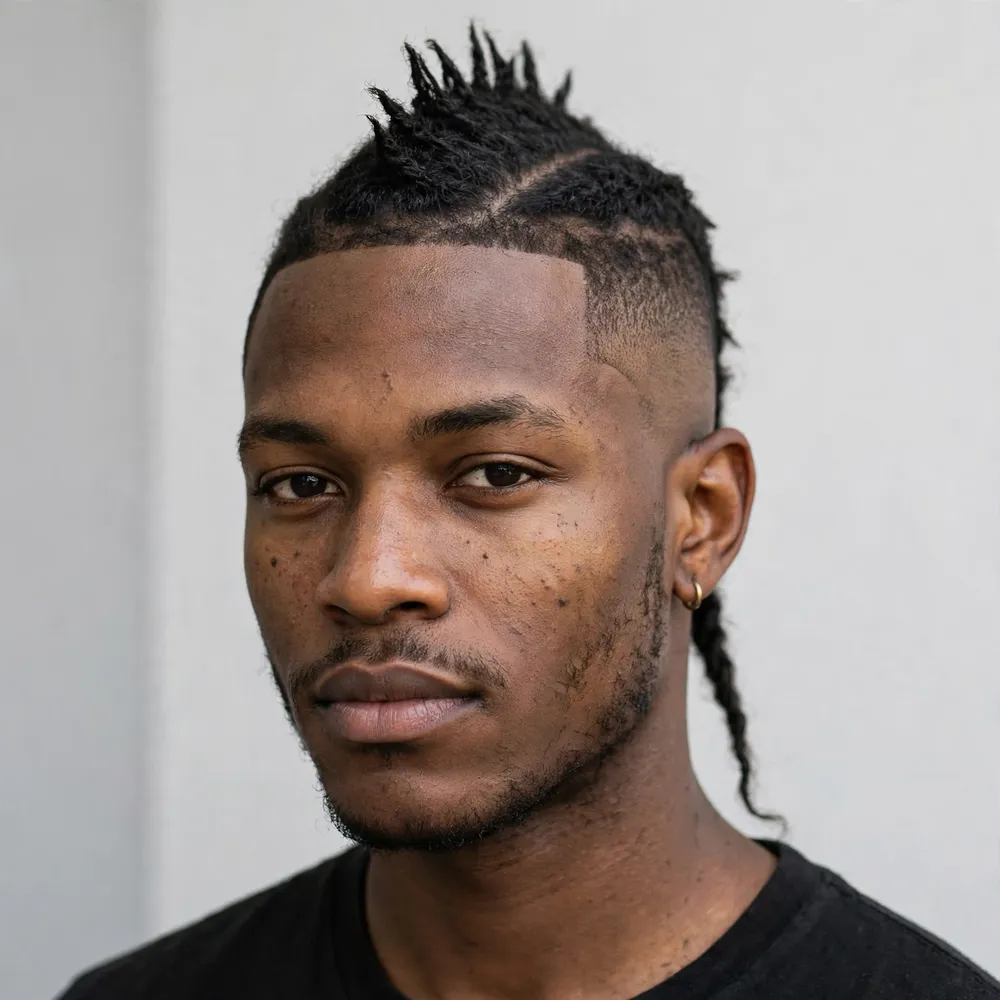
Here the strip doesn’t stop at the crown — it runs the full length of the head and ends in a long tail down the neck. It’s a bolder cousin of the mohawk mullet, and the tail is the whole statement. It suits thick hair that can carry the length without going stringy, and guys who genuinely enjoy long hair. Ask your barber to fade the sides, define the strip, and leave the tail long with only split ends cleaned up. Tie it back for work or the gym, and let it loose when you want the full effect. A drop of hair oil keeps the tail from looking dry, and the strip itself needs the usual strong-hold clay. Trim the tail every six to eight weeks to keep it healthy.
30. Wide Mohawk

The wide mohawk keeps the strip broad — three to four inches across the crown — with only the outer edges faded. It’s the easiest mohawk to grow out of, because there’s so much hair up top that the transition back to a normal cut is painless. It suits thicker hair and rounder faces, since the width fills out the head rather than elongating it, and it’s a good first step if the classic narrow strip feels like too much commitment. Ask your barber for a broad strip with a low or mid fade on the sides, keeping the top long enough to push back or spike. Style with a medium-hold cream for a swept look, or matte paste for texture. Maintenance is easy: a trim every three to four weeks and whatever product you already own.
31. Disconnected Mohawk

A hard disconnect — no blending at all — separates the long strip from the faded sides, and the sharp line is what makes this version look so deliberate. There’s no taper, no gradient, just a clean cliff edge where the strip begins. It suits straight hair best, since the disconnect reads cleanest when the top hair lies in a defined mass, and it looks sharpest on guys with strong bone structure. Ask your barber explicitly for a disconnected cut with no blending, and a skin or low fade on the sides. Style the strip with a strong-hold pomade combed straight up or swept back. The catch is the upkeep: the disconnect blurs within ten days, so you’ll be back in the chair every two weeks if you want the line to stay razor-sharp.
32. Slicked-Back Mohawk

The strip is combed back smooth instead of spiked up, which turns a punk cut into something polished enough for a wedding. The faded sides keep the mohawk shape, but the slicked top reads classic rather than rebellious. It suits straight and wavy hair with some length — at least three inches on top — and it flatters oval and square faces by keeping the profile clean. Ask your barber for a mid fade and enough length on top to comb back, with the sides tight. Work a strong-hold pomade through damp hair, comb it back, and finish with a light mist of hairspray for shine and hold. It’s a low-drama style day to day, but the pomade needs washing out properly each night or it builds up fast.
33. Mohawk with Quiff

The front of the strip lifts into a quiff, so you get the mohawk’s shape with the quiff’s volume and movement. It’s a smart hybrid: the height at the front elongates the face, while the faded sides keep everything crisp. It suits guys with naturally thick or wavy hair, since the quiff needs some body to hold its shape, and it works well on round faces that benefit from extra height up front. Ask your barber for a mid fade and a strip that’s longest at the front, tapering back. Blow-dry the front upward with a round brush, then lock it in with a volumising mousse and a matte clay. It takes a few minutes each morning, but the payoff is a cut that looks styled without looking sculpted.
34. Mohawk with Undercut Sides

Swap the fade for an undercut and the whole cut changes character. The sides are clipped to one uniform short length, leaving a hard edge directly under the long strip — no gradient, no taper, just a clean step. It suits straight and thick hair, and it looks best on guys who like their cuts to look intentional from every angle. Ask your barber for an undercut on the sides at a #2 or #3 guard, with the strip kept long and the disconnect left sharp. Style the strip up with strong-hold clay or swept back with pomade — both work, since the undercut frames either direction. The undercut grows out more obviously than a fade, so book a tidy-up every two to three weeks to keep the edge clean.
35. Mohawk for Thick Hair

Thick hair is the mohawk’s best friend. The density gives the strip real height and structure, so it stands up with less product and holds its shape all day. The trick is thinning it out just enough at the base so the strip doesn’t turn into a solid wall. Ask your barber to texturise the strip with thinning shears and keep the sides faded tight — a high or skin fade balances the bulk up top. Use a strong-hold matte clay, worked through from the roots, and blow-dry upward for maximum lift. Thick hair can handle heavier products without going greasy, which is a genuine advantage. Expect a trim every three weeks, since thick hair shows growth fast and the strip loses its shape quicker than finer hair does.
36. Mohawk for Fine Hair

Fine hair can absolutely carry a mohawk — it just needs a lighter touch. The strip should be kept shorter and heavily textured, because long fine hair flops under its own weight and heavy product makes it look greasy. Ask your barber for a choppy, layered cut on the strip and a low fade on the sides, and skip the thinning shears entirely. The styling secret is volume at the roots: a pea-sized amount of volumising mousse on damp hair, blow-dried upward, then a light matte paste — never gel or heavy wax. It suits guys with straight fine hair best, and the finished look is a softer, more wearable mohawk. Wash daily if your hair gets oily, and re-cut every three to four weeks to keep the texture sharp.
37. Mohawk for Thin Hair

A short matte strip creates the illusion of density, and that’s the whole strategy here. Keep the strip short — an inch to an inch and a half — so the hair stands up instead of lying flat and exposing scalp. A skin or high fade on the sides adds contrast that makes the strip look fuller. Ask your barber to cut the strip with a point-cutting technique for texture, and avoid heavy product that clumps hair together. A matte texturising powder is your best friend: it adds grip and volume without weight. This cut suits guys with early thinning at the crown or a widening part. Be honest — if the thinning is advanced, a shorter all-over cut may serve you better, but a modest mohawk still works while there’s enough coverage.
38. Grey Mohawk

Silver-grey hair and a mohawk is a combination with real confidence behind it. The grey adds a distinguished edge that turns a young man’s cut into a statement at any age, and the faded sides keep it sharp rather than scruffy. It suits naturally grey or silver hair best, though younger guys are deliberately dyeing their strips grey too. Ask your barber for a mid or low fade and a strip long enough to show off the colour — two to three inches works well. Keep the grey looking clean with a purple shampoo once a week, which stops it drifting yellow, and style with a matte clay for a natural finish. The maintenance is mostly about the colour: if you’re dyeing it grey, expect a root touch-up every four weeks.
39. Mohawk for Receding Hairline

A narrow strip swept forward softens a receding hairline instead of fighting it. The trick is keeping the strip short and textured, with the front pushed slightly forward so it frames the hairline rather than exposing it. A low fade on the sides keeps the focus on the centre, and the overall effect is a cut that works with your hairline, not against it. Ask your barber for a strip no wider than two inches, with the front left a touch longer to sweep forward, and faded sides. Use a light matte paste and avoid slicking anything straight back, which only highlights the recession. It’s an honest, wearable option — and if the recession advances further, the same cut transitions naturally into the shorter styles in our spiky hairstyles guide.
Mohawk vs Faux Hawk: What’s the Difference?
| Mohawk | Faux Hawk | |
|---|---|---|
| Sides | Shaved or faded to skin | Short or faded, but hair remains |
| Centre strip | Narrow, tall, clearly defined | Wider, softer, more blended |
| Styling | Strong-hold product, spiked up | Light product, textured or pushed up |
| Work-friendly | Rarely, unless faded and short | Yes, with a low fade it’s office-safe |
| Maintenance | Trim every 2–3 weeks | Trim every 3–4 weeks |
The real difference is commitment. A mohawk is a statement — the sides are gone and the strip is the whole show. A faux hawk keeps the same silhouette in a softer form, so you can wear it to the office on Monday and spike it up for the weekend. If you’re trying the look for the first time, start with a faux hawk. You can always go shorter and sharper at the next appointment, but you can’t un-shave a mohawk. And if you decide the faux hawk isn’t bold enough, your barber can take the sides down in a single visit.
Which Mohawk Suits Your Face Shape?
Round face: Go for height. A tall strip or a quiff-front mohawk adds length to your face and breaks up the roundness. Avoid wide strips that add width where you don’t need it.
Square face: You’re in luck — almost every mohawk works. A mid fade with a textured strip softens the jawline just enough, while a skin fade sharpens it further if you want the full dramatic effect.
Oval face: The most flexible shape. A classic mohawk, a slicked-back version or a low fade mohawk all sit well. Your only real decision is how bold you want to go.
Long face: Keep the strip short and wide rather than tall. A wide mohawk or a short mohawk with a low fade adds width without adding more length, which keeps your proportions balanced. Skip the liberty spikes.
How to Style a Mohawk in 6 Steps
- Start with clean, damp hair. Wash with a volumising shampoo and towel-dry until the hair is damp, not dripping. Product grips damp hair far better than dry hair.
- Work in a pre-styler. A pea-sized amount of mousse or sea-salt spray through the strip adds grip and volume before the main product goes on.
- Blow-dry upward. Use your fingers or a vent brush to push the strip straight up while you dry. This is what creates the height — skip it and the product alone won’t hold.
- Apply your main product. Warm a strong-hold matte clay or pomade between your palms, then work it through the strip from roots to tips, shaping as you go.
- Shape and set. Pinch the strip into spikes or smooth it into a ridge, whichever version you’re wearing. Take a step back and check the shape from the front and the side.
- Lock it with hairspray. A light mist from about 30 cm away holds everything without making it crunchy. Go easy — too much spray makes the mohawk look stiff and helmet-like.
5 Mistakes to Avoid with a Mohawk
- Using too much product. A heavy hand with gel or wax makes the strip greasy, clumpy and hard to reshape. Start with less than you think you need — you can always add more.
- Skipping the blow-dry. Product alone can’t create height. If you skip the blow-dry, the strip will collapse by lunchtime, no matter how strong the hold claims to be.
- Letting the sides grow out. A mohawk lives or dies on contrast. Once the sides get fuzzy, the whole cut looks accidental. Book your tidy-up before it gets there.
- Choosing the wrong strip width for your head. Too narrow on a wide head looks lost; too wide on a narrow head looks like a regular haircut. Ask your barber what’s proportionate.
- Washing out colour with hot water. Hot showers strip dye and bleach toner fast. If you’ve coloured your mohawk, wash with cool water and sulphate-free shampoo, or watch the colour disappear in a fortnight.
FAQs
How long does hair need to be for a mohawk?
You need at least two inches on top for a short mohawk, and three to six inches for a tall or spiked version. Shorter than two inches and the strip won’t stand up — it’ll just lie flat. If your hair is shorter than that, grow it out for six to eight weeks first, keeping the sides trimmed in the meantime so the shape starts to emerge.
Can you wear a mohawk to work?
It depends on the version and the workplace. A low fade mohawk or a faux hawk is perfectly fine in most offices, especially if the strip is kept short and styled neatly. A tall spiked mohawk with shaved sides is a harder sell in conservative workplaces. If in doubt, ask your barber for a version you can flatten down for work and spike up afterwards.
What is the difference between a mohawk and a faux hawk?
A mohawk has shaved or skin-faded sides with a narrow, clearly defined strip of longer hair running down the centre. A faux hawk keeps the same general shape but with short hair on the sides instead of shaved skin, and a wider, softer strip. The faux hawk is the wearable, office-friendly version; the mohawk is the bolder original.
How often does a mohawk need trimming?
Every two to three weeks for most versions, since the contrast between the strip and the sides blurs quickly as the sides grow. Skin fades and disconnected mohawks need the most frequent attention — sometimes every ten days to two weeks. Softer versions like the wide mohawk or the taper mohawk can stretch to three or four weeks between cuts.
What face shape suits a mohawk best?
Oval and square faces suit almost every mohawk, since their proportions handle the added height well. Round faces benefit most from tall strips and quiff fronts that add length. Long faces should stick to short, wide strips that add width rather than height. The honest truth is that the cut matters more than the face shape — a good barber will adjust the strip width and fade height to suit you.
Can you get a mohawk with thinning hair?
Yes, with the right version. A short matte strip creates the illusion of density, and a skin fade on the sides makes the strip look fuller by comparison. Keep the strip short — an inch to an inch and a half — and use texturising powder instead of heavy product. If the thinning is advanced, though, a mohawk will draw attention to it, and a shorter all-over cut may be the better choice.
How do you grow out a mohawk?
Start by letting the sides grow while keeping the strip trimmed to a manageable length, which evens out the contrast over a few months. The wide mohawk is the easiest exit route, since its broad strip blends into a normal cut faster. Expect an awkward phase of about two to three months where the sides are too long for a fade but too short to blend — a textured crop or a messy fringe can carry you through it.
Final Word
A mohawk isn’t just one haircut — it’s a whole family of cuts, from the office-safe faux hawk to the full punk statement, and there’s a version that fits your hair, your face and your life. Start with the softer end, find the shape that suits you, and let your barber sharpen it from there. For more cuts, styles and grooming guides, browse our blog — there’s plenty more where this came from.